
As an Alliance 8.7 Pathfinder Country, Guatemala has committed to accelerating efforts to prevent and eradicate child labor, forced labor, and human trafficking. In support of these efforts, Free the Slaves (FTS) is working with the Ministry of Labor and Social Welfare (MINTRAB), civil society organizations, and survivor leaders to strengthen national responses to modern slavery.
Through a Technical Cooperation Agreement with MINTRAB, Free the Slaves is supporting the development and implementation of policies, strategies, and coordination mechanisms aimed at prevention and eradication of child labor and its worst forms. A key component of this work is promoting the meaningful inclusion of experts with lived experience as survivors of child labor and its worst forms, in policy development and decision-making processes.
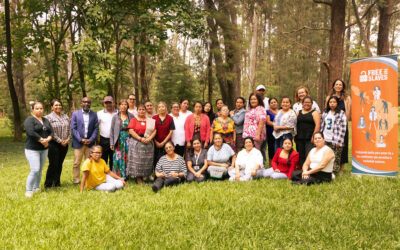
To advance this objective, Free the Slaves has partnered with Fundación Sobrevivientes in developing leadership, advocacy, and public policy engagement skills. Participants have received training on public policy processes, national and international legal frameworks, and strategies to translate lived experience into concrete policy recommendations.
As part of this initiative, survivor leaders presented to Guatemala’s National Commission for the Prevention and Eradication of Child Labor (PETI) their recommendations for public policies aimed at improving the care, prevention and eradication of child labor and its worst forms, directly to the officials responsible for shaping national strategy. The recommendations focused on survivor participation in decision-making, access to justice, effective implementation of laws, comprehensive victim services, education-based prevention, accountability mechanisms, community awareness, and sustained dialogue between survivors and government institutions.
By strengthening survivor leadership and fostering collaboration among government institutions, civil society organizations, and affected communities, Free the Slaves is helping ensure that Guatemala’s efforts to address child labor, including its worst forms, are informed by the lived experiences of those most directly affected. This approach strengthens the country’s capacity to develop and implement effective, sustainable, and long-term solutions.
Current News
People trapped in forms of modern slavery
Per 1000 People
Guatemala’s engagement in Alliance 8.7 and the adoption of a National Action Plan in 2023 demonstrates its regional commitment to align national efforts with international standards and foster cross-border collaboration to end forced labor, modern slavery, human trafficking, and child labor by 2030.
According to the 2023 Global Slavery Index, approximately 140,000 people (7.8 per 1,000) were living in situations of modern slavery in Guatemala in 2021. Forced labor is prevalent in agriculture, domestic service, construction, and manufacturing. Indigenous communities, especially women and children, face higher risks due to structural discrimination, poverty, and geographic isolation.
The government reported progress in victim identification and referral mechanisms to protection services, expanded investigations, and the opening of a new specialized shelter for victims of trafficking. According to the reports provided on its law enforcement efforts, authorities reported investigating 452 suspected trafficking cases, compared to 182 cases in 2022, and initiating prosecutions in 113 cases involving 200 suspects, across cases related to sex trafficking, labor trafficking and other forms of exploitation (US Trafficking in Person (TIP) Report, 2024).
Additionally, they had implemented the Return Home Plan to ensure reintegration and reduce vulnerabilities among returned migrants. It is part of a broader national reintegration framework. In 2024, the Guatemalan Migration Institute registered the return of 76,768 Guatemalan migrants, primarily from the United States and Mexico, including women, men, children, and families. In accordance with the principles of the Global Compact for Migration, the State of Guatemala has promoted reintegration initiatives, including the Interinstitutional Protocol for the Reception and Assistance of Returned Guatemalans (2021) and the National Migration Policy (2023), which frames reintegration as a multidimensional process addressing economic, social, and psychosocial needs. These efforts seek to reduce structural vulnerabilities that can increase the risk of trafficking, forced labor, and other forms of modern slavery, by enabling reintegration as a sustainable option rather than a necessity-driven return to migration.
Despite civil societies and government efforts, according to the 2024 U.S. TIP Report, prosecutions and convictions have declined compared to previous years; additionally, they pointed out that labor inspections and victim services need also to be better expanded in rural areas.
Regarding their legal framework Guatemala’s Law Against Sexual Violence, Exploitation, and Trafficking in Persons (Decree 9-2009) provides a comprehensive, rights-based legal framework. According to Article 202 Ter, the offense of trafficking in person involving adults does not require proof of force, fraud, or coercion as constituent elements; rather, these factors are considered aggravating circumstances in accordance with Article 204. This legislative design sought to avoid creating unnecessary barriers to prosecuting trafficking crimes, going beyond the minimum standard of the Palermo Protocol. The law also introduced strong provisions on prevention, victim protection, assistance, and inter-institutional coordination, positioning Guatemala as a regional reference at the time of its adoption.
Year FTS started working in Guatemala
CHILD LABOR AND ITS WORST FORMS
Regarding child labor and its worst forms, in Guatemala nearly 350,000 boys and girls between the ages of 10 and 14 are working, according to estimates by the Ministry of Labor and Social Welfare (MINTRAB) based on the National Survey of Household Income and Expenditure (ENIGH) 2022–2023. This represents 17.8% of the population in that age range.
According to the National Survey on Living Conditions (ENCOVI) 2023, the number of working children under 14 is 341,454, marking an increase compared to 2011, though lower than the 519,503 recorded in 2000, reflecting a rise in risk factors.
Of the children who work: two out of three are Maya, 60.8% work without pay, and 57.6% are employed in agriculture.
Those most affected are between 14 and 17 years old, and the highest incidence occurs in departments with large indigenous populations, which also concentrate the highest rates of chronic malnutrition and low school coverage.
The Worst Forms of Child Labor, as defined by ILO Convention 182 (ratified by Guatemala in 2001), include slavery, trafficking, forced labor, sexual exploitation, and hazardous work.
The following modalities are documented in Guatemala:
1. Trafficking and labor exploitation: Between January and May 2025, the Office for Children and Adolescents (PNA) received 278 complaints of economic exploitation of children and adolescents: 254 cases of trafficking and labor exploitation, and 24 of forced begging. Throughout 2024, 601 complaints were documented and 35 children were rescued.
2. Commercial sexual exploitation: Traffickers exploit Guatemalan minors through forced labor such as begging, street vending, and street performing, particularly in Guatemala City and along the border with Mexico. Online sexual exploitation of minors has also been recorded through live internet broadcasts.
3. Recruitment by organized crime: Criminal organizations, including gangs (maras), exploit girls in sex trafficking and coerce urban children and youth into selling or transporting drugs, participating in extortion, or committing murder.
4. Hazardous industrial work: Documented hazardous activities include garment manufacturing, chemical production, fireworks manufacturing, and gemstone polishing, among others, causing respiratory diseases, poisoning, burns, eye injuries, and hearing loss.”
5. Child domestic work: Girls are the most affected in domestic work; the hours and responsibilities placed on them often prevent access to education or medical care, and expose them to physical and sexual abuse.
6. Work in garbage dumps: In landfills, approximately 82% of child workers suffer cuts or other injuries; 56% experience eye burns from decomposition gases, and 40% suffer headaches due to sun exposure.
Guatemala is one of the countries that has developed, with the support of the ILO and ECLAC, a Child Labor Risk Identification Model (MIRTI) — Guatemala, within the framework of the Regional Initiative Latin America and the Caribbean Free of Child Labor.
The MIRTI is a model that identifies which municipalities have the highest likelihood of child labor, to concentrate preventive efforts there. It is based on data from the 2018 Census and the ENCOVI 2014.
Key data for Guatemala include:
• 18.2% of children and adolescents aged 7 to 17 are employed
• The most affected group: ages 14–17 (34.5% employed in that range)
• 71% of employment in the country is informal
• 59.3% of the population lives in poverty; 23.4% in extreme poverty
• 43.7% of the population is indigenous
The 18 municipalities with the highest risk (>80%) are concentrated in Alta Verapaz (14 municipalities), Baja Verapaz (2), and Chiquimula (2).
The MIRTI identifies four risk factors:
1. Mother’s employment outside the home — multiplies risk by 2.7 (up to 6 times in Petén)
2. Belonging to an indigenous people — doubles risk nationally; triples it in the Northern Region
3. Rurality — increases risk by 1.7 times (up to 3 times in the Northern Region)
4. School lag — multiplies risk by 1.2
Among the public policy recommendations, the document proposes actions in five areas: formalization of female employment with childcare services; priority attention to indigenous peoples; rural development and infrastructure; strengthening of health and education systems; and culturally relevant awareness campaigns.”
Local Partner
FTS Roadmap for Guatemala
Policy and Institutional Advocacy
- Advocate for Survivor Inclusion: Advocate for the meaningful participation of survivors in the design, implementation, and monitoring of national policies.
Partnerships and Community Engagement
- Collaborate with Civil Society: Work closely with NGOs and survivor-led organizations to develop community-based prevention and intervention initiatives.
Training and Capacity Building
- Strengthen Survivor Capacities: Deliver targeted training to survivors to strengthen advocacy, engagement, and participation in policy processes.
- Train Frontline Actors: Provide specialized training for labor inspectors, prosecutors, and first responders on victim identification and survivor-centered approaches.
- Facilitate Workshops: Conduct inclusive workshops with stakeholders working for the state to improve their capacity to prevent and eradicate child labor and its worst forms.
Movement Building
- Promote Multi-Stakeholder Dialogue: Facilitate platforms for exchange and collaboration among government, civil society, private sector, and survivor representatives. Invite relevant actors to the Freedom from Slavery Forums for this purpose.
- Support Survivor Coalitions: Assist in the creation and mobilization of survivor networking and regional coalitions to sustain advocacy efforts beyond project timelines.
Guatemala’s Legal Framework on Modern Slavery
Political Constitution of the Republic of Guatemala (1985), Article 102 (k)
Recognizes the right to decent work and prohibits the employment of minors in work incompatible with their physical or moral development. (https://antislaverylaw.ac.uk/wp-content/uploads/2019/08/Guatemala-Constitution.pdf)
Comprehensive Protection Law for Children and Adolescents (Decree 27-2003)
Provides protection against economic exploitation, hazardous labor, and child trafficking. (https://oig.cepal.org/sites/default/files/2003_d27-2003_gtm.pdf)
Criminal Code (Decree 17-73) – Article 150 Bis
Criminalizes abuse against minors and persons with volitional or cognitive disabilities, including acts or omissions that cause physical or psychological harm, illness, or place the victim at serious risk. Establishes penalties of two to five years of imprisonment and provides that the statute of limitations begins when the victim reaches adulthood. (https://tse.org.gt/images/UECFFPP/leyes/Codigo_Penal.pdf).
Labor Code of Guatemala (Decree No. 1441, 1961)
Sets the minimum employment age at 14 years, prohibits hazardous or unhealthy work for those under 18, and guarantees the right to education. (https://mcd.gob.gt/wp-content/uploads/2013/07/codigo-de-trabajo.pdf)
Roadmap for the Prevention and Eradication of Child Labor in all its Forms and Protection of Working Adolescents. HOJA DE RUTA PARA LA PREVENCIÓN Y ERRADICACIÓN DEL TRABAJO INFANTIL4
Political Constitution of the Republic of Guatemala – Articles 4, 43, 101 and 102.
Declares that all persons are free and equal in dignity and rights; prohibits servitude and recognizes the right to freedom of work. (https://faolex.fao.org/docs/pdf/gua126743E.pdf)
Criminal Code (Decree 17-73) – Article 202.
Criminalizes reducing a person to slavery or maintaining them in such condition, or condition or subjecting them to a condition similar to slavery. (https://tse.org.gt/images/UECFFPP/leyes/Codigo_Penal.pdf)
Criminal Code (Decree 17-73) – Article 202 ter.
Criminalizes human trafficking for purposes of sexual exploitation, forced labor, servitude, irregular adoption, or organ removal. (https://tse.org.gt/images/UECFFPP/leyes/Codigo_Penal.pdf)
Law Against Sexual Violence, Exploitation and Trafficking in Persons (Decree 9-2009).
Establishes measures for prevention, punishment, and comprehensive victim assistance related to trafficking and exploitation. (https://igm.gob.gt/wp-content/uploads/2021/11/19_LEY-CONTRA-LA-VIOLENCIA-SEXUAL-EXPLOTACION-Y-TRATA-DE-PERSONAS-DECRETO-No.-9-2009.pdf)
FTS Staff for Guatemala

Cinthia Belbussi
Latin America Regional Manager
cinthia.belbussi@freetheslaves.net

Carolina Quinteros
Local Consultant
carolina.quinteros@freetheslaves.net