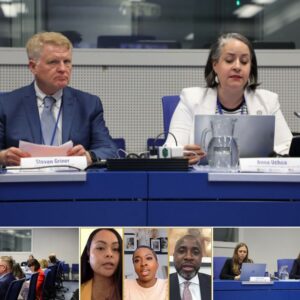
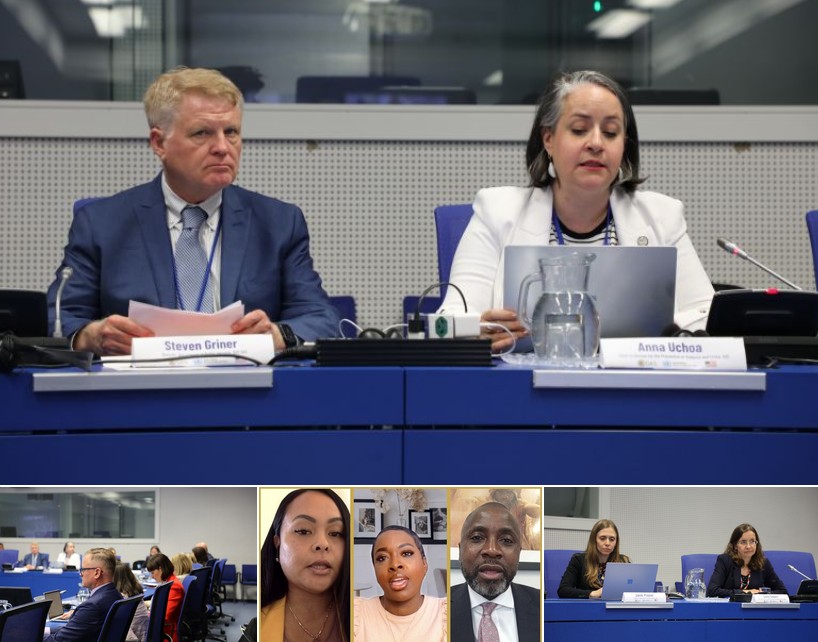

On June 1, 2026, Free the Slaves joined governments, survivors, civil society organizations, and international agencies at a landmark side event on the margins of the 35th Session of the Commission on Crime Prevention and Criminal Justice (CCPCJ) in Vienna. The event, Inclusion in Practice: Examining Survivor Participation in Anti-Trafficking Efforts Across the Americas, was jointly organized by the United Nations Office on Drugs and Crime (UNODC) and the Organization of American States (OAS). Bukeni Waruzi, Executive Director at Free the Slaves, joined an expert panel to represent the organization and share evidence from its work across Latin America and the Caribbean.
The conversation at the heart of this event was not new. For years, the anti-trafficking field has recognized that survivor participation in policy and programming is not just ethically important; it is operationally necessary. Research consistently shows that initiatives developed without the leadership of people directly affected by exploitation are less likely to succeed and more likely to cause unintended harm. And yet, meaningful inclusion remains the exception rather than the rule. Survivors are too often invited to share their stories for visibility purposes while being excluded from the decisions that shape policy, programs, and resource allocation.
This panel offered a different starting point. Rather than debating whether survivors should be included, it asked a harder and more practical question: what does it actually take to make that inclusion real?
Lessons from the Field: Insights from Free the Slaves
Free the Slaves came to this event with concrete answers drawn from active programming across the region.
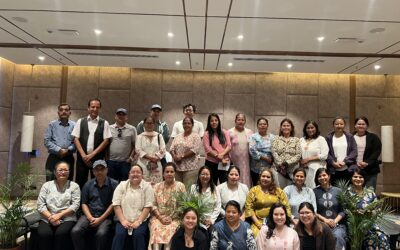
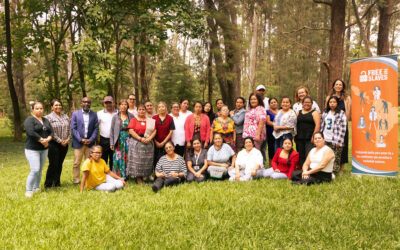
In Guatemala, survivors with lived experience in child labor and its worst forms completed months of training and preparation before presenting eight strategic recommendations directly to the country’s interinstitutional child labor committee (PETI). It was the first time in Guatemala’s history that persons with lived experience had presented at that level. The Ministry of Labor formalized a two-year collaboration with Free the Slaves one week later. The next phase of this work goes further: those same survivors will train government officials themselves. This is what survivor leadership looks like when the conditions for it are deliberately built.
In Bolivia, a survivor of forced labor served as a co-trainer throughout a capacity-building program for civil society organizations across four departmental networks. The survivor-informed components of the training received the highest evaluation scores. Following the program, the Ministry of Justice requested a meeting with Free the Slaves, a signal that this approach to training carries institutional weight. When civil society organizations learn alongside a person with lived experience, the result is not just improved knowledge. It is a shift in perspective, in posture, and in how organizations understand their own role in the broader anti-trafficking response.
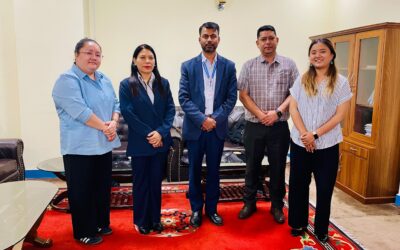
At the regional level, Free the Slaves is in active dialogue with Honduras and Costa Rica on formally integrating survivor voices into their Alliance 8.7 National Roadmaps, the national-level frameworks through which governments translate commitments on forced labor and child labor into action. A strategic alliance with the International Labor Organization’s Central America Directorate anchors this work, recognizing that survivor-informed engagement requires both the technical credibility and the community relationships that Free the Slaves brings to the table.
Free the Slaves has also invested in knowledge systems that connect field experience to broader movement learning. Conversaciones sobre Esclavitud Moderna, a Spanish-language podcast series, documents what works in Latin America through conversations with people who understand exploitation from the inside. An episode featuring Josefa Condori Quipes, a lived-experience expert on domestic servitude who has developed a proven community intervention model in Peru, illustrates how survivor knowledge becomes a resource for the entire region when it is properly supported, documented, and shared. Watch the episode here.
The Conditions That Make Participation Meaningful
Across these programs, a consistent lesson emerges: survivor participation does not happen by invitation alone. It is built. The conditions for it must be created deliberately, with investment, preparation, and institutional commitment, in communities, in civil society organizations, and in the government agencies that shape policy.
When survivors enter government spaces equipped with expertise, training, and a platform, they are not asking to be heard. They are exercising informed, prepared leadership. When civil society organizations learn alongside a survivor co-trainer, they leave with more than skills; they leave with changed frameworks for understanding who holds knowledge and who should hold power in the anti-trafficking response. When governments are asked to formalize survivor engagement in their national roadmaps, they are being held accountable to a standard that organizations like Free the Slaves have already demonstrated is achievable.
The Inter-American Network of Survivors of Trafficking in Persons (RISTRAP), whose development this event was also designed to support, represents an important structural step in the same direction. Regional networks that connect survivors across borders, create peer support, and build collective advocacy capacity are exactly the kind of infrastructure that transforms individual participation into sustained movement.
Looking Forward
Free the Slaves’ presence at this event reflects the organization’s long-standing commitment to advocacy that is grounded in practice. Our work in Latin America and the Caribbean is not built on assumptions about what survivors need. It is built with the people who have navigated exploitation, who understand its root causes, and who have the expertise to inform the systems designed to address it.
The challenge before governments, international organizations, and civil society is not only to acknowledge the importance of survivor participation in principle. It is to resource, institutionalize, and protect it over time. That is the standard Free the Slaves is working toward, and the evidence we brought to Vienna shows it is within reach.