
Caribbean

In the Caribbean, Free the Slaves works to tackle the multifaceted challenges of modern slavery. Our projects were designed to address immediate issues as well as build long-term resilience against the threats of forced labor, human trafficking and other forms of modern slavery. Below, we spotlight our past projects showcasing our comprehensive approach in the Caribbean.
Our Work in the Caribbean
Free the Slaves has been working in the Caribbean since 2008, when it launched programs in Haiti to address restavek, a system in which children from impoverished families are sent to work as domestic servants in other households. That early work, conducted alongside local partners, helped free and support many children and adults affected by exploitation, and directly informed the development of the Community Liberation Initiative (CLI) Toolkit, now used by practitioners across the region and around the world.
Building on that foundation, since 2022 FTS has deepened its engagement across the broader Caribbean, forging relationships with regional institutions and with survivors, civil society organizations, and government agencies in Barbados, Trinidad and Tobago, Jamaica, Guyana, Belize, Antigua and Barbuda, Saint Lucia, Grenada, and St. Vincent and the Grenadines.
Free the Slaves is legally registered in Trinidad & Tobago, which serves as the regional office.
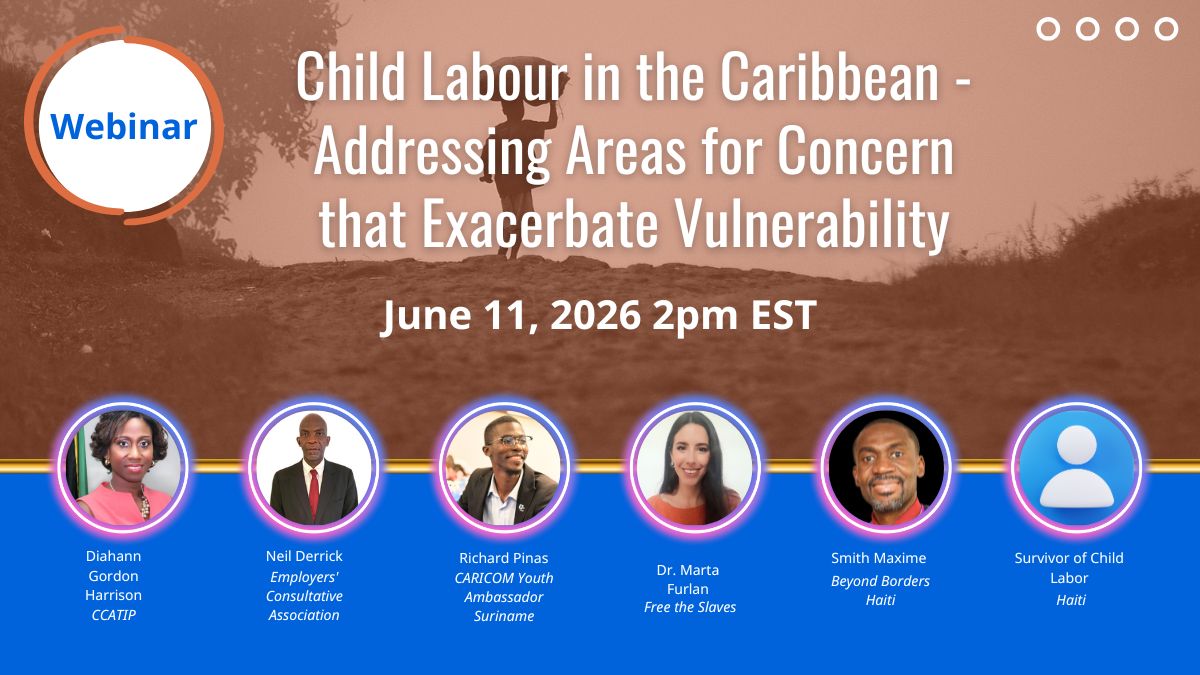
Upcoming Events
Key Initiatives
Caribbean Coalition Against Trafficking in Persons (CCATIP)
Launched in July 2024, the Caribbean Coalition Against Trafficking in Persons (CCATIP) is a direct response to the call for greater regional coordination that emerged from the 2023 and 2024 Freedom from Slavery Caribbean Regional Forums. It is a growing partnership of government agencies, civil society organizations, law enforcement, academic institutions, community stakeholders, and survivors united around a shared purpose: to eliminate the buying, selling, and exploitation of people across the Caribbean, while meaningfully empowering and integrating survivors into society.
CCATIP serves as a regional hub for collaboration, resource alignment, information sharing, and education. It supports and strengthens existing anti-trafficking efforts rather than duplicating them, fostering the cross-border, cross-sector coordination the region has long needed. At its core, the Coalition holds that all forms of trafficking are an abuse of universal human rights, and that survivors must be meaningfully engaged in the movement to end it. Free the Slaves serves as the Secretariat of CCATIP, supporting the Coalition’s governance, membership, and operations. Coalition leadership spans Barbados, Guyana, Haiti, Jamaica, Saint Lucia, St. Vincent and the Grenadines, Trinidad and Tobago, and Venezuela, reflecting a deep commitment to inclusivity and shared regional ownership.
Regional Training and Capacity Building
Our Training and Capacity Building work has focused on strengthening social workers and other helping professionals who are on the front lines of protecting the vulnerable in our region.
Since 2024, we have delivered three in-person Community Liberation Initiative (CLI) workshops for school social workers and guidance officers in Trinidad and Tobago, and four virtual CLI workshops for cohorts of social workers in Barbados, Jamaica and the Eastern Caribbean.
Podcasts and Media from the Caribbean Region
FTS supports and regularly collaborates with the CCATIP to produce two podcasts and a monthly radio segment called Freedom Matters. We also led a stellar regional committee to coordinate the CCATIP’s 2025 Caribbean Anti-Trafficking Conference in observance of World Day Against Trafficking in Persons.
FTS Strategy for The Caribbean
Policy and Advocacy
Through regional forums and our role as Secretariat of the Caribbean Coalition Against Trafficking in Persons (CCATIP), FTS works with survivors, civil society, and governments to strengthen anti-trafficking policy, improve youth and survivor engagement, and promote whole-of-government and whole-of-society responses, including engagement with global frameworks such as Alliance 8.7.
Partnerships and Collaboration
Training and Capacity Building
Movement Building
FTS convenes Freedom from Slavery Regional Forums and supports CCATIP in hosting Caribbean Anti-Trafficking Conferences, creating space for cross-border collaboration, survivor leadership, and shared strategy across the region.
Research
FTS conducts research to evaluate the impact of community-based programs and to inform evidence-based solutions. Current research includes:
(1) a study on the self-care knowledge, attitudes, and practices of regional anti-trafficking stakeholders — building a healthier, more sustainable movement.
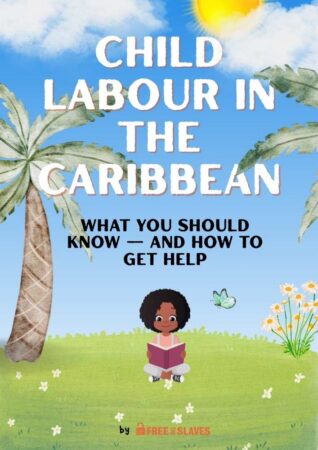
(2) a factsheet on child labour in the Caribbean, which is available in three versions, including a child-friendly resource.
(3) research into the experiences of trafficking survivors with Caribbean judicial systems. The findings and recommendations from this research will inform law enforcement and judicial actors across the Caribbean so they can improve their policies and processes to become more trauma-informed, and survivor-centred.