Summer & Winter School on Human Trafficking
A Joint Learning Initiative by Free the Slaves and The Wilberforce Institute, University of Hull
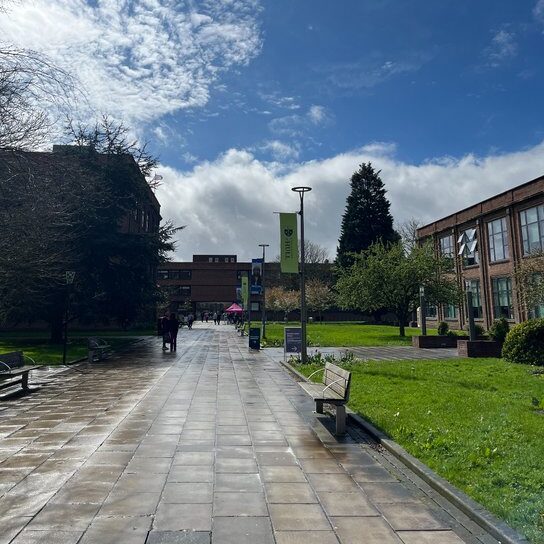


The Summer and Winter School on Human Trafficking is a dynamic and innovative learning initiative jointly launched by Free the Slaves and the Wilberforce Institute at the University of Hull. Designed to deepen understanding and inspire action, the program brings together a distinguished faculty of globally recognised scholars, frontline practitioners, and policy experts.
Through an engaging blend of lectures, case studies, and interactive workshops, participants gain a comprehensive, interdisciplinary perspective on human trafficking. The curriculum integrates cutting-edge academic research with real-world insights drawn from global best practices, offering a nuanced exploration of the causes, manifestations, and impacts of trafficking in both local and international settings.
Whether focused on prevention, protection, prosecution, or policy, the program equips participants with the knowledge, tools, and strategies necessary to confront and combat human trafficking effectively. This school represents a unique opportunity for professionals, students, and advocates to collaborate, learn, and lead in the global fight against human trafficking.
For more information contact:
Dr Marta Furlan – Research@freetheslaves.net
Dr Daniel Ogunniyi – wilberforce@hull.ac.uk
Structure and Topics
Interactive and frontal lectures
Individual and group assignments
Panels for participants to present
The course adopts a global perspective, exploring the following topics with contributions from academics and practitioners from FTS and the University of Hull, complemented by talks from distinguished guest speakers:
Human trafficking in today’s world
Legal and policy framework on human trafficking
Gender- and ethnic-based discrimination in human trafficking
Irregular migration, migrant smuggling & human trafficking
Human trafficking in areas of conflict and humanitarian crisis
Climate change, green energy transition & human trafficking
Technology-facilitated human trafficking & the use of technology to counter exploitation
Human trafficking in supply chains and best practices to address it
Survivor engagement – values, concepts & practices
Participatory approaches to research on human trafficking
Reparations
The combined insights from legal, political, economic, sociological, and practice-based approaches to the study of modern slavery and human trafficking offer participants a deeper understanding of one of the most complex and multifaceted phenomena affecting societies across the globe.
Format
The Human Trafficking School is held twice annually. The program is delivered entirely online, making it accessible to a global audience regardless of location. This virtual format ensures broad participation and allows for flexible engagement with the program’s expert-led content. The Winter School is held each year in January-February, and the Summer School is held in June-July.
Duration
The Human Trafficking School spans five consecutive days, running from Monday to Friday, and comprises a total of 30 instructional hours.
The structured, week-long format allows for in-depth exploration of key themes, combining expert-led presentations, interactive discussions, and practical exercises. This intensive schedule is designed to maximise learning while allowing participants to fully immerse themselves in the subject matter within a focused timeframe.
- Morning class – 9:00AM – 10:30AM
- Coffee break – 10:30AM – 11:00 AM
- Morning class – 11:00AM – 12:30PM
- Lunch – 12:30PM – 2:00PM
- Afternoon class – 2:00PM – 3:30PM
- Coffee break – 3:30PM – 4:00PM
- Afternoon class – 4:00PM – 5:30PM


Who can apply?
Application is open to graduate students, researchers, civil servants, journalists, and practitioners from intergovernmental and governmental agencies working in human trafficking-related areas. They provide ample opportunities to engage in discussions and exchange ideas with topical experts and fellow participants working in the same field.
Participants from all nationalities are welcome and encouraged to apply. Kindly note that all classes are in English and participants therefore need to have a strong command of English.
Admission is based on merit and motivation. Applications will be reviewed on a rolling basis. Places on the courses are limited, and candidates are advised to apply early.
Application process
Materials
Before the course starts, we will send you a link to access the course materials, including slides, suggested readings, short clips, exercises. All materials will be uploaded online in advance of the School and we will provide time for reading and preparing for the different sessions during the School. This will allow for self-paced work, as well as facilitate active exchanges between participants and lecturers throughout the course.
Certification
Participants in the course will receive a certificate of attendance. To receive the certificate participants must attend at least 85% of the School.
What will you get from the School?
Gain a comprehensive understanding of key topics in the field
Analyse human trafficking from multiple perspectives
Develop a deeper understanding of the complexities and global implications of human trafficking
Build a global professional network through interaction with scholars, civil servants, international organization officials, NGO and civil society representatives, journalists, policy analysts from around the world
Fee
Additionally, School attendees from LICs and LMICs, and Persons with Lived Experience who are accepted, will be eligible to apply for available need-based scholarships.
Organizations enrolling at least 5 staff members can apply as an organization and benefit from a discounted rate.
All reading materials and a certificate of completion are included in the registration fee.

26 to 30 January 2026
online winter school
June 29 – July 3, 2026
online summer school



Highlights from the 2025 Online Winter School
For more information contact:
Dr Marta Furlan – research@freetheslaves.net
Dr Daniel Ogunniyi –wilberforce@hull.ac.uk