
Anti-slavery work demands constant evaluation. That’s why FTS works diligently to improve anti-slavery activities by our grassroots partners through baseline research to examine, contextualize and adapt our program strategies to best suit the needs of individual communities.
I recently visited Ghana to guide our training and data collection program in 14 newly-targeted communities being served by our partner International Needs Ghana. My trip launched phase two of our original research project on child trafficking in fishing. Participatory Development Associates (PDA) is the external evaluator conducting this research project.
Interacting with local groups and leaders in areas at acute risk of slavery and exploitation was an invaluable learning experience. The training and information sessions were enlightening, evocative, powerful—and often even fun.
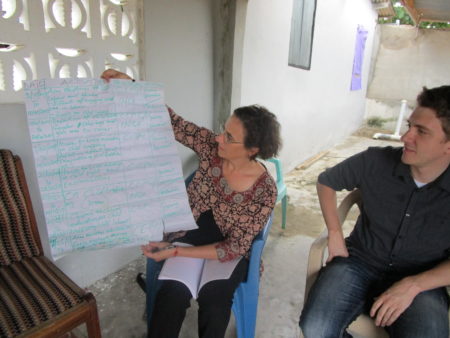
In Ghana, candid focus groups, intense discussions with local leaders, and social mapping activities helped FTS understand key perspectives of vulnerable villagers and identify challenges and opportunities. Children and adults alike drew maps of their communities—distinguishing the poorest places, as well as vital landmarks such as schools and latrines—in chalk on a church blackboard.
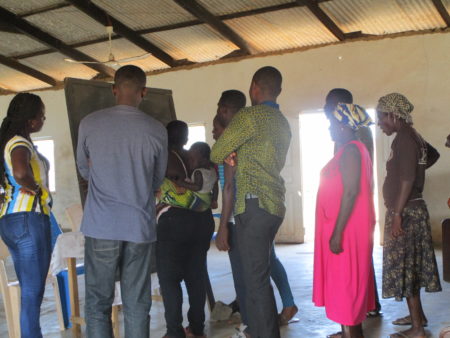
Community groups engaged in lively conversations with researchers, revealing important aspects of the local situation. For instance, FTS discovered that boys in one community often left their homes for up to three years at a stretch to work herding cattle. The research teams shared simple refreshments with villagers, hearing their stories and gaining their trust.
FTS worked with PDA to translate culturally appropriate questions and answers about human trafficking in the four languages spoken in the 14 communities. We worked with the enumerators on ethics, data collection confidentiality, and the use digital technology for household surveys.
Child Trafficking and Slavery Is Rampant in Ghana
Phase one of this extensive study was completed in 2016, and found significant levels of child trafficking and slavery-like conditions in 20 communities in Ghana’s Volta and Central regions (see report here). Child trafficking and exploitation were found in every community studied—more than one-third of households had a child trafficking or slavery victim.
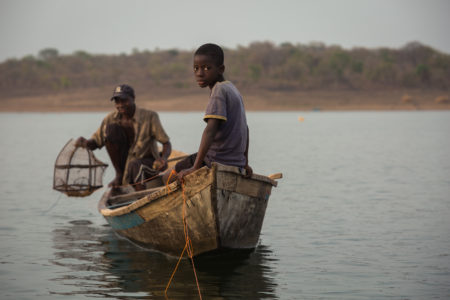
The phase-one research team uncovered more than 500 instances of child exploitation: half in fishing industries, followed by domestic servitude, unpaid child labor, and forced marriage. To prove the prevalence of child exploitation in the area, FTS teams conducted 80 focus groups, 40 interviews, and 1,621 household visits. One household alone reported 10 trafficked or exploited children.
The poverty that leads to modern slavery deprives many children of their basic rights to education and freedom. It can even cost them their lives. They are trapped in gold mines and on deadly fishing boats. On the massive expansive of Lake Volta, violent swells can suddenly swamp small boats and children are forced to dive into perilous waters to retrieve heavy nets. They are forced to work day and night with little food or rest—at risk of sexual assault, under threat of violence, and unable to walk away.
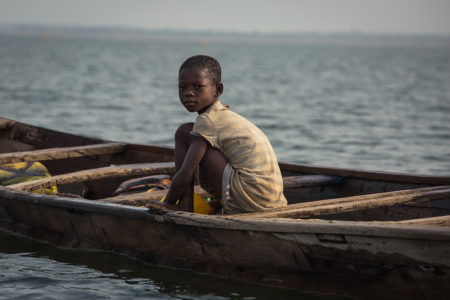
Fortunately, our phase-one research also showed parents, children and other community members were aware of the risks of child trafficking and exploitation. They understood the devastating effects of slavery on children.
But villagers described a desperate need for secure sources of income and employment. In a place where a bag of rice costs 170 Ghanaian Cedi (about $38), families are forced to “hire” their children out to brutal slave owners for as little as 100 GHS, or roughly $25.
Better Ways to Grow Up Free
Our collaborative Growing Up Free project helps fight child fishing slavery in Ghana. FTS will continue to use our research findings to improve the relevance, effectiveness, efficacy, impact and sustainability of Growing Up Free initiatives.
The phase-two research team left Ghana feeling confident and inspired—our work helps protect and liberate slavery’s youngest victims.
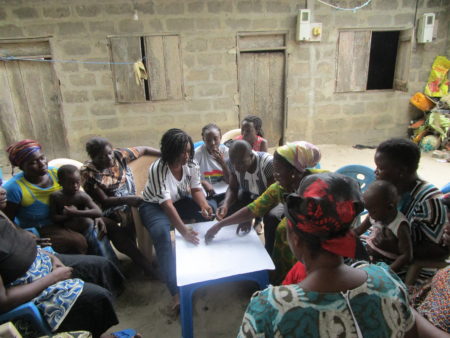
We are committed to freeing slaves, confronting the conditions that allow modern slavery to persist, and helping communities achieve sustainable systems of freedom. When villagers are given the chance to fight slavery, they do.