
Written by Dr. Marta Furlan and Ruja Pokhrel
In Kathmandu, tens of thousands of children live and work as domestic workers. They cook, clean, fetch water, carry heavy loads, care for younger children, and often support family businesses.
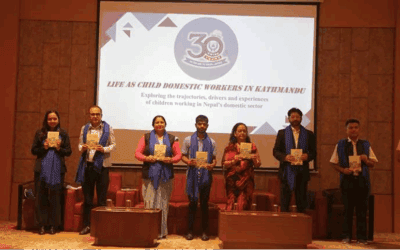
The research report Life as Child Domestic Workers in Kathmandu, published by Free the Slaves and CWISH Nepal, sheds light on this largely invisible form of labor.
It finds that most child domestic workers come to Kathmandu at a very early age. Recruited through relatives, neighbors, or informal intermediaries, children leave rural villages with promises of education and better life opportunities in exchange for some limited household chores. Once in the capital, however, children find themselves working very long hours and taking on hazardous tasks. While most are enrolled in school, their ability to regularly attend classes and study is constrained by the workload in the home. Removed from their family of origin and isolated from the outside world, child domestic workers find themselves living in emotionally and psychologically challenging circumstances.
The research also documents the deeper structural forces that sustain the practice. Families from the middle-upper class in Kathmandu employ children as domestic workers to perform household chores. They often justify the practice by arguing that children are treated as family and benefit from the educational and developmental opportunities that life in the capital offers. However, the research reveals that the extent to which those initial promises are met varies greatly across cases. Moreover, the hidden nature of domestic work makes it extremely hard to see, assess, and monitor children’s well-being.
The report concludes with a series of recommendations targeting different actors and emphasizing the need for a whole-of-society approach built on intersecting actions. Government authorities, employers, parents, teachers, police officers, civil society organizations, and communities all have roles to play. The research therefore calls for coordinated, multi-sector action that addresses root causes, strengthens accountability, and empowers children.
You can read the full report here: https://freetheslaves.net/wp-content/uploads/2025/08/Life-as-Child-Domestic-Workers-in-Kathmandu-.pdf
From Research to Action
Building on the recommendations above, it was clear that completing the research would not mark the end of the process. It would mark a starting point for practical follow-up on the ground in Nepal.
Strengthening Accountability
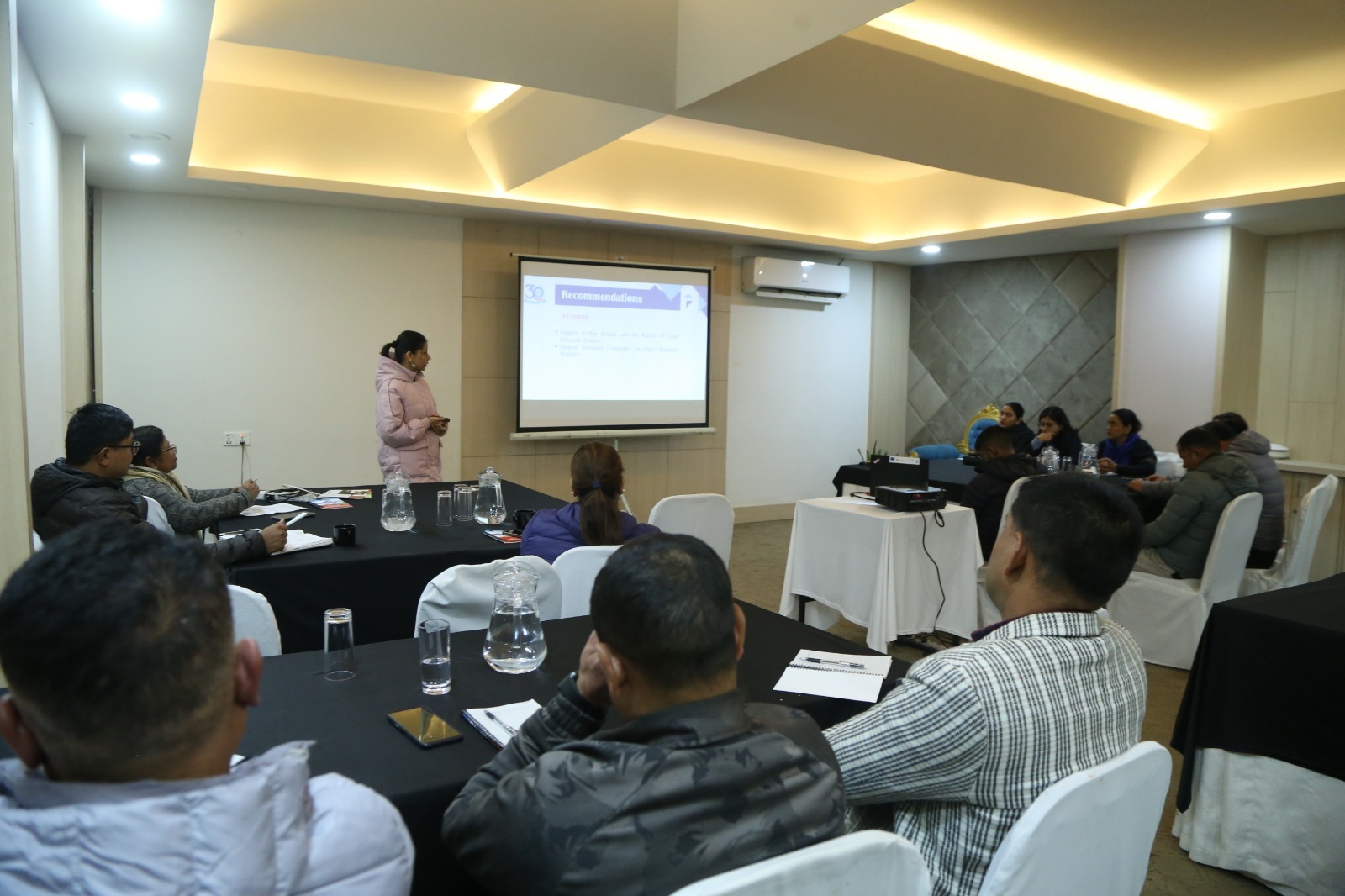
On December 9, 2025, the research findings were presented and discussed in the context of a multi-stakeholder dialogue on “Ethical Business Practices to Address Child Labor.” The dialogue brought together 23 participants, including employers, trade union representatives, police officers, and child welfare and civil society actors.
The findings provided grounded evidence on the lived experiences of child domestic workers and highlighted the link between informal employment practices and child labor. This encouraged participants to engage with the issue through evidence rooted in local realities. Building on the research, the conversation focused on implementation gaps, accountability challenges, and the roles different actors play in addressing child domestic labor.
By grounding the discussion in research, the dialogue fostered a shared understanding of the problem and reinforced the need for coordinated action across sectors. In this way, the research served not merely as information, but as a catalyst for collective responsibility.
Empowering Children
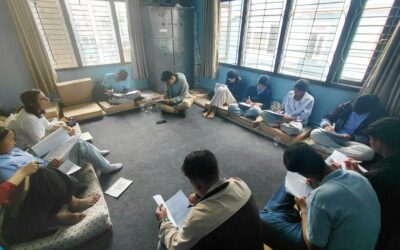
On December 19–20, 2025, a two-day capacity-building training took place for 21 members of CWISH’s Children Advisory Board (CAB).
The study’s insights were used as learning material during leadership and advocacy sessions with children with lived experience as domestic workers. For many participants, the research helped connect personal experiences to broader systemic patterns and strengthened their confidence to engage with local authorities, media, and duty bearers. By equipping children with new evidence, the training provided guidance to support child-led advocacy and strategic action.
This approach is critical for a whole-of-society response to child domestic labor, as one key finding of the research is that children are not only affected by the issue. When provided with knowledge and platforms to participate meaningfully, they are also key actors in shaping solutions.
Engaging Local Government Actors
On December 22, 2025, research findings were shared during an orientation program with municipal networks and Child Welfare Officers, including representatives from the Municipal Association of Nepal (MUAN) and the National Association of Rural Municipalities in Nepal (NARMIN). The objective was to inform local government actors about child domestic labor and support evidence-based child protection mechanisms at the municipal level.
Because child domestic work occurs in private homes and reliable data are often hard to collect, it often remains low on policy agendas. By presenting documented and up-to-date evidence of the issue, the research contributed to greater recognition of child domestic labor as a governance priority.
Participants discussed how to strengthen data management systems, improve protection mechanisms, and enhance coordination across municipal departments. Integrating the findings into local government dialogues helps ensure that child domestic labor is not addressed solely through isolated projects, but through well-informed planning and coordinated initiatives.
Why This Matters
The experience of CWISH and FTS in Nepal demonstrates that research can illuminate problems and inform practical, coordinated, and impactful responses.
By bringing findings to local actors through multi-stakeholder dialogue, educational programs, and capacity-building sessions, CWISH and FTS created spaces where stakeholders could actively engage with evidence and reflect on pathways for change. The process also surfaced a core lesson: sustainable impact requires bridging research and implementation. Evidence must extend beyond written reports to inform structured dialogues, capacity-building initiatives, and policy deliberations. When children, civil society actors, employers, and government authorities engage with a shared body of evidence through coordinated learning and consultation, a foundation for collective action begins to take shape.