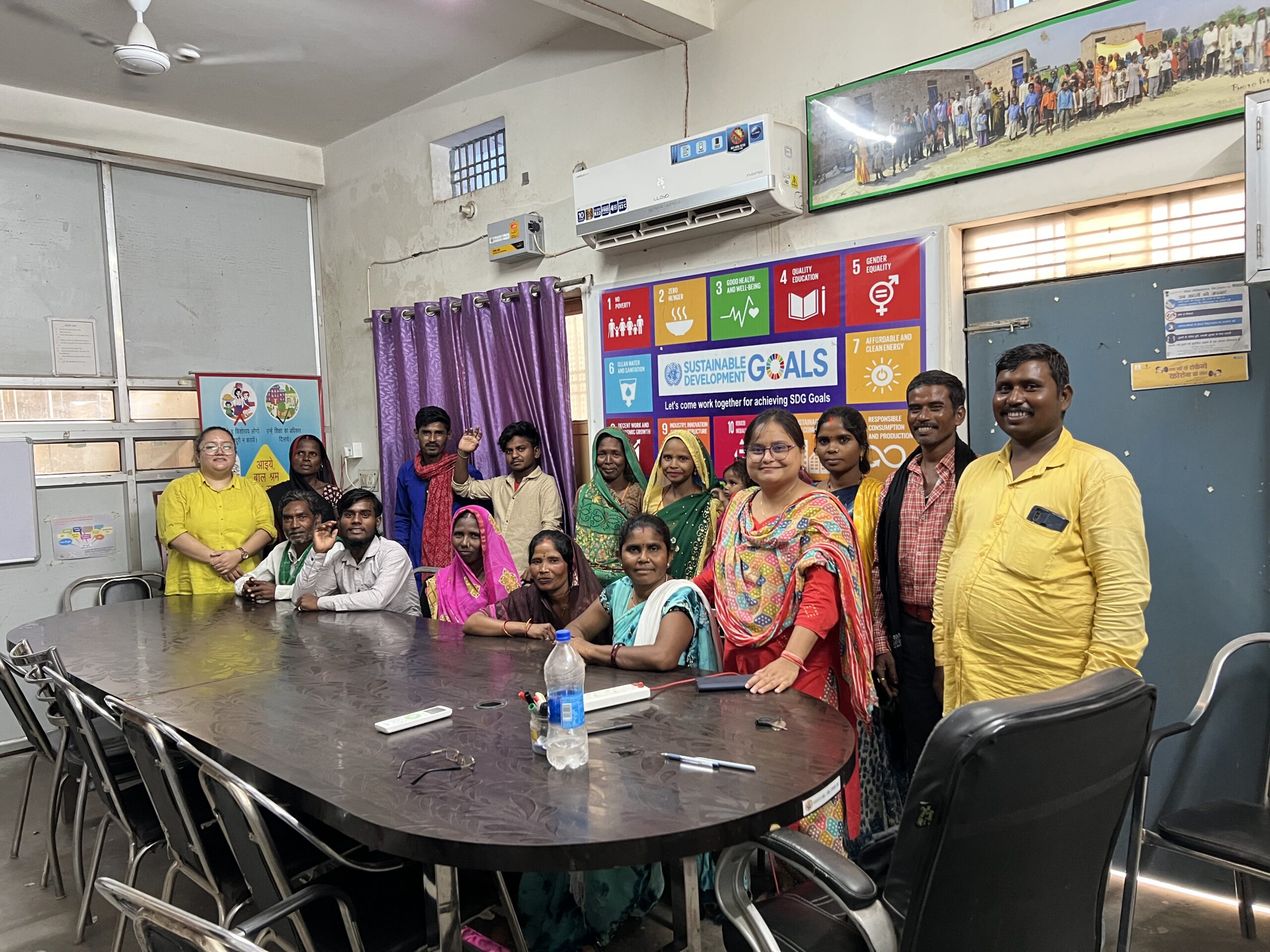

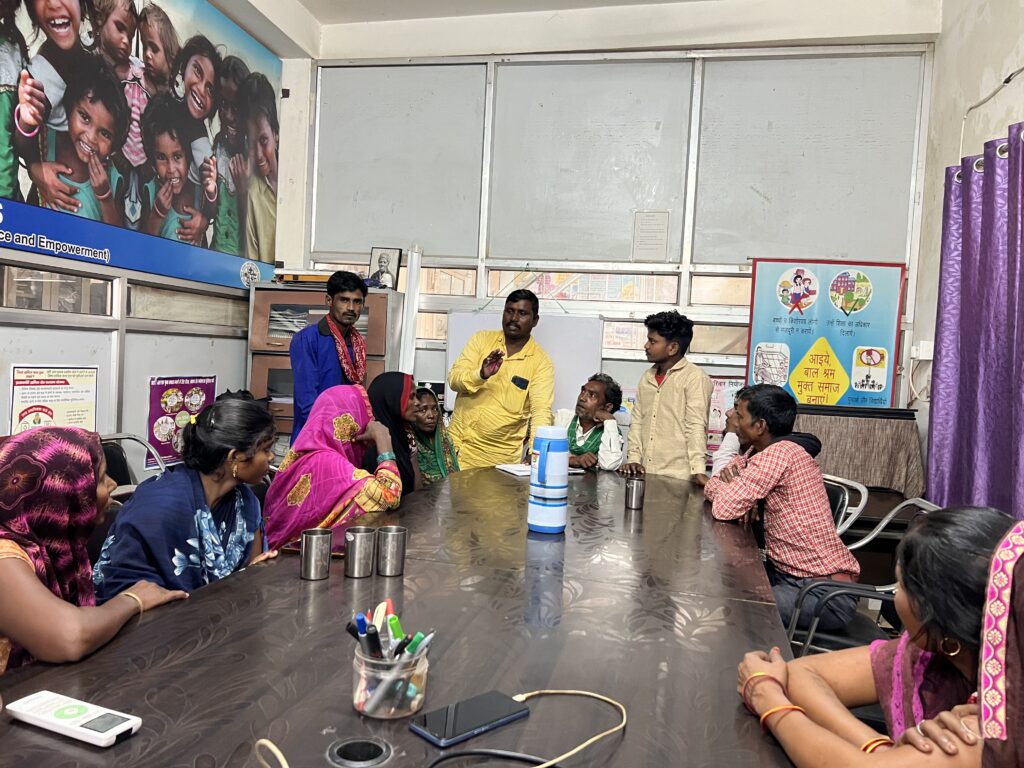
Buddhiram participating in a group presentation during a training.
When trained survivor leaders share what they learn with their neighbors, that knowledge stays in the community and is available when needed. In one village in Uttar Pradesh, India, it helped 15 workers recognize a familiar trap and refuse it.
A familiar offer
The labor contractor who arrived in a village in Bhadohi district, Uttar Pradesh, was no stranger. Several years earlier, he had recruited 15 members of the village’s Vanvasi community to work for him in Ratnagiri, in the western state of Maharashtra. For two years, they worked for him in exchange for food rations alone. Each time they asked about wages, he found a reason to delay. When the work ended, he brought them home without paying them, and that money has never been paid. Eighteen months later, he returned with a new offer: good work, full wages paid right away, and an advance of about 500 rupees for each worker, handed over on the spot. All they had to do was pack their things and leave with him.
Why the offer was hard to refuse
Most of the workers have had little or no chance to attend school. They support their families through daily wage labor and farm work, and that work comes and goes. In a good week there is a job; in a bad week there is nothing. Contractors and local landowners know how to use that uncertainty. They offer low pay and vague promises to people with few alternatives. Poverty, unreliable local work, and limited information about rights and safe migration create the conditions in which forced labor takes root. Under severe financial pressure, all 15 workers initially accepted the offer and agreed to go back.
Knowledge shared in the community
Dilip, one of the workers, had second thoughts. He had not forgotten the two years of unpaid labor. He also remembered a community meeting where Buddhiram, a survivor leader from the same village, had explained how to migrate safely and how to recognize the warning signs of forced labor. What he learned at that meeting helped him see the risk in the contractor’s offer, and he decided to seek advice before going anywhere. Buddhiram knows those warning signs from his own experience of forced labor and from training. He has completed survivor leader training twice through the Indian Community Prevention Project, a program of Free the Slaves (FTS) and our partner, Manav Sansadhan Evam Mahila Vikas Sansthan (MSEMVS). The training covered safe migration, workers’ rights, prevention of forced labor, and the importance of education. Since then, he has used his free time to visit communities, hold meetings with workers, and share what he has learned, so that others can recognize exploitation and know where to turn. Dilip walked the short distance to Buddhiram’s home and told him everything.
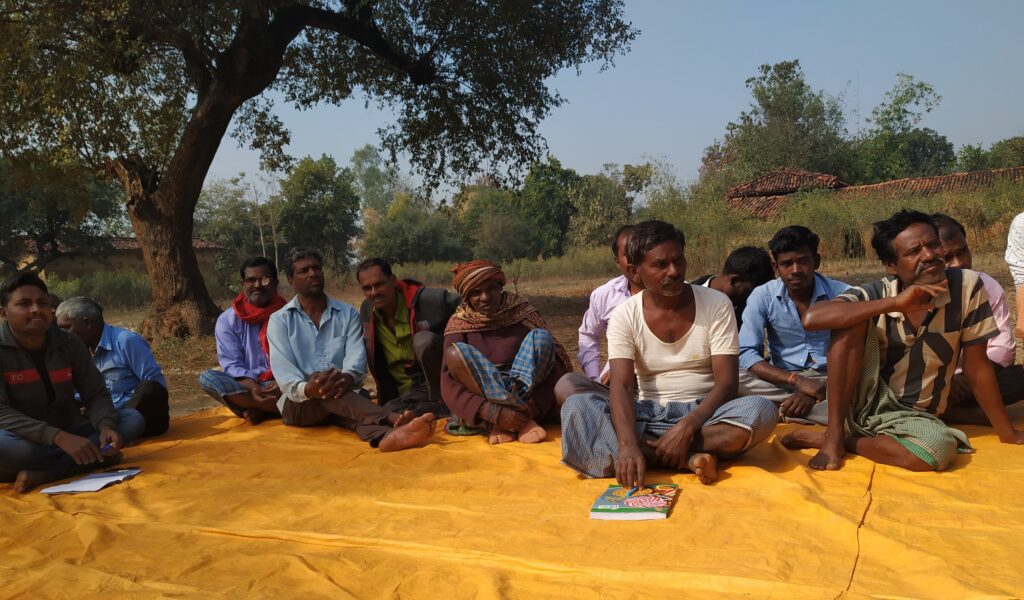
Community members participating in a training session in the community.
Asking the right questions
Buddhiram went back with Dilip to the settlement, where the contractor and the other workers were gathered. He put his training into practice and asked the contractor for the basic facts any worker should have before migrating for a job: what the work was and where, what housing and food the workers would have, and how much they would earn and when they would be paid.
The contractor dodged each one, then shifted to threats. If the workers did not leave with him immediately, he said, he would never help them again, and since he had already paid them, they had no choice. Buddhiram answered firmly that no one could be forced to go. As the argument grew heated, Buddhiram called Brijesh, a fellow survivor leader, for support. He also contacted the village head (gram pradhan) and the village employment assistant (rozgar sevak) and briefed them on what was happening. The village head made the position clear to the contractor: he could not pressure the workers to leave, and if he tried, the police would be called. The contractor demanded his advance back. The workers responded with one voice: pay the two years of wages you owe us first, and we will return your money. Facing a united group and a warning from the village head, the contractor walked away. All 15 workers stayed home.
How training reaches a whole community
This outcome shows how knowledge moves from one trained leader to an entire community. Buddhiram received the training and shared it at a community meeting. Dilip remembered it when it mattered and brought the problem to someone he trusted. Buddhiram then used the same knowledge to question the contractor, and he drew in a fellow survivor leader and local officials for support. At each step, someone recognized the signs of forced labor and acted on them.
Survivor leaders are well placed to carry this knowledge. They are trusted members of their communities, they recognize recruiters’ tactics because they have faced them, and they can explain risks and rights in ways their neighbors understand. When they pass on what they learn, the benefits of training reach far more people than the leaders themselves.
Prevention happens in communities
This time, the harm was stopped before it began. Because one worker recognized the warning signs and knew whom to ask, 15 workers who had already lost two years of wages kept their right to decide where and for whom they would work. The risks have not gone away. Local work remains unreliable, poverty remains severe, and the workers have yet to receive the two years of pay they are owed. Contractors may return with new offers. The more people in a community who can recognize the warning signs and know where to turn, the better prepared that community is to respond.
Through the Indian Community Prevention Project, FTS and MSEMVS train survivor leaders who carry their knowledge back to their own villages. Working alongside community members and local officials in Uttar Pradesh, they address the conditions that allow modern slavery to exist. The aim is for every worker to have the information and support needed to make safe choices about work and migration, and to claim the rights they already hold.