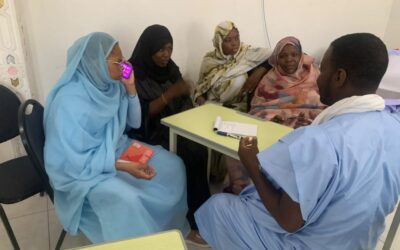
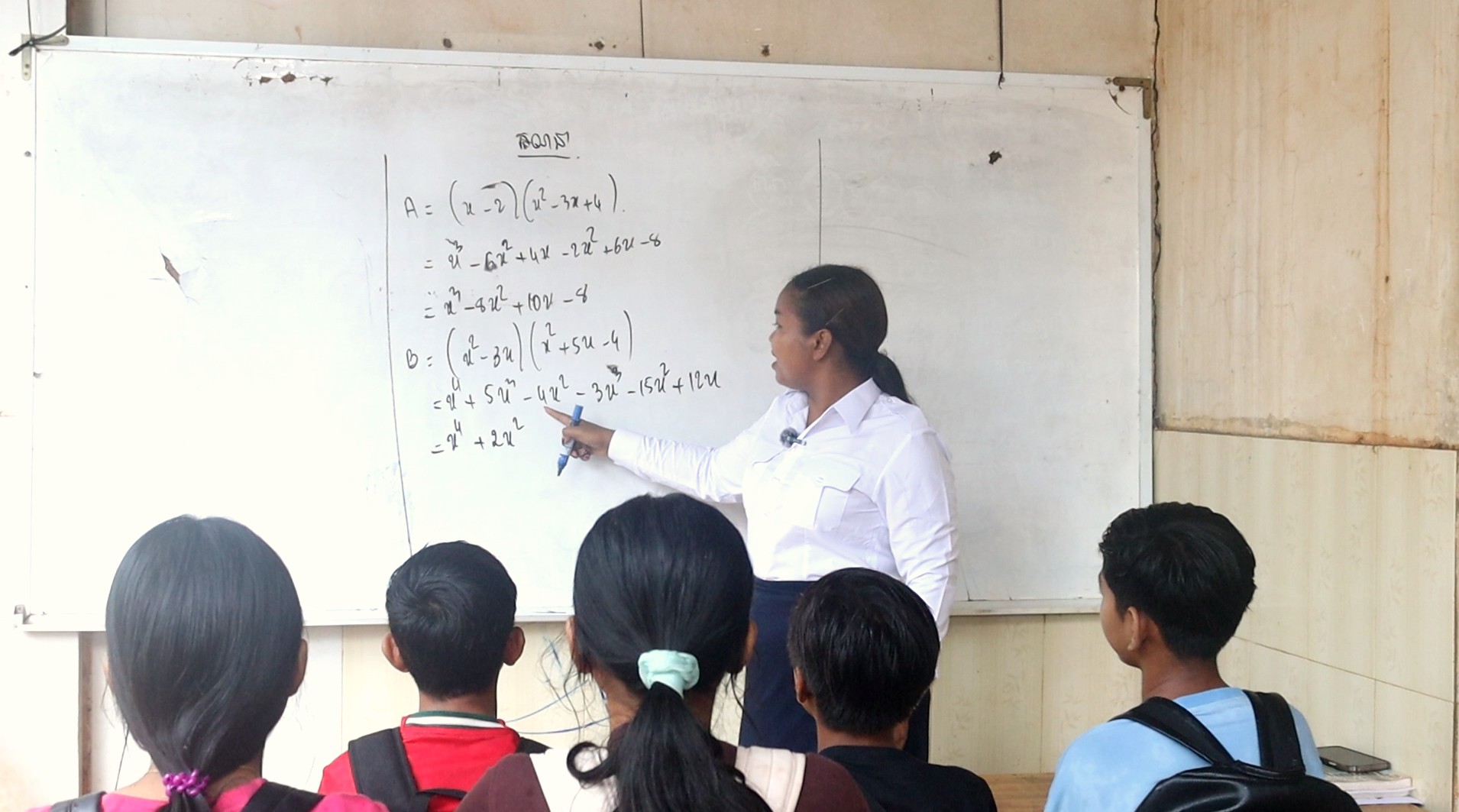

Sokhim leading a classroom session
What does it take for students to feel safe speaking up about abuse and exploitation? Through the Community Heroes Prevention Project, Free the Slaves (FTS), and Chab Dai Coalition are working with teachers in Cambodia to answer that question in their own schools.
One teacher’s experience in Tboung Khmum Province shows that knowing about risks is only the first step. Students also need a trusted, confidential way to be heard. Sokhim teaches mathematics at a high school in Tboung Khmum Province. Before becoming a Chab Dai Hero, her role focused primarily on teaching mathematics and providing private tutoring, and she had not previously been involved in child protection or awareness-raising activities. The school did not have a clear and confidential process for students to report concerns or seek support. This was particularly important because students could be reluctant to speak up when they were worried about retaliation or negative consequences from the person involved. With support from FTS, Chab Dai trained Sokhim on human trafficking, migration, and sexual abuse and exploitation. The training reflects FTS’s approach of strengthening local capacity, so that people who already hold trust in their communities can recognize risks and take appropriate action to keep children safe. After becoming a Chab Dai Hero, Sokhim began sharing what she learned with her own students and with the wider student body during school gatherings and official announcements. Her messages covered sexual abuse and exploitation, appropriate and inappropriate behavior, personal boundaries, and why it matters to speak up.
When students stayed silent
The need for a safe reporting process became clear when Sokhim learned of inappropriate physical contact between a male and a female student on school grounds. Other students had noticed the behavior. None had reported it, because they feared the male student might retaliate or harm them. Sokhim met with the two students to talk about their behavior and its possible consequences. She also contacted their parents so the families could continue to support and monitor the students outside school. Afterward, she observed that the behavior no longer occurred at school.
The incident left Sokhim with a larger question: why had the other students remained silent? Their reluctance showed that responding to one incident would not be enough. Students needed to know where to go with a concern about themselves or a peer, and they needed to feel safe doing so.
A confidential channel for every student
Sokhim supported the school in establishing an internal, confidential reporting mechanism. Students can use it to raise any behavior that makes them feel uncomfortable or unsafe, including concerns related to sexual abuse, exploitation, or trafficking. The mechanism reaches beyond the type of incident that prompted it. It gives the school a chance to identify and address concerns earlier, before a situation escalates, and it means a student no longer has to approach one teacher alone.
Sokhim describes how the training changed her confidence and her sense of her role:
“I have gained more confidence and courage to share what I have learned beyond what I normally teach in my mathematics classes. I now see how important it is for our school to have a clear procedure and reporting mechanism to protect students. I took every opportunity to share the key messages I learned from Chab Dai, including during school gatherings, because I saw that these messages were relevant and important for our students.”
What this means for prevention
Sokhim’s students recognized that the behavior was wrong, yet they had no trusted place to report it. In this school, the absence of a reporting channel was itself a protection gap.
For programs like the Community Heroes Prevention Project, the lesson is to connect awareness-raising with practical reporting and referral mechanisms. Children need the knowledge to recognize protection concerns and confidence that a safe way to report them exists. Teachers like Sokhim are well placed to help schools build both.
When local actors have training and support, schools can move from knowing about risks toward systems that identify and respond to them early. In Tboung Khmum, that shift started with a mathematics teacher who chose to share what she had learned.