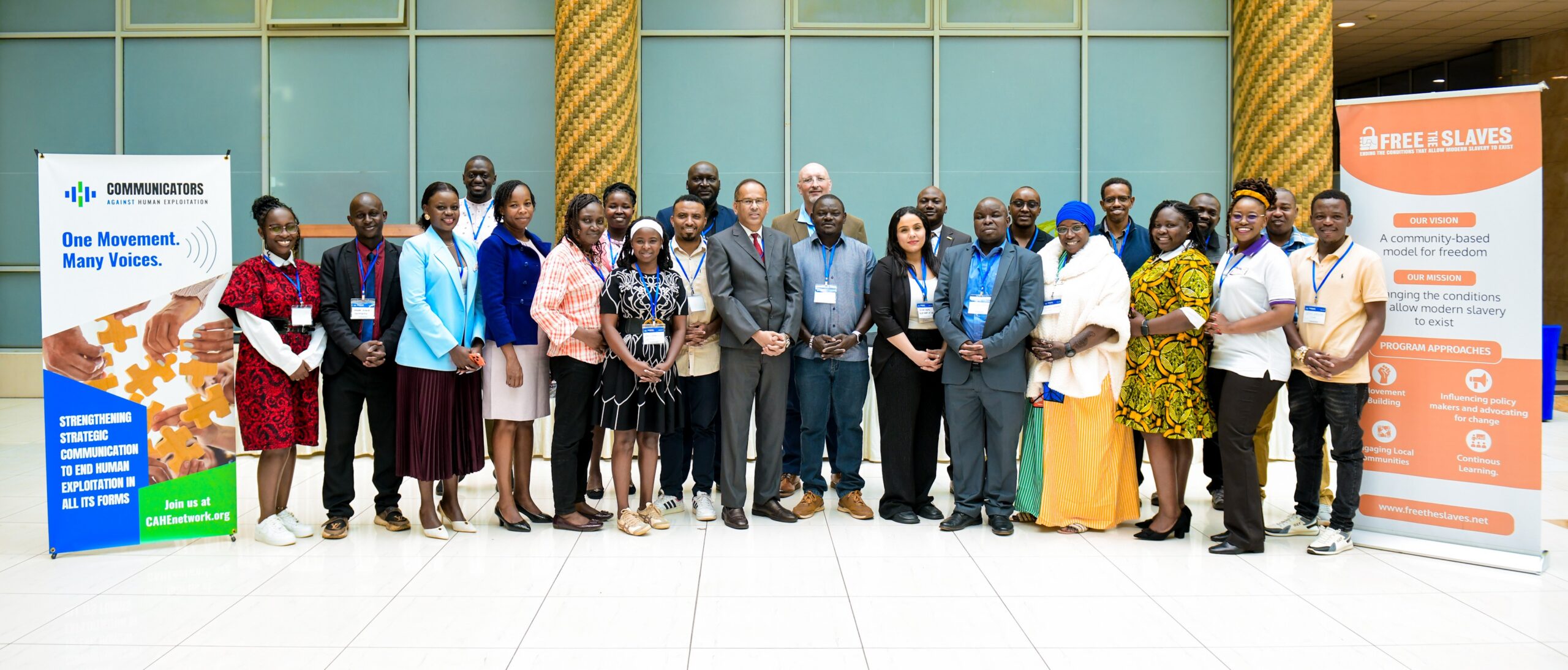

Free the Slaves (FTS) is supporting the development of Communicators Against Human Exploitation (CAHE), a new professional network for communicators working to end human trafficking, forced labor, and child labor. On October 7, 2026, CAHE held its first convening in Kenya, facilitated by FTS Director of Communications, Bryon Lippincott. The meeting, held at the Panari Hotel in Nairobi, brought together 24 people from government, media, civil society, survivor leadership, the private sector, and international organizations.
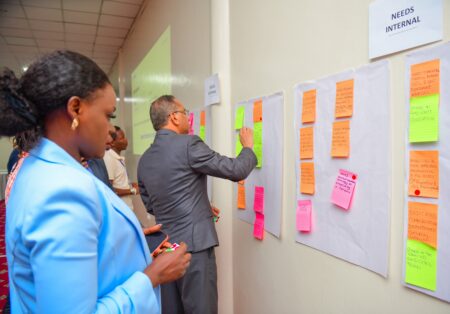
Participants taking part in the group activities.
Why a network
Public understanding of exploitation shapes the will to address the conditions that allow it to persist. In a difficult media and communication environment, that understanding depends on how well communicators work together. Communication on modern slavery is spread across government agencies, media houses, civil society organizations, and survivor-led groups, each with its own data, policies, and audiences. Communicators across these groups need more opportunities to collaborate, share knowledge with one another, build relationships, and share resources so they can communicate about exploitation more strategically.
What we learned
At the Nairobi convening, participants set out to map what each sector needs, what blocks progress, and what opportunities and resources exist to meet these challenges. They then produced action plans to drive collaboration and collective action.
Participants spent the morning in sector groups before working across sectors in the afternoon. The conversation was direct. Media participants described the pressures of competing for audience attention, finding funding for investigations, and staying safe while investigating trafficking and exploitation. Civil society organizations acknowledged that separate campaigns leave the public with a fragmented picture. The Ministry of Labour noted that staff transfers and bureaucracy make it hard to retain knowledge. The Office of the Director of Public Prosecutions offered its presence in all 47 counties as an opportunity to support information sharing and case reporting. Survivor leaders from Survivors Network Kenya positioned themselves as experts and facilitators. They named consent, confidentiality, dignity, and trust as the conditions for any communication involving people with lived experience.
The central message of the day was that communication about survivors should happen with survivors and under their leadership. Participants agreed that credible communication rests on four foundations: accurate, verified data; a strong network across sectors; ethical, trauma-informed reporting; and survivor leadership built in from the start.
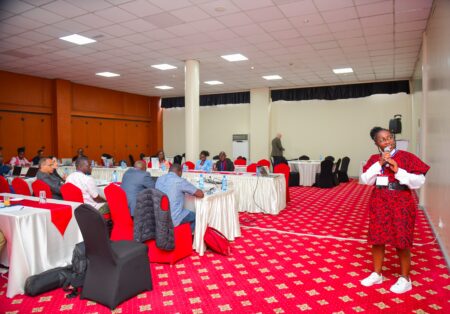
Presentation of group activities
Three action plans
In the afternoon, participants formed multi-sector groups to produce three action plans. Each plan has named leads and due dates for its first steps.
The first plan covers ethical reporting, media training, and support for survivor communicators.
The second plan will build evidence-based community awareness and safe migration campaigns. A survivor leader will steward this work, drawing on research, government case records, and the reach of partners already working in communities.The third plan will integrate training on human exploitation into the curricula for police, labor officers, children’s officers, immigration officers, and prosecutors. Representatives from the Ministry of Labour will steward this plan, and Survivors Network Kenya will shape the curricula and review them over time.
The workshop also produced commitments to shared training. Journalists offered to train other participants on ethical resourcing of journalists and on how to collaborate effectively with the media. Survivor leaders offered to train journalists on trauma-informed engagement with survivors and on how to involve survivors in research and reporting in ways that protect their privacy, dignity, and safety.
What happens next
In early November, a volunteer leadership committee for the Kenya working group will meet to follow up on implementation of the action plans. The committee will coordinate training activities to avoid duplication and make each training as effective as possible. Members will also review the needs, opportunities, and resources identified at the convening and discuss how the network will coordinate member activities in Kenya.
Communicators Against Human Exploitation is a global professional network open to communicators working to end human trafficking, forced labor, child labor, and related forms of exploitation. To learn more or to join, visit cahenetwork.org.
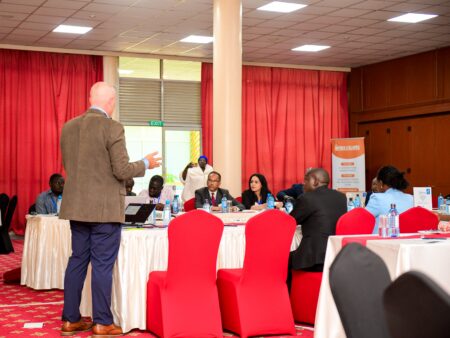
FTS Communications Director Bryon Lippincott leading the session