
The people most likely to notice when exploitation is happening in a cocoa community are often the ones no one thinks to train. They are the staff who visit farms, hold conversations with households, and observe working conditions firsthand. They are close to the problem, but without the right knowledge and tools, even the clearest warning signs can be difficult to read.
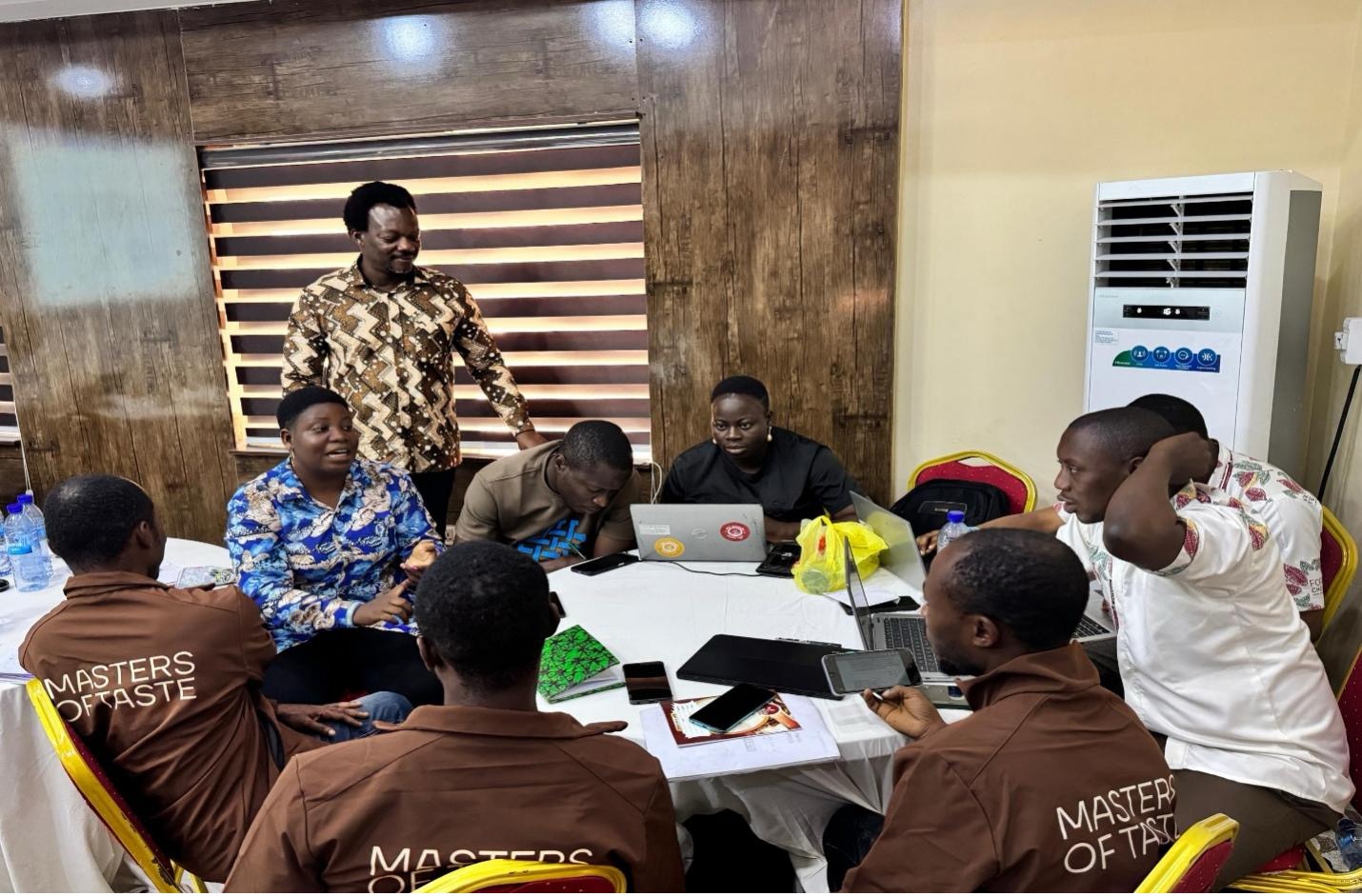
In November 2025, Free the Slaves partnered with a leading cocoa industry partner to address that gap directly. Over two days in Akure, Nigeria, FTS delivered an in-person training for 12 sustainability and community engagement staff, deepening their capacity to identify, respond to, and report suspected cases of human trafficking, forced labor, and related human rights violations in cocoa supply chains.
Building Knowledge Where It Matters
Modern slavery, forced labor, and child labor are not always visible. They are embedded in power dynamics, economic pressure, and social norms that can make exploitation look ordinary. For frontline staff who work directly in producing communities, developing a shared and accurate understanding of these issues is foundational to any meaningful response.
The training covered both the legal frameworks and the practical realities of human rights risks in cocoa supply chains. Participants explored international and national instruments that protect against trafficking and forced labor, including the Palermo Protocol. They examined the Act-Means-Purpose framework used to identify trafficking situations, learned about the worst forms of child labor and their relationship to child slavery, and reviewed high-risk sectors and trafficking typologies relevant to cocoa production. Sessions also covered grievance mechanisms and the concrete steps teams can take when they encounter a suspected case.
One of the most valuable aspects of the training was its responsiveness. When participants indicated they needed more on child labor and hands-on application, the facilitator adapted the curriculum in real time, adding dedicated content and practical exercises. That kind of participant-shaped learning reflects FTS’s belief that the people closest to a problem have knowledge that should inform the response.
What the Results Showed
Pre- and post-training assessments revealed meaningful progress. Most participants began the training with a working familiarity with human rights concepts, forced labor, child labor, and trafficking. Modern slavery, however, emerged as a notable knowledge gap. It is a concept that is frequently conflated with related terms but carries distinct legal and practical implications that matter for identification and response.
By the close of the two days, participants demonstrated consistently strong understanding across all core concepts, including grievance mechanisms. Equally important, they reported greater confidence in their ability to act on what they had learned, moving from awareness to readiness.
A Step in a Longer Journey
Translating knowledge into consistent field practice requires reinforcement, institutional support, and practical tools that staff can return to when they encounter uncertainty in real situations.
Recommended next steps include providing field job aids to help teams quickly identify risk indicators on the ground, scheduling focused refresher sessions on modern slavery definitions, and establishing internal benchmarks to track reporting quality and response timeliness over time.
This training in Akure is part of FTS’s broader engagement in cocoa supply chains across West and Central Africa, which includes community-led monitoring in Cameroon, case management system development, and supporting industry partners to align their human rights response protocols with emerging due diligence standards. The work is grounded in a core conviction: lasting protection does not come from policy alone. It is built when the people who work closest to vulnerable communities have the tools, knowledge, and support to act.
When that foundation is in place, the conditions that allow modern slavery to persist begin to erode.