
When I got the news, I rushed to the site with our local colleagues. I knew that this day would be especially important.
Labor Department authorities were raiding a brick kiln. Freedom was within reach for 27 adults and 24 children.
The raid was triggered by one courageous man, Ram ji (that’s him in the photo below on the right). He had escaped the kiln, and sought advice from a local community vigilance committee (CVC). Part of what a CVC does is to work like a neighborhood watch, keeping traffickers away and strengthening a village’s resistance to slavery.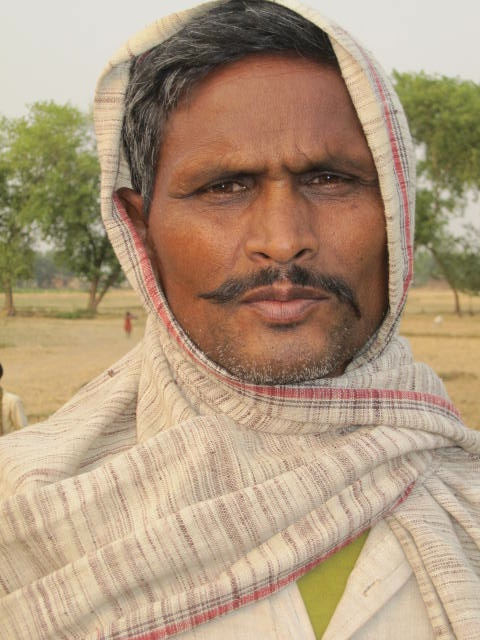
CVC members explained to Ram ji that everyone could break free from the kiln, if he would go back and prepare them for a rescue. Despite the danger, Ram ji said yes. And his risk paid off.
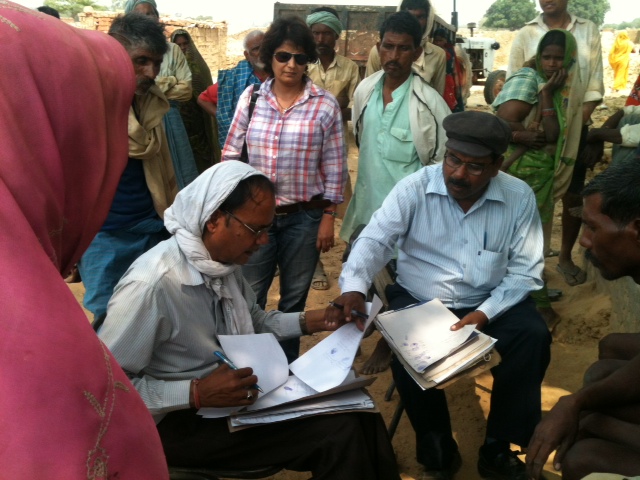
Freedom came on the hottest day of the season. At first the workers were scared, and when I arrived there was an unusual silence. Many girls and women were hiding in small huts; labor officials were unable to reassure them. When I told the workers that we could ensure their freedom and safety, they gradually began to share their appalling stories. We compelled the authorities to take the whole day to get a statement from everyone (photo below on the left).
 “We had been living under the threat of being thrown into the kiln furnace,” one of the women explained. This is what the brick kiln manager would say to them every day.
They had been lured from their village by small up-front payments and promises of good work, but when they arrived at the kiln they were told they were in debt. They were forced into two years of labor without wages. They were beaten almost every day.
As the rescue unfolded, rather than waiting at the kiln for a truck to bring them home, the men and women immediately headed up the road.
As I helped one man pick up his bundle of belongings, he laughed, saying, “I’m running to freedom!”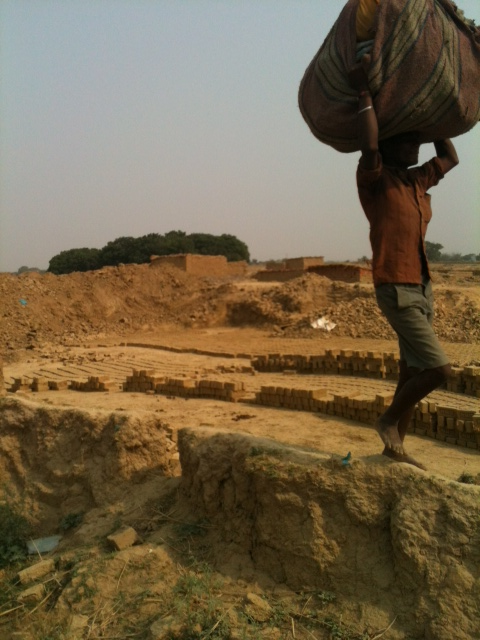 (That’s him in the photo on the right, literally running to freedom.) For a moment, I could feel what this was like: not wanting to lose the opportunity to run away from slavery.
The silence was broken by the excitement of the children who saw their parents rushing to get on the truck. We lifted the small children up inside. Finally the women began to smile.
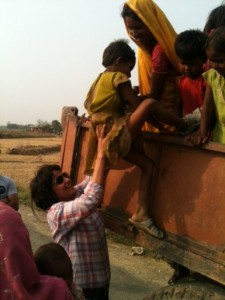 As I lifted those kids, I knew they would remember this day, and they would never get on another truck to be taken off to slavery.
We escorted the survivors back to their village, where they have now formed a joint savings group to protect each other from future illegal debts.
Many of the children are back in school and many of the adults now have paying jobs.
The brick kiln has been closed.
This story demonstrates not only the courage of one man, but the importance of community vigilance committees. Without them, the slave who initially escaped, Ram ji, would have had no one to turn to. Without the training that the CVC received from FTS and our local partner, MSEMVS, the villagers would not have known what to do. The brick kiln slaves would have remained hidden in slavery – like so many thousands of others in India.
Editor’s note: FTS has supported 10 similar raids on brick kilns in northern India during the past year. You can read more about our innovative and inspiring India projects on the FTS website.