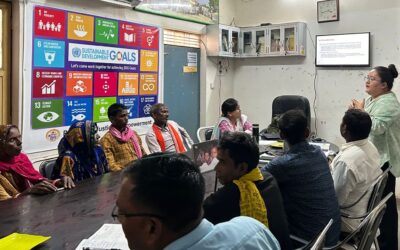


In an effort to address the challenges faced by migrant workers, Free the Slaves, in collaboration with Verité, has initiated the Fostering Fee Accountability and Cost Tracking (FFACT) project. Spanning from 2022 to 2024, this initiative aims to bring greater transparency and accountability to the recruitment of blue-collar workers in the Gulf Cooperation Council (GCC) countries.
The core of the FFACT project is its in-depth research into the complex fee structures that migrant workers often encounter when dealing with employment agencies and brokers. This research is crucial in developing tools and resources that help educate workers about their rights and provide a platform for advocating for fairer and more transparent fee systems.
The insights from this research are invaluable, offering civil society organizations, unions, and various stakeholders the information they need to advocate effectively. The goal is to create policies and practices that protect workers from excessive fees and exploitative recruitment practices.
An important aspect of the FFACT project is the emphasis on empowering stakeholders to track and monitor fees, promoting fair practices within the industry. This initiative is about more than just advocacy; it’s about enabling meaningful change at the grassroots level.
One of the key outputs of the FFACT project will be the publication of detailed data and reports, shedding light on the transactions between workers, employers, government entities, employment agencies, and brokers. This information is crucial for raising awareness about the issues in the recruitment process and holding those responsible accountable.
The FFACT project’s significance lies in its potential to improve the working conditions and treatment of blue-collar workers migrating to GCC countries. By focusing on fee transparency and fair recruitment practices, the project aspires to create a more equitable environment for these workers.
Free the Slaves and Verité’s collaborative efforts through the FFACT project symbolize a commitment to treating migrant workers not just as laborers, but as individuals deserving of respect and fair treatment. As this project progresses, it stands as a promising step towards a more equitable future for workers globally.
Through collective efforts and shared dedication, the FFACT project aims to make a real difference in the lives of migrant workers, advocating for a world where fairness and dignity are not just ideals, but realities.
Funding for this project is provided by the United States Department of State under Grant Agreement number S-LMAQM-17-GR-1045. The Promoting Worker Rights in the India-Gulf Migration Corridor Project is being led by Verité. This material does not necessarily reflect the views or policies of the United States Department of State.