
In the recently released 2024 US Department of State Trafficking in Persons (TIP) Report by the Office to Monitor and Combat Trafficking in Persons (JTIP), India has been placed on Tier 2. This designation indicates that while the Indian government is making significant efforts to address trafficking, it still does not fully meet the minimum standards for the elimination of trafficking. For the first time, the 2024 TIP Report has explicitly highlighted an issue that Free the Slaves (FTS) is addressing through our projects in India.
India, with one of the largest emigrant populations globally, faces significant challenges in protecting its migrant workers from exploitation. Traffickers, often known and trusted by their victims, exploit the vulnerabilities of male and female migrant workers seeking economic opportunities abroad. Despite increasing forced labor import bans and other Human Rights Due Diligence legislation directed at companies and brands to demonstrate ethical recruitment principles, it remains the norm for employers demanding a low-cost labor supply chain to place workers in a position of vulnerability to exploitation from the very earliest stages of their recruitment. Employers must be held accountable for allowing exploitive recruitment practices to occur unchecked.
Many Indian migrants who seek employment abroad are forced into construction, domestic work, factories, and other low-skilled sectors in regions like the Gulf countries or Malaysia. This often follows recruitment during which migrants face fraud and exorbitant recruitment fees associated with high risks of debt bondage. Indian migrant workers, in Gulf countries report exploitation, particularly as a result of recruitment deception and recruitment debt, as well as non-payment of wages, contract violations, and physical abuse. Some women are exploited in sex trafficking while migrating for employment.
Labor traffickers are known to bring Indian workers overseas on tourist visas and then withhold their identity documents and wages, forcing them to work, especially in dangerous conditions such as construction or domestic service. The government of India partially prohibited worker-paid recruitment fees but permitted licensed foreign employment recruiters to charge migrant workers up to 30,000 INR ($360) for documentation fees and related costs. However, interviews conducted in 2023 show that unregistered sub-agents often charge migrant workers more than double the maximum.
The 2024 TIP Report includes a specific recommendation that aligns with FTS’s efforts on consistently enforcing strong regulations and oversight of labor recruitment companies and employers, including by eliminating recruitment fees charged to migrant workers and holding fraudulent labor recruiters and the companies that employ their services criminally accountable.
Free the Slaves has been proactive in addressing the issues highlighted in the 2024 TIP Report. Our focus has been on reducing the vulnerabilities of low-waged migrant workers, who underpin much of the global economy and are particularly susceptible to serious exploitation, including debt bondage and forced labor.
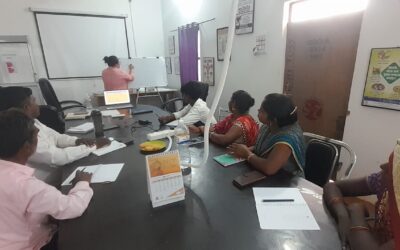
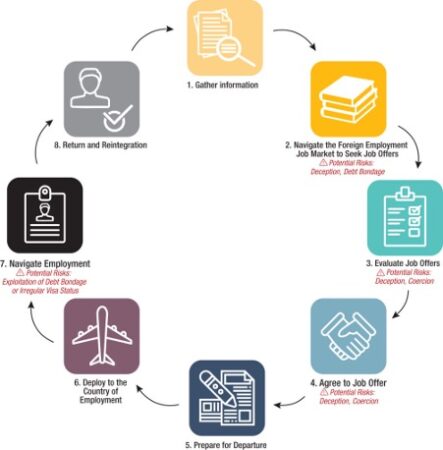
Our recent collaborative project, Promoting Worker Rights in the India-Gulf Migration Corridor, produced and trained hundreds of migrant and potential migrant workers using SAFE TIPS Handbooks. These handbooks guide workers through each step in labor migration, emphasizing strategies for navigating risks of forced labor indicators during their journey. Created in collaboration with Verité and local partners in India, Manav Sansadhan Evan Mahila Vikas Sansthan, the handbooks are tailored for workers and their advocates to promote more informed migration decisions and actions.
Another project, The Fostering Fee Accountability and Cost Tracking (FFACT), focuses on workers in the India-GCC corridors, who are especially vulnerable to debt from high recruitment fees and related costs. The project supports migrant workers’ communities in addressing labor exploitation by leveraging the power of worker-led organizations.
Since 2020, the Promoting Worker Rights in the India-Gulf Migration Corridor and subsequently the FFACT project have engaged civil society and workers’ organizations in the India-GCC recruitment corridors. The project partners have field-tested worker-centered, digital methods to collect recruitment cost data. With this data, the FFACT project promotes data-driven, cross-sectoral interventions to address the debt-related exploitation of migrant workers. Our efforts are documented in the report “What do workers pay?“, which provides an in-depth look at the recruitment costs faced by workers. This report is a crucial resource for understanding and addressing the financial burdens placed on migrant workers which leave them vulnerable to other exploitation.
The 2024 TIP Report’s specific mention of issues FTS and its partners are addressing is a significant recognition of our efforts. By continuing to focus on worker rights, transparent recruitment processes, and accountability for labor recruiters, FTS aims to create a safer and more just environment for migrant workers. Our collaborations with Verité, including the Promoting Worker Rights in the India-Gulf Migration Corridor and the FFACT project, funded by the US Department of State’s Bureau of Democracy Human Rights and Labor, are crucial steps toward achieving these goals and ensuring that the vulnerabilities of migrant workers are systematically addressed and mitigated.
Co-Authored By:
Kuldeep Singh Chauhan
Regional Director for Asia
Free the Slaves
Sarah Lince, Senior Program Manager, Verité