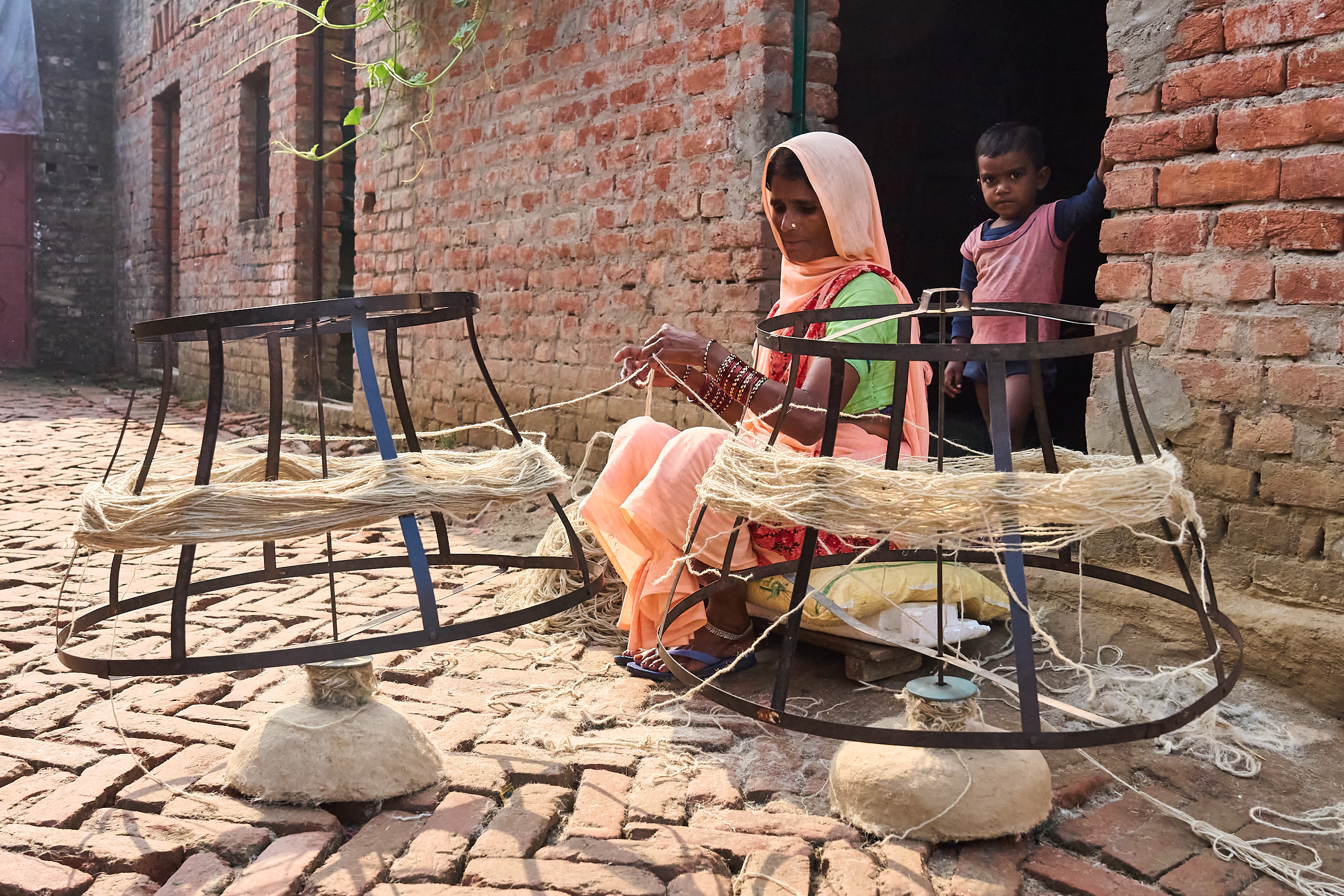

Meena, an Accredited Social Health Activist (ASHA), lives in a peaceful rural village near Varanasi in Uttar Pradesh. The Hindi word “ASHA” means “hope,” making it the perfect title for an individual whose dedication to the well-being of her community extends far beyond the scope of her official responsibilities. As part of the National Rural Health Mission, Meena facilitates communication between her community and the healthcare system while also educating the villagers about health and healthcare services.
By complete coincidence, a community volunteer from FTS Partner, Manav Sansadhan Evam Mahila Vikas Sansthan (MSEMVS) put Meena in touch with the Fostering Fee Accountability and Cost Tracking (FFACT) project. Her own experiences were reflected in the project’s emphasis on combating exploitation in international migration, which deeply resonated with her. Much like other people who had gone to the Gulf countries in search of employment, her husband had fallen victim to the predatory tactics of brokers who demanded fees that were far higher than what was allowed by law.
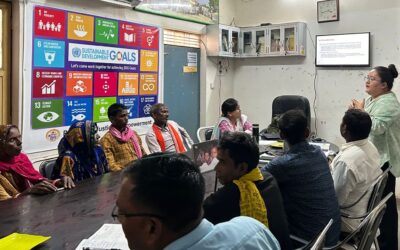
Meena was compelled to explore the FFACT project and its initiatives, like SAFE TIPs and the creation of village-level Migration Vigilance Committees (MVC), after this revelation sparked an interest in her. She joined her village’s MVC with enthusiasm, drawing on her own experience of exploitation. She had one clear goal: to protect her community from the deceitful promises of brokers who take advantage of people by withholding important employment details, charging exorbitant fees, and providing loans at ridiculous interest rates.
Meena is devoted to the MVC, going to meetings and spreading the word about SAFE TIPs, even though she is employed full-time by the government as an ASHA. Her dedication to the well-being of her community is evident as she wears her signature pink saree, the attire of an ASHA.
Meena’s unique position provides her with access to every household in the village, a privilege she leverages to collaborate with the MVC in tracking individuals considering or currently working overseas. Her goal is to arm her community with the knowledge to safely navigate migration, avoiding the pitfalls of exploitation.
Meena dreams of a day when her husband and the other villagers can leave the village in search of better opportunities overseas, free from the clutches of debt and exploitation. The fact that she continues to work tirelessly while also volunteering shows how seriously she takes the cause of helping her community have a more informed and secure migration process.
Meena’s story exemplifies how individual struggles can inspire collective action for betterment. Her tenacity, resolve, and altruism illuminate the path toward a more fair and equitable society, liberated from the specters of exploitation in migration.
Funding for this project is provided by the United States Department of State under Grant Agreement number S-LMAQM-17-GR-1045. The Promoting Worker Rights in the India-Gulf Migration Corridor Project is being led by Verité. This material does not necessarily reflect the views or policies of the United States Department of State.