
In the gold-mining regions of Kédougou and Saraya in Southeastern Senegal, the convergence of migration, poverty, and weak legal oversight has created conditions in which women and girls, particularly young Nigerian migrant women, face serious risk of sex trafficking. Lured across borders by false promises of jobs in catering, hairdressing, or domestic work, many find themselves trapped and compelled to provide sexual services to repay fabricated travel debts. Threats, isolation, document confiscation, and the fear of cultural stigma make escape difficult. For those who do access help, the path home carries its own risks: women returning to Nigeria often face family rejection, economic insecurity, and heightened vulnerability to re-trafficking. These challenges are compounded by structural gaps, including limited shelter capacity, insufficient trauma-informed services, and weak coordination between Senegalese and Nigerian authorities. Free the Slaves (FTS) is working to address these gaps through a bi-national initiative implemented in partnership with La Lumière in Senegal and Emmanuel World Children Foundation (EWCF) in Nigeria, coordinated under Senegal’s national mechanism on human trafficking. The project builds on a three-year intervention that supported 211 survivors of trafficking in the same region. This current initiative deepens that foundation through a survivor-informed approach that integrates direct services, community-led prevention, and sustained systems strengthening across both countries. At the heart of the project is a coordinated protection pathway. Community Vigilance Committees (CVCs) in Kédougou and Saraya provide frontline capacity for early identification and referral. Survivors are connected to shelter, medical care, psychosocial support, and legal assistance at La Lumière. Voluntary repatriation and reintegration, coordinated by FTS and EWCF, includes family tracing, safe transportation, and access to vocational training and education. The initiative also establishes survivor networks to foster peer support and survivor leadership, and builds the capacity of local authorities, service providers, and CVC members to sustain these responses over time. Glory’s* story reflects what this work looks like in practice. * Her name has been changed to protect her privacy. Glory’s Story At 28, Glory embodies resilience, courage, and hope. Originally from Benin City, Nigeria, she is now a committed survivor leader working alongside young women who have experienced exploitation in the Kédougou region of Senegal. Born into a family of pastors, Glory grew up in a stable environment surrounded by her parents and siblings. Passionate about healthcare, she pursued higher education in the field after earning her high school diploma and had already begun her professional career at a pharmacy. Her ambition was clear: to continue her studies abroad and become a qualified healthcare professional. It was in this context that she met a man who promised her an exceptional opportunity: to travel to Canada to continue her education. Certain she could make her dream a reality, Glory accepted the offer without realizing that she was being targeted by a human trafficking network. Her journey took place in stages. She left Nigeria and passed through Benin, where she was given a false identity document, then through Togo, Burkina Faso, and Mali before arriving in Senegal. At each border crossing, she was handed over to a new intermediary responsible for taking her to the next destination. After passing through several countries, she arrived in the village of Mourang, in the Saraya department of Senegal. That’s when her dream came crashing down. Upon her arrival, a woman she did not know informed her that she would have to provide sexual services to pay off an alleged debt of 1.5 million CFA francs. Shocked, Glory flatly refused. Despite the threats, intimidation, and psychological pressure brought to bear against her, she stood firm in her decision.
“I didn’t understand what was happening to me. I had come here to study. I never would have imagined finding myself in this situation.”
After two weeks in captivity, her situation took a decisive turn. Acting on reports from members of the Community Vigilance Committees (CVCs) established as part of the project supported by Free the Slaves, Adjutant Faye and security forces conducted an operation in the village of Mourang. Glory and five other women were freed and transferred to the La Lumière shelter, a partner of FTS. The trafficker was arrested and later sentenced to two years in prison for human trafficking. At the shelter, Glory was provided with safe housing and immediate protection. A few months later, FTS, in collaboration with the La Lumière Center, organized the survivors’ voluntary return to Nigeria. The five other survivors chose to return to their families in Nigeria. Glory, however, made a different decision. Deeply affected by her experience, she did not feel ready to return home. She feared the judgment of those around her, social rejection, and the psychological impact of what she had been through. She chose to remain in Senegal and rebuild her life. Determined to regain her independence, she looked for work in healthcare facilities in Kédougou. Despite her qualifications, she encountered a significant obstacle: the language barrier, as she did not yet speak French. Without a stable income, Glory refused to give up. She put her hairdressing skills to use, braiding hair for women in the Nigerian community living in Kédougou. Little by little, she saved those earnings and invested them in a small business selling Nigerian food products as a street vendor. Today, thanks to her efforts, she has left the shelter and lives in a modest rented room in Kédougou. Although her financial situation remains precarious, she is working to regain control of her life. But what makes Glory’s journey particularly remarkable goes far beyond her personal recovery. Since leaving the center, she has continued to return regularly as a volunteer to support new survivors. She listens to them, offers advice, and helps them navigate their daily lives. For many of them, Glory is a trusted figure, an older sister who understands their pain because she has lived it herself. Recently, she played a key role in supporting a pregnant survivor staying at the center, accompanying her to medical appointments and ensuring she followed her dietary recommendations.
“I want to help the other girls understand that there is life after what we’ve been through.”
Her commitment reflects the importance of FTS’s approach, which centers survivor leadership. By supporting people with lived experience to take active roles in protection and outreach, this approach strengthens sustainable reintegration and helps build more effective community protection mechanisms. Today, Glory hopes to open her own shop specializing in Nigerian food products in Kédougou. She is convinced that this venture will allow her to strengthen her financial independence and continue her work with survivors. Her journey also highlights the importance of the prevention, identification, protection, and reintegration measures implemented by FTS and its local partners. From a young woman targeted by a human trafficking network to a survivor dedicated to supporting others, Glory’s path reflects what becomes possible when community protection systems, local partnerships, and survivor leadership work in concert. Looking Ahead As part of its future initiatives, Free the Slaves plans to support Glory’s economic reintegration and capacity development. Her experience, credibility among survivors, and commitment make her a strong candidate to help build a network of survivor leaders capable of contributing to awareness-raising, prevention, and anti-trafficking efforts in Senegal’s gold-mining regions. Glory’s story is a reminder that success in this work extends beyond identification and immediate protection. It lies in survivors’ ability to reclaim their autonomy, rebuild their lives on their own terms, and, for some, channel their experience into meaningful action for others.
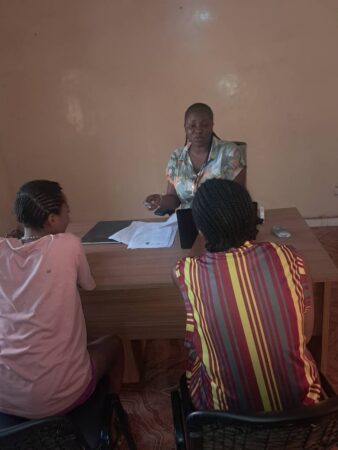
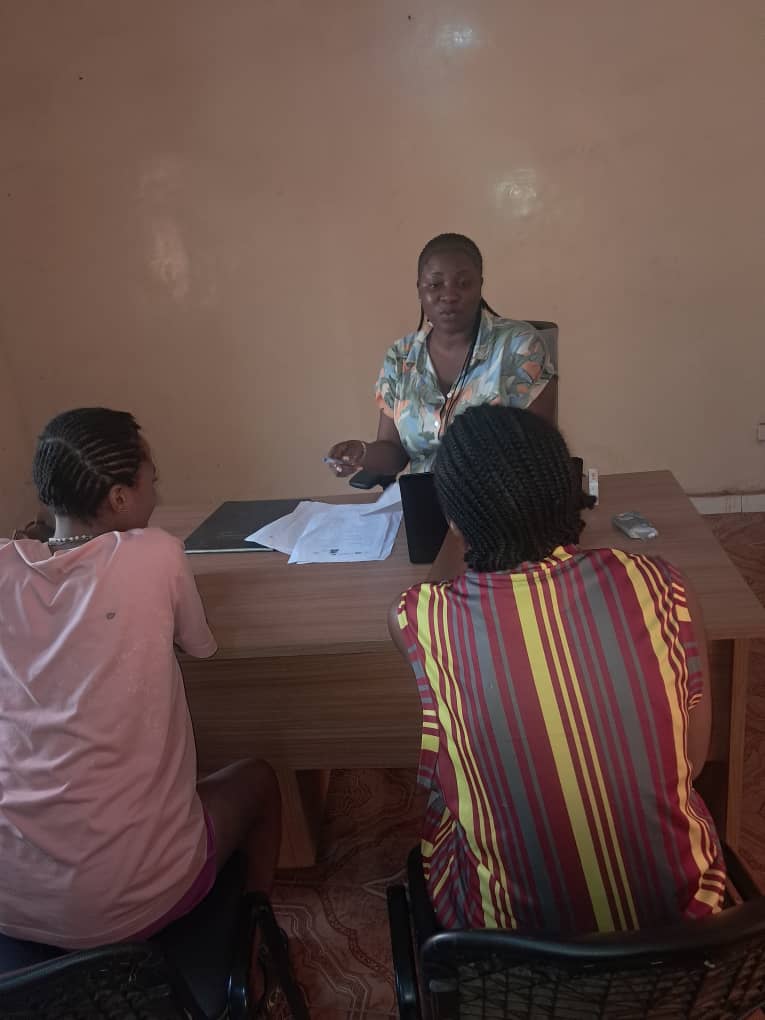
FTS Project Manager for Senegal Sokhna Fatou Cissokho meeting with survivors during a visit to project sites in Kédougou, Senegal.
Support This Work The protection pathway that reached Glory, from community vigilance to shelter care to survivor-led peer support, depends on sustained investment. Your support helps Free the Slaves and its partners maintain the infrastructure that makes identification, protection, and dignified reintegration possible for women and girls in Senegal and beyond.
To support this work, visit freetheslaves.net/donate or share Glory’s story to help more people understand what community-led, survivor-centered protection looks like when it works.