
Free the Slaves, along with the Alliance Against Trafficking of Women and Children in Nepal (AATWIN) and the Shanti Foundation, have worked on putting together a fact sheet on ‘Modern Slavery in Nepal’ for easy and handy availability of information on modern slavery. The fact sheet comprises information about how Nepal defines modern slavery, the types of modern slavery in Nepal, efforts of the government to address modern slavery, and how Nepal is doing as a pathfinder country of Alliance 8.7.
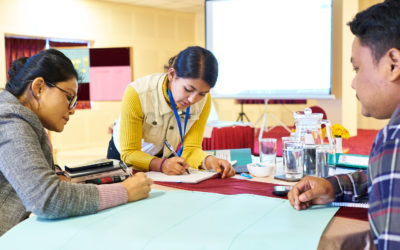
On May 31st, 2024, Free the Slaves, in collaboration with the Alliance Against Trafficking of Women and Children in Nepal and the Shanti Foundation, organized a webinar to officially launch the fact sheet. The webinar was a panel-style roundtable featuring speakers from ILO, Nepal, AATWIN, Free the Slaves, and USAID, Humro Saman to help better understand how the private and public sector can help each other achieve goals in disrupting and preventing modern slavery and human trafficking. More than 35 participants from the government, CSOs and public sector joined in the webinar.
Ms. Kranti Tamang from the Shanti Foundation kicked off the session with an Introduction and Overview of modern slavery in Nepal. Ms. Tamang outlined the current state of modern slavery in Nepal and highlighted ways in which the public and private sectors help each other address modern slavery. Ms. Benu Maya Gurung from AATWIN shared about the work of AATWIN in Nepal and how AATWIN plays very crucial roles in committees and planning groups with the government of Nepal for advocating for the rights of the victims and survivors of modern slavery. Ms. Benu also flagged various efforts by the government of Nepal in recent years in order to address modern slavery in the country such as amending existing laws as per new facts in cases of modern slavery, efforts to focus on the male victims of modern slavery and human trafficking, etc.,. Mr. Ram Charmakar from ILO presented about the work of ILO in Nepal and ILO’s focus on addressing forced labour in the country. Towards the end of the webinar, Mr. Tanka Aryal from Hamro Samman Project of USAID shared about various efforts under Humro Samman 1 and currently ongoing Hamro Samman II for addressing modern slavery in Nepal. Mr. Aryal highlighted that Nepal is also one of the countries witnessing the worst forms of modern slavery such as bonded labour, child labour and sex trafficking.
The Webinar was wrapped up with Mr. Kuldeep Singh Chauhan sharing about the work of Free the Slaves on international migration from India to the Gulf corridor and highlighting that Nepal has also been observing a dramatic increase in migrant workers migrating abroad for work. Mr. Kuldeep highlighted that the tools and techniques used in the project in India were found to be very effective in raising awareness among migrant workers for migrating safely and encouraged participating organizations to look into possibilities of collaborating with FTS, so that the migrants from Nepal and also be benefitted from the learnings of the projects in India.
Ms. Tsering Diskit from FTS wrapped up the session by launching the fact sheet.
Click on the factsheet to view the full document.
Factsheet cover