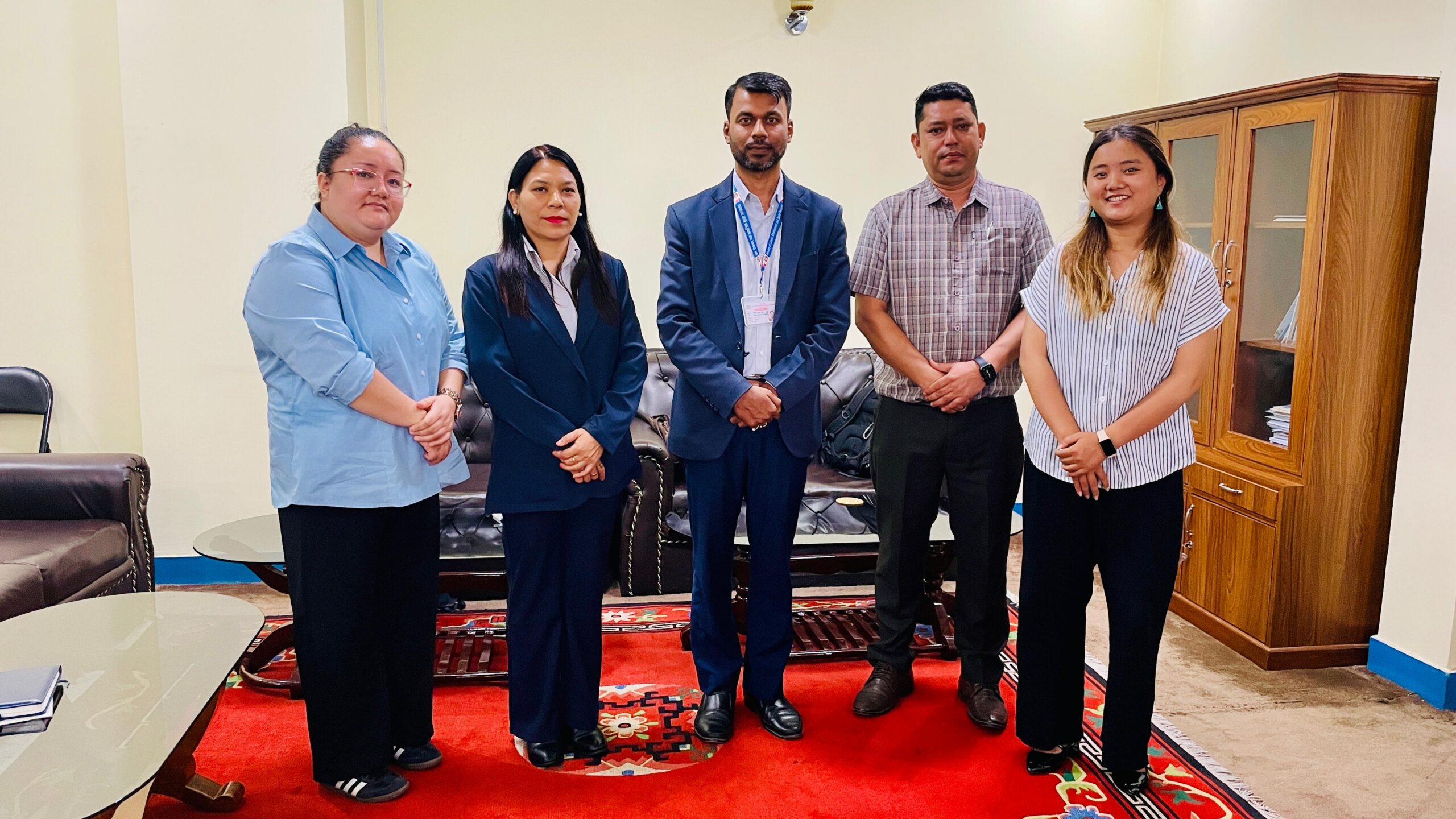

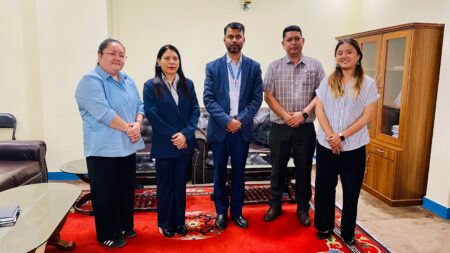
On July 30, 2026, Free the Slaves (FTS) met with leadership at the Ministry of Youth, Labor and Employment (MoYLE) in Kathmandu, the first stop in a week of stakeholder engagement in Nepal as part of the Alliance 8.7 pathfinder initiative. Alliance 8.7 is the global partnership working to end forced labor, human trafficking, child labor, and modern slavery in line with UN Sustainable Development Goal target 8.7, and Nepal’s designation as a pathfinder country places it at the forefront of this effort.
The meeting was convened to lay the groundwork for a strategic stakeholder workshop that FTS is organizing this coming September. The workshop’s objective is to support MoYLE in strengthening coordination among key partners, identifying required areas of support, and tracking progress toward the goals outlined in Nepal’s National Roadmap under the Alliance 8.7 framework.
Four Areas of Focus
Discussions with the Ministry centered on four proposed focus areas, each designed to ensure the upcoming workshop reflects institutional priorities and builds on work already underway.
Workshop objectives. FTS shared the proposed agenda and framework for the workshop to be conducted in September, seeking the Ministry’s feedback to ensure the event is shaped collaboratively rather than presented as a finished plan.
Ministry priorities. The team discussed how FTS’s programming aligns with MoYLE’s current strategic priorities under Alliance 8.7, reinforcing a shared sense of direction between the Ministry and its partners.
Timeline coordination. Participants reviewed tentative dates in August and September to accommodate the calendars of the Joint Secretary and the Secretary, ensuring that senior leadership could participate in the workshop.
Stakeholder engagement. FTS briefed the Ministry on its ongoing data validation work with local civil society networks, reinforcing the evidence base that will inform the workshop’s discussions.
Priority Needs Raised by the Ministry
Beyond the four focus areas, the Under Secretary raised two priority needs that will directly shape the design of the upcoming workshop. First, the Ministry highlighted a need for capacity-building support for stakeholders at the provincial level, where implementation of the National Roadmap depends on local officials having the skills and tools to carry it forward. FTS assured the Ministry that it will conduct capacity-building trainings in these provincial areas as part of its ongoing support.
This provincial focus reflects a broader reality of Nepal’s federal structure: national commitments under Alliance 8.7 can only translate into protection on the ground if the officials responsible for implementation at the provincial and local levels have the training, tools, and confidence to act on them. The Under Secretary noted that many provincial stakeholders are eager to engage but currently lack consistent guidance on how national policy translates into local practice. FTS’s planned trainings are intended to close that gap, equipping provincial officials to identify, respond to, and refer cases of forced labor and trafficking in line with national standards.
Second, the Ministry described ongoing challenges with data collection, tracking, and management, and asked for FTS’s support in strengthening these systems. Officials noted that inconsistent data practices across provinces make it difficult to build a reliable, national picture of trends in modern slavery, which in turn complicates efforts to target resources and measure progress against the National Roadmap.
FTS and the Ministry discussed this as an area where FTS’s existing data validation work with local civil society networks could be extended to directly support MoYLE’s own systems, rather than operating as a parallel process. Strengthening consistent data collection and tracking mechanisms would allow the Ministry to monitor progress more effectively, coordinate more efficiently with provincial offices, and report more confidently against Alliance 8.7 indicators.
These two needs, capacity building at the provincial level and stronger data systems, reinforce the importance of the workshop FTS is planning to organize for all stakeholders. The workshop is intended to bridge gaps among stakeholders and strengthen collaboration in the response to modern slavery in Nepal, ensuring that the concerns raised directly by the Ministry are reflected in how the workshop is designed and in who is brought into the room.
Setting the Tone for the Week Ahead
This meeting set a collaborative tone for the engagements that followed. By grounding the visit in a direct conversation with government leadership first, FTS ensured that the civil society and survivor-led discussions held the following day were informed by an understanding of the Ministry’s priorities and institutional realities, reflecting FTS’s broader commitment to coordinating action across every level of the system, from ministries to communities.