
The director of Manav Sansadhan Evam Mahila Vikas Sansthan (MSEMVS) in India, Bhanuja Sharan Lal, Ph.D., has been honored this morning by the U.S. State Department as a global anti-slavery hero in the 2014 Trafficking in Persons report.
His team of more than 75 front line anti-slavery activists has been progressively dismantling entrenched systems of slavery at brick kilns, farms and quarries in the states of Uttar Pradesh and Bihar. They have transformed hundreds of communities into no-go zones for traffickers, fully eradicating slavery in more than 130 villages. The group’s name in English means the “Society for Human Development and Women’s Empowerment.” It has been a Free the Salves partner organization since 2005.
Led by Dr. Lal, the MSEMVS Sustained Liberation Program helps residents establish community vigilance committees, a process through which groups of slaves come to freedom by exercising collective power and by pressuring police to enforce anti-slavery laws. His strategy focuses on movement building, so that community-level committees are united in 14 district-level networks and a larger federation, through which they enable local government to address root causes of slavery.
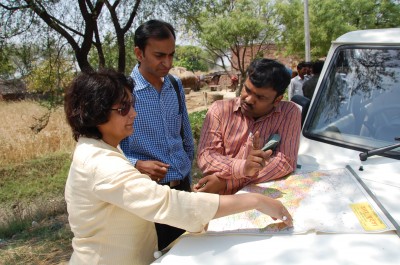
Dr. Lal (right) maps out strategy with MSEMVS activist Rajneesh Kumar Yadev (center) & Free the Slaves South Asia Director Supriya Awasthi (right). | Photo: FTS / FitzPatrick
MSEMVS teams are currently assisting in rescues of approximately 65 men, women and children every month, providing slavery survivors with follow-up reintegration support. Under Dr. Lal’s leadership, MSEMVS launched and manages a rescue shelter in Bihar, providing rights-based assistance and recovery to sex trafficking survivors. Currently, 14 village-based transitional schools are enabling more than 100 child slavery survivors to catch up on their education, so that they can successfully enter public schools within three years.
Dr. Lal became director of MSEMVS in 2003, and his leadership has been characterized by a commitment to ownership of anti-slavery efforts by those most affected, as well as by rigorous documentation of the program’s achievements, and tenacious engagement of authorities. He has guided many documentary filmmaking teams to bring the realities of modern slavery in India to a global audience. He has set a personal example of caring for and diligently assisting each person coming out of slavery – enabling those in slavery to understand their own unique human worth.
Quick Questions & Answers with Dr. Lal
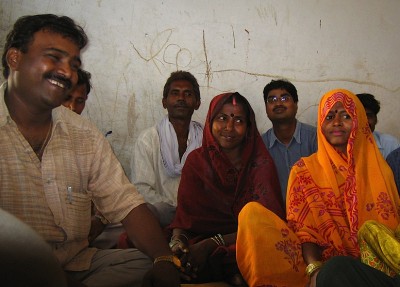
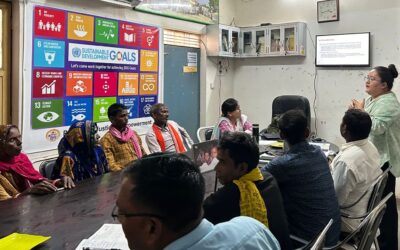
Dr. Lal with community members breaking free from slavery | Photo: FTS / Baumann
How did you become an anti-slavery activist and why have you chosen this as your life’s work?
“There are so many sectors where bonded labor and child labor are being used, one can see the daily exploitation. The situation touched me, a lot. The laborers were not being paid; they were beaten up. They were chained in the carpet industry. And nobody was there to help them. So I started. I started to do my best to bring human dignity to their lives.
What impact is slavery having on the people and the economy of India?
“Many business owners are only thinking about profit, they are not thinking about the lives of the people who are working for them. This will have an effect on the Indian economy because of international efforts to avoid products made by bonded labor and child labor. For example: when the carpet industry was using bonded and child labor, sales declined because of international campaigns against Indian carpets. When the industry worked to cleanse itself, the Indian carpet industry began again to grow.”
How does your organization work to end slavery: what is the strategy or process?
“First: identify communities affected by slavery and trafficking. Many are identified when some of their members are rescued. Second: conduct systematic baseline research to assess the situation and needs. Third: form a community vigilance committee to develop and lead the community’s strategy to break free. Fourth: identify why slavery is happening in an individual community. Fifth: address the causes – communities build collective strength and capacity through skills training, legal literacy, independent income generation and accessing government entitlements, which empowers the community to challenge the grip of slaveholders and traffickers. Sixth: rescue slavery victims, rehabilitate survivors and in some places create transitional schools for former child slaves, aimed at establishing lasting freedom by ensuring the community can sustain its efforts.”
What is the most rewarding part of your work; what keeps you optimistic?
“It is whenever we see slavery victims and communities moving toward sustainable freedom and building their collective power against slavery. I have witnessed many individuals and communities doing this. It gives me courage, motivation and energy to work for the elimination of slavery.”