Integrating Anti-Trafficking Work into COVID-19 Medical Interventions

International development and humanitarian relief programs frequently work in areas where modern slavery flourishes. This connection has deepened as the COVID-19 global pandemic increases social and economic vulnerabilities to human trafficking. But in India, a pandemic response program is now working to prevent the spread of the coronavirus while simultaneously spreading critical information to help […]
September 28, 2021

International development and humanitarian relief programs frequently work in areas where modern slavery flourishes. This connection has deepened as the COVID-19 global pandemic increases social and economic vulnerabilities to human trafficking.

But in India, a pandemic response program is now working to prevent the spread of the coronavirus while simultaneously spreading critical information to help people avoid human traffickers.

Free the Slaves helped link our advocacy partner, HEAL Trafficking, with our India front-line partner, Emmanuel Health Association, to hand out anti-trafficking pamphlets to vulnerable community members at vaccination clinics.

HEAL Trafficking is dedicated to ending human trafficking and supporting its survivors from a health perspective. The group shared their informational handout for patients in health care systems with Emmanuel Health Association, who translated it into Hindi. It includes information about how to identify if someone is at risk of forced labor and trafficking. The pamphlet includes local helpline phone numbers for women and children in distress, civil society organizations, and the human rights commission.
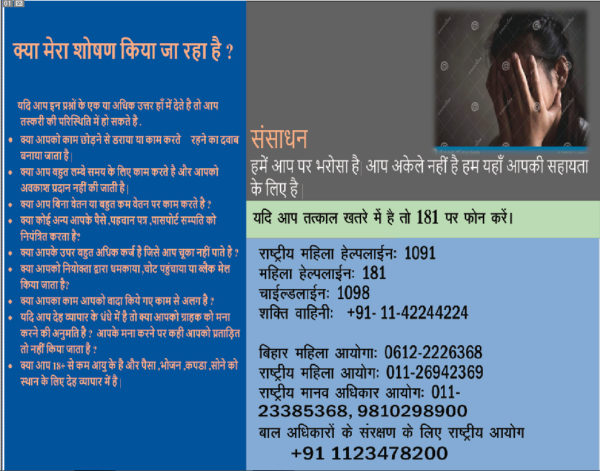
The goal of the brochure is for patients become aware of trafficking and connect them to resources if they are victims. The project distributed more than 20,000 brochures in one of the most vulnerable areas of India, the East Champaran district of Bihar.

The patient brochures, which are customizable to include local resources, are available in 20 languages including English. Learn more here.

Can you help end the conditions that cause modern slavery?

Related Posts

From Planning to Action: Grassroots Leaders Advancing Anti-Trafficking and Safe Migration Efforts

From Planning to Action: Grassroots Leaders Advancing Anti-Trafficking and Safe Migration Efforts

When community members are equipped to lead, lasting protection becomes possible. In eastern Uttar Pradesh, 22 grassroots leaders from Migrant Vigilance Committees and Azad Shakti Abhiyan groups recently completed Community Action Plan workshops, translating a year of training into structured, village-level strategies to prevent exploitation, promote safe migration, and connect vulnerable families to support. Here is what that looks like in practice.

read more
Empowering Partners Through Community Maturity Toolkit Training

Empowering Partners Through Community Maturity Toolkit Training

Sustainable change starts with communities leading their own path to freedom. Through a recent training on the Community Maturity Toolkit, Free the Slaves and partners equipped local organizations in India and Nepal with a practical approach to assess progress, strengthen resilience, and build long-term, community-led solutions to prevent trafficking and modern slavery.

read more
When Crisis Strikes, Migrant Workers Need More Than Emergency Response

When Crisis Strikes, Migrant Workers Need More Than Emergency Response

Migrant workers in crisis settings often face compounded risks, including restricted mobility, withheld documents, and limited access to information, that reflect deeper structural vulnerabilities in migration systems. Free the Slaves’ community-led approaches, including Migrant Vigilance Committees and the SAFE TIPS Guide, help workers prepare before they leave home, strengthening their ability to navigate uncertainty and reduce vulnerability to exploitation.

read more