Educating India’s Children to Avoid Slavery

Trickery cuts a wide swath in India’s impoverished communities. People often leave home in search of work, and many find themselves being trafficked instead. FTS frontline partner MSEMVS aims to change that. And young people are at the heart of the strategy. The goal of the Trafficking Prevention Plan is to stop migration from becoming […]
April 4, 2013

Trickery cuts a wide swath in India’s impoverished communities. People often leave home in search of work, and many find themselves being trafficked instead.

FTS frontline partner MSEMVS aims to change that. And young people are at the heart of the strategy. The goal of the Trafficking Prevention Plan is to stop migration from becoming a road to slavery.

To do that, MSEMVS targets schools in some of India’s most vulnerable villages. Using case studies, posters and pamphlets, they teach students about the risks of migration and the realities of human trafficking.

With millions of people on the move worldwide, it’s easy for traffickers to pose as legitimate labor recruiters. Students are now being taught the warning signs so they won’t fall victim when they grow up.
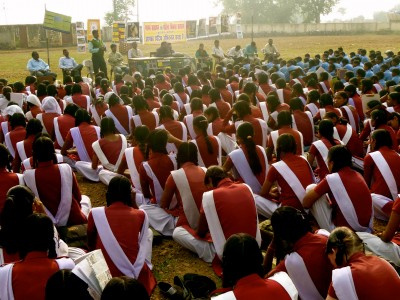
India 5The events are organized as mass meetings, with 250 to 300 students per site. To make the lesson stick, the approach is interactive. It’s not a lecture. Students discuss ways that they can become agents of change in their own communities.

Organizers provide a telephone hotline number and leave a “Report Box” at schools for anonymous tip-offs about suspicious activities that might be related to trafficking.

It’s working. At one location, students provided more than 30 tips for community organizers to investigate.

This educational initiative is one reason that more and more people are escaping slavery at farms, brick kilns, brothels and factories. MSEMVS reports that in 2012 they helped nearly 800 people move from slavery to freedom.

Learn more about our India program on the FTS website.
Can you help end the conditions that cause modern slavery?

Related Posts

Mr. Bachelal’s Path from Surviving Exploitation to Leading Others to Freedom

Mr. Bachelal’s Path from Surviving Exploitation to Leading Others to Freedom

Mr. Bachelal, once trapped in bonded labor, turned his experience into empowerment through Free the Slaves’ Community Liberation Initiative training. Equipped with a deeper understanding of labor rights, legal frameworks, and advocacy, he used his learning to secure the release of five workers held in forced labor—and to begin mentoring them into survivor leaders themselves. His story is a testament to the transformative power of knowledge: when survivors are informed and connected, they not only reclaim their freedom—they help ensure others never lose theirs.

read more
Leadership for Liberation: Strengthening Azad Shakti Abhiyan

Leadership for Liberation: Strengthening Azad Shakti Abhiyan

As part of Free the Slaves’ Community Liberation Initiative, survivor leaders from Azad Shakti Abhiyan gathered in September for a two-day training on Liberation, Care, and Rehabilitation. The workshop deepened their knowledge of trauma-informed care, victim identification, and reintegration—empowering participants to take action against trafficking and support survivor-centered rehabilitation. By investing in survivor leadership, this initiative strengthens grassroots resilience and builds a sustainable, community-driven response to modern slavery in India.

read more
Stronger Together: Building Survivor-led Change in India

Stronger Together: Building Survivor-led Change in India

Survivors of slavery are not just reclaiming their own freedom—they are leading the charge to protect others. In August 2025, Free the Slaves hosted a two-day training in India as part of our Community Liberation Initiative, equipping survivor leaders with the knowledge, tools, and confidence to prevent exploitation in their communities. From learning the roots of modern slavery to developing strategies for awareness and advocacy, participants demonstrated the power of transformation: once victims, now champions for change. Their stories show how one empowered life can spark freedom for many more.

read more