
Indian weddings are legendary – they are large, loud, colorful, and can last for days. Because it is such a big cultural occasion, families plan the biggest event possible. That expense is how marriage ceremonies can lead to slavery. Helping newlyweds and their parents reduce those costs is the newest frontier in fighting slavery in India.
More than 60 percent of families turn to unscrupulous moneylenders to borrow funds for wedding ceremonies, according to the Free the Slaves front-line partner organization PGS. Loans to cover those costs come with impossibly high interest rates, causing many families to fall into bondage to “work-off” the debt.
But earlier this year I had the privilege of attending an innovative group wedding organized by a federation of quarry miners and PGS. The idea was simple and elegant: five couples were married at the same time so their families could share the financial burden.
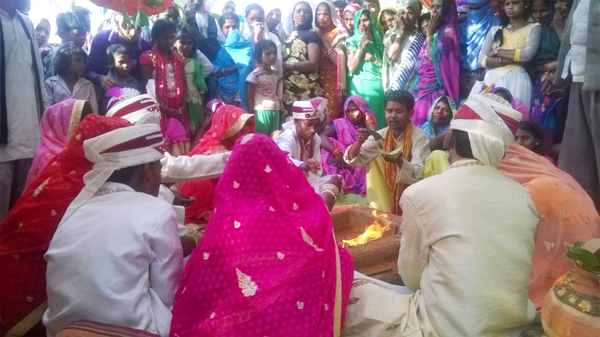
I was excited to see such a huge ceremony. More than 1,000 people witnessed the occasion. It was not organized by an expensive wedding planner, but by slavery survivors — villagers who want freedom for the next generation by saying “no to debt” for weddings.
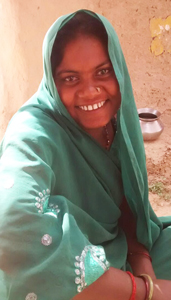
Ranjana, happy newlywed
Ranjana and Sharda were two of the newlyweds.
“I was so happy,” Ranjana says. “I never dreamed of having a cheerful husband, wearing a bride’s dress and going to a beauty parlor to prepare. I am happy that without any burden on my parents of taking any debt I was able to get this. I wish every girl fulfills her dream.”
“I am happy to give time to my wife,” Sharda says, “which I would have given to a contractor to repay a debt. I wanted to enjoy my married life, and I am doing so. Thanks to the federation and PGS for coming up with such a great idea.”

Sharda, happy newlywed
One of the parents, Shiv Kumar, had been injured in a mine explosion and is unable to work. But he was beaming with pride at the wedding. “I lost hope my daughter will get married, as I have no money, nor can I work, nor will anyone lend me money,” he said. “But I realized that the community also has a power to attain freedom from debt and that’s what I am seeing on this occasion.”
Collective marriage helped these five families dramatically reduce wedding expenses. A typical ceremony can cost about $750. But by sharing the burden and doing much of the work themselves, each family in this wedding paid only about $15. The strategy prevented the need for borrowing, ensuring the parents and newlyweds could avoid the risk of debt bondage slavery. These families can instead invest in opening small businesses or buying cattle or sending their children to school.
“This event has encouraged the concept of community social responsibility and has helped in achieving self-esteem of the community,” says PGS Director Sunit Singh. “I am happy to say that it has brought a new dawn of freedom for the newlywed couples from the very first day of their married life.”
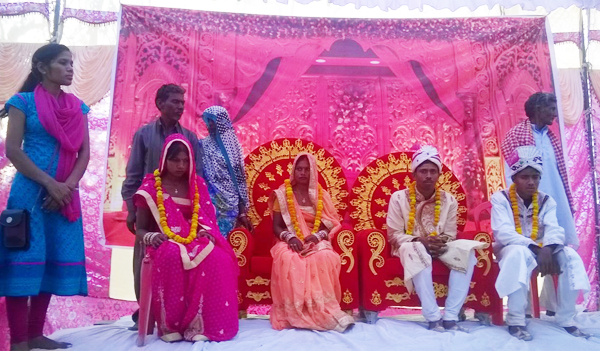
The innovation of collective marriage ceremonies not only changed the mindset of community members, it also helped them envision a slavery-free life for the next generation. With hope for a new dawn of freedom, I’ll be working to help replicate this model in many more slavery-prone communities.
Editors Note: Rajneesh is the Free the Slaves India country director. Learn more about our projects in India on our India webpage.