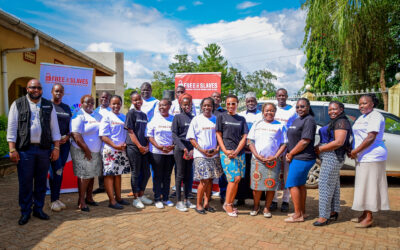
Courage, Vision and Hope From the Front Lines of Slavery

It takes a special kind of person to fight for freedom and justice in dangerous hot spots where slavery still thrives. It takes a resilient and resourceful spirit to assist impoverished and marginalized people in their struggle to break free. But that’s the job description for the staffers who direct Free the Slaves programs around […]
February 20, 2014

It takes a special kind of person to fight for freedom and justice in dangerous hot spots where slavery still thrives. It takes a resilient and resourceful spirit to assist impoverished and marginalized people in their struggle to break free.

But that’s the job description for the staffers who direct Free the Slaves programs around the globe — sweat, grit, guts, smarts, vision, passion and compassion.

You can now see FTS country directors talking candidly about their work in three recently-released videos: What Does Slavery Look Like Today, Passion for Freedom, and Overcoming Slavery. These videos provide an in-depth look at the scope of modern-day slavery. The films feature FTS country directors sharing personal insights on how one of history’s greatest human rights abuses can be brought to an end.

“I free slaves,” says FTS South Asia Director Supriya Awasthi in one video, “I think it was a calling. I always wanted to do work where I could tangibly see change, and what has touched me the most was to see change in human lives when it was needed.”

As FTS Congo Director Jack Kohorha explains: “It is good to tell stories, but it also important to act. At Free the Slaves, it is not only a matter of reporting, we do the research and then we use the research to see how the communities can come out of slavery themselves.”

The videos illustrate the brutality of bondage and showcase the joy of freedom.

These videos are available on YouTube and Vimeo for anyone to play at awareness-raising events on campus, at work, with friends or relatives or fellow members of your faith community.  Click here to find out more about how you can join the fight by hosting a FTS house party.

As FTS Ghana Director Joha Braimah tells us, “I believe that slavery can end in our lifetime if we put our minds to it and commit to this cause.”

Can you help end the conditions that cause modern slavery?

Related Posts

Empowering Partners Through Community Maturity Toolkit Training

Empowering Partners Through Community Maturity Toolkit Training

Sustainable change starts with communities leading their own path to freedom. Through a recent training on the Community Maturity Toolkit, Free the Slaves and partners equipped local organizations in India and Nepal with a practical approach to assess progress, strengthen resilience, and build long-term, community-led solutions to prevent trafficking and modern slavery.

read more
When Crisis Strikes, Migrant Workers Need More Than Emergency Response

When Crisis Strikes, Migrant Workers Need More Than Emergency Response

Migrant workers in crisis settings often face compounded risks, including restricted mobility, withheld documents, and limited access to information, that reflect deeper structural vulnerabilities in migration systems. Free the Slaves’ community-led approaches, including Migrant Vigilance Committees and the SAFE TIPS Guide, help workers prepare before they leave home, strengthening their ability to navigate uncertainty and reduce vulnerability to exploitation.

read more
From Research to Action: Advancing Change for Child Domestic Workers in Kathmandu

From Research to Action: Advancing Change for Child Domestic Workers in Kathmandu

In Kathmandu, thousands of children work behind closed doors as domestic workers, largely unseen and unprotected. A new report from Free the Slaves and CWISH Nepal brings their experiences into focus and examines the structural forces that sustain child domestic labor. But research alone is not enough. This work moves beyond documentation to action, engaging employers, civil society, local government, and children themselves to drive coordinated change rooted in evidence and lived experience.

read more