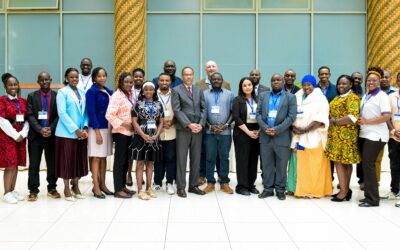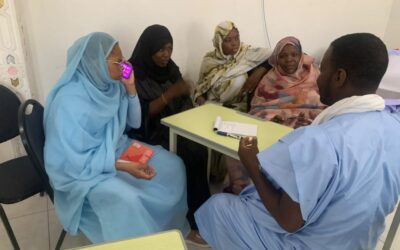


In Nguila, Salakounou, Mbangassina, and Ntui, the meetings happen every two weeks. Farmers, community monitors, local officials, and trained committee members gather to review progress, track follow-up on identified forced labor risk factors, and plan next steps. No outside organization convenes these meetings. No external team manages the follow-through. The communities do.
From January to May 2026, Free the Slaves (FTS), the Delegate of Labour for Cameroon, and a cocoa industry partner continued building and deepening this infrastructure across four communities in Cameroon’s cocoa-producing heartland, where forced labor, withheld wages, and other labor rights violations are documented risks. What is taking shape across these localities is something more durable than a project. It is a set of community-rooted systems designed to prevent, detect, and respond to exploitation long after any single initiative ends.
Structures with Standing
At the heart of this work are the Community Vigilance and Remediation Committees, local bodies trained and supported to receive reports of forced labor risk factors, investigate concerns, facilitate remediation processes, and refer serious risk factors to the appropriate authorities.
In February 2026, the Delegate of Labour convened meetings with committee members, community mobilizers, and FTS staff across all four communities. The sessions accomplished practical things: clarifying roles and reporting procedures under the Cameroon Labor Code, agreeing on a rhythm of bi-weekly meetings to track progress on identified risk factors, and developing action plans for community sensitization.
Committee members were also issued authorization documents and identification badges. These credentials convey legitimacy to farmers and field workers. They signal that a committee member arriving at a farm to follow up on a concern is not acting alone but as part of a recognized structure with institutional backing. Trust takes time to build, but structures and symbols play a meaningful part in that process.
When Chiefs Lead, Communities Listen
One of the most significant developments observed during this period has been the growing engagement of traditional leaders, including chiefs and community elders, in prevention and response efforts. In many rural Cameroonian communities, traditional authority shapes norms and behavior in ways that formal institutional channels often cannot fully reach.
Awareness activities conducted between January and May helped chiefs understand their role in discouraging forced labor practices. Their involvement has contributed to a measurable reduction in identified forced labor risk factors in some of the four communities. When traditional leaders make it clear that exploitation is unacceptable, it shifts the social environment in which exploitation either occurs or is deterred. That is a form of prevention that community monitors and formal committees alone cannot replicate.
Taking the Message Farther: Radio as a Prevention Tool
Reaching committee members and community leaders is necessary but not sufficient. Prevention requires changing the broader conditions and norms that allow exploitation to persist, and that means reaching farmers, workers, and households across wide and often remote areas.
To extend the project’s reach beyond formal community structures, FTS and its partners launched an awareness campaign broadcast on three local radio stations: Amplitude FM, CRTV, and Royal FM. Developed with the support of a local journalist, the campaign brought messages about forced labor, its impact on individuals and families, and the importance of reporting directly into homes across the project zones. Radio remains one of the most effective tools for reaching rural communities in West and Central Africa, and this campaign extended the conversation far beyond what in-person activities alone could have achieved.
Honest About the Obstacles
Progress between January and May 2026 has been real. So have the challenges, and they deserve to be named plainly.
Transportation constraints have limited some committees’ ability to reach remote farms and conduct timely follow-up visits. Limited communication credit has slowed coordination, and some completed remediation processes have not yet been formally documented, creating gaps in the accountability record.
These are the honest realities of community-based human rights work, particularly in settings where resources are constrained and infrastructure is uneven. Stronger logistical support for committee members, improved documentation systems, and continued investment in the community trust that makes reporting possible in the first place are needed to improve responses as this project expands.
Looking Ahead
A partner mission will assess progress on the ground and shape planning for the next phase of the project. For the committee members who have been carrying this work with limited resources and consistent dedication, that mission represents something concrete: the possibility of continuation, and recognition that the infrastructure they have been building is worth sustaining.
Each month, committee members attend their bi-weekly meetings, follow up on identified risk factors, and bring concerns to the appropriate authorities. Chiefs reinforce messages about workers’ rights. Community members hear about forced labor on local radio and learn where to report. Risk factors are documented and tracked. That steady, unglamorous rhythm is continues to expand progress that is already underway in Nguila, Salakounou, Mbangassina, and Ntui.