Breaking Free and Staying Free

People become enslaved for a reason. And if we don’t change those circumstances, a trafficking survivor is at extreme risk of being enslaved again. That’s why our India team provided Chhatanki with a way to support himself after liberation from a local brick kiln. Five years ago, Chhatanki was lured by a trafficker who offered […]
December 14, 2017

People become enslaved for a reason. And if we don’t change those circumstances, a trafficking survivor is at extreme risk of being enslaved again. That’s why our India team provided Chhatanki with a way to support himself after liberation from a local brick kiln.

Five years ago, Chhatanki was lured by a trafficker who offered him a payment of about $75 if he agreed to work at a nearby brick factory. Sounded great, at first. But day by day, his situation got worse. The kiln owner forced Chhatanki’s family to work beside him. When the work made him ill, the owner would not provide funds for medical treatment.

Fortunately, our India front-line partner organization, MSEMVS, liberated Chhatanki in August 2014. And that’s just the first part of the story.
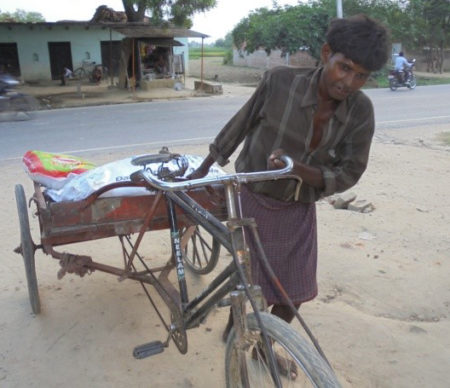
Chhatanki now earns a decent living | Photo: MSEMVS


Since then, MSEMVS has provided Chhatanki with a bicycle rickshaw so he could start a small business hauling products to and from local markets. They helped him get a new ID card and start a bank account. They helped him apply for government food and housing benefits. This attention to ensuring slavery survivors are sustainably liberated is a key element of our Community-based Model for Freedom.

It has worked. Chhatanki has been free for three years. He is able to be an active father once again and get his children educated. He earns a modest living, but it’s enough to start saving in order to become financially resilient. He has joined his village anti-trafficking committee, and encourages others to reach out for help and break free.

“I am very happy with my family,” Chhatanki says. “My children go to school and I also play with my children. I have a choice to work as I wish. All these dreams came true.”
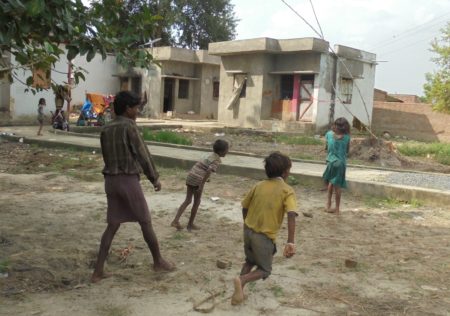
Chhatanki plays with his children | Photo: MSEMVS


Learn more about our India program – and watch an actual rescue as it happens – here.
Can you help end the conditions that cause modern slavery?

Related Posts

From Planning to Action: Grassroots Leaders Advancing Anti-Trafficking and Safe Migration Efforts

From Planning to Action: Grassroots Leaders Advancing Anti-Trafficking and Safe Migration Efforts

When community members are equipped to lead, lasting protection becomes possible. In eastern Uttar Pradesh, 22 grassroots leaders from Migrant Vigilance Committees and Azad Shakti Abhiyan groups recently completed Community Action Plan workshops, translating a year of training into structured, village-level strategies to prevent exploitation, promote safe migration, and connect vulnerable families to support. Here is what that looks like in practice.

read more
Empowering Partners Through Community Maturity Toolkit Training

Empowering Partners Through Community Maturity Toolkit Training

Sustainable change starts with communities leading their own path to freedom. Through a recent training on the Community Maturity Toolkit, Free the Slaves and partners equipped local organizations in India and Nepal with a practical approach to assess progress, strengthen resilience, and build long-term, community-led solutions to prevent trafficking and modern slavery.

read more
When Crisis Strikes, Migrant Workers Need More Than Emergency Response

When Crisis Strikes, Migrant Workers Need More Than Emergency Response

Migrant workers in crisis settings often face compounded risks, including restricted mobility, withheld documents, and limited access to information, that reflect deeper structural vulnerabilities in migration systems. Free the Slaves’ community-led approaches, including Migrant Vigilance Committees and the SAFE TIPS Guide, help workers prepare before they leave home, strengthening their ability to navigate uncertainty and reduce vulnerability to exploitation.

read more