

Junaid Ansari is a resident of Bhudki village Uttar Pradesh, India, a father of two children, and is 50 years old. Junaid used to work as a carpet weaver in his village but eventually found that this job could not support his family. Junaid searched for a new career in Uttar Pradesh but found very few job opportunities. In December 2021, Junaid decided to work abroad. Junaid contacted a local agent that convinced him to take a position as a house helper in Dubai for 1400 Dirhams ($380.00 USD) as a monthly wage. He was told that in addition to a monthly payment, he would also receive food and accommodations. He was promised that the employers were kind, reasonable, and good people who would take care of his visa. With that, Junaid was convinced! After Junaid paid his recruitment fee, he was ready to begin work.
Upon reaching Dubai, Junaid realized that he had been lied to. He was not sent to a beautiful home with kind employers but rather to a perfume factory. In the factory, he and other migrants were forced to work 12 hours daily. If any of the migrant workers spoke against the factory owner, they would receive verbal abuse, physical abuse, or have their pay withheld. Unfortunately, Juniad’s situation is very common. West India is one of the largest migration corridors in the world. It’s estimated that 9 million Indian migrants are working in the Persian Gulf region. Many are employed in low-profile jobs such as construction jobs, food service, or even domestic positions.
Oftentimes, these workers are paid for their hard work and provided with food and housing for their services. But that’s not always the case. The less fortunate Indian migrant workers are victims of hazardous labor or even labor trafficking. They have no safety net, social security protection, welfare mechanisms, or labor rights. Many of these victims are lured by job agents’ promises of good pay, easy work, and foreign labor sponsorship. Yet, reality tells us this is not the case. Most victims find themselves trapped in low-paying domestic jobs, working up to 15-hour days and having to endure verbal or physical abuse.
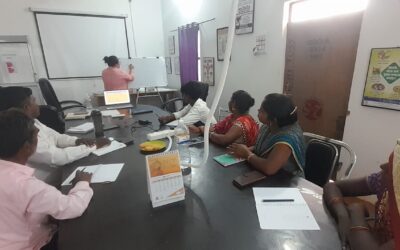
“The only reason why I was able to pressure the agent for arranging my journey back to India was the knowledge I gained from the Free the Slaves events. I made it clear to the agent that … I can take legal action against him through the POE (Protector of Emigrants). The agent got the idea that I am a well-informed migrant worker and then he arranged [my release from the factory and the journey back home] for me. I will always be very grateful to Free the Slaves and MSEMVS. I will help and support other migrant workers with the knowledge I have gained.” – Junaid
Thousands of others from West India are in slavery, just like Junaid was. You can help them have the knowledge to avoid risky job situations, or if they find themselves trapped, demand their own freedom. Donate now to ensure that more people like Junaid can know their rights and can remain free from slavery.