
They had never been in the media spotlight before, and no one was sure what would happen. Four slavery survivors would face journalists to say that it is time to take a stand against bonded labor slavery in northern India.
It wasn’t the way news briefings are usually conducted. They are usually the province of experts and activists, not slavery survivors.
It turned out that the news conference was a tremendous success. Reporters discovered new ways to think about an old problem. Activists discovered new ways to get their message out through the media. And the four survivors discovered that their stories of overcoming bondage are powerful tools in the struggle to eradicate slavery for all.
The news conference was the culmination of a two-day training workshop conducted by Free the Slaves in Varanasi. FTS has determined that strengthening the communications capacity of our frontline partner groups should be an integral part of our technical assistance training and support. This includes helping groups to improve the way they communicate to four key audiences:
- People in slavery and in vulnerable communities;
- Politicians, government officials, international non-governmental organizations and other influential actors who can help foster lasting systemic change;
- Journalists who can spread awareness about slavery and ways to overcome it;
- Potential donors who can diversify sustainable funding streams for frontline work.
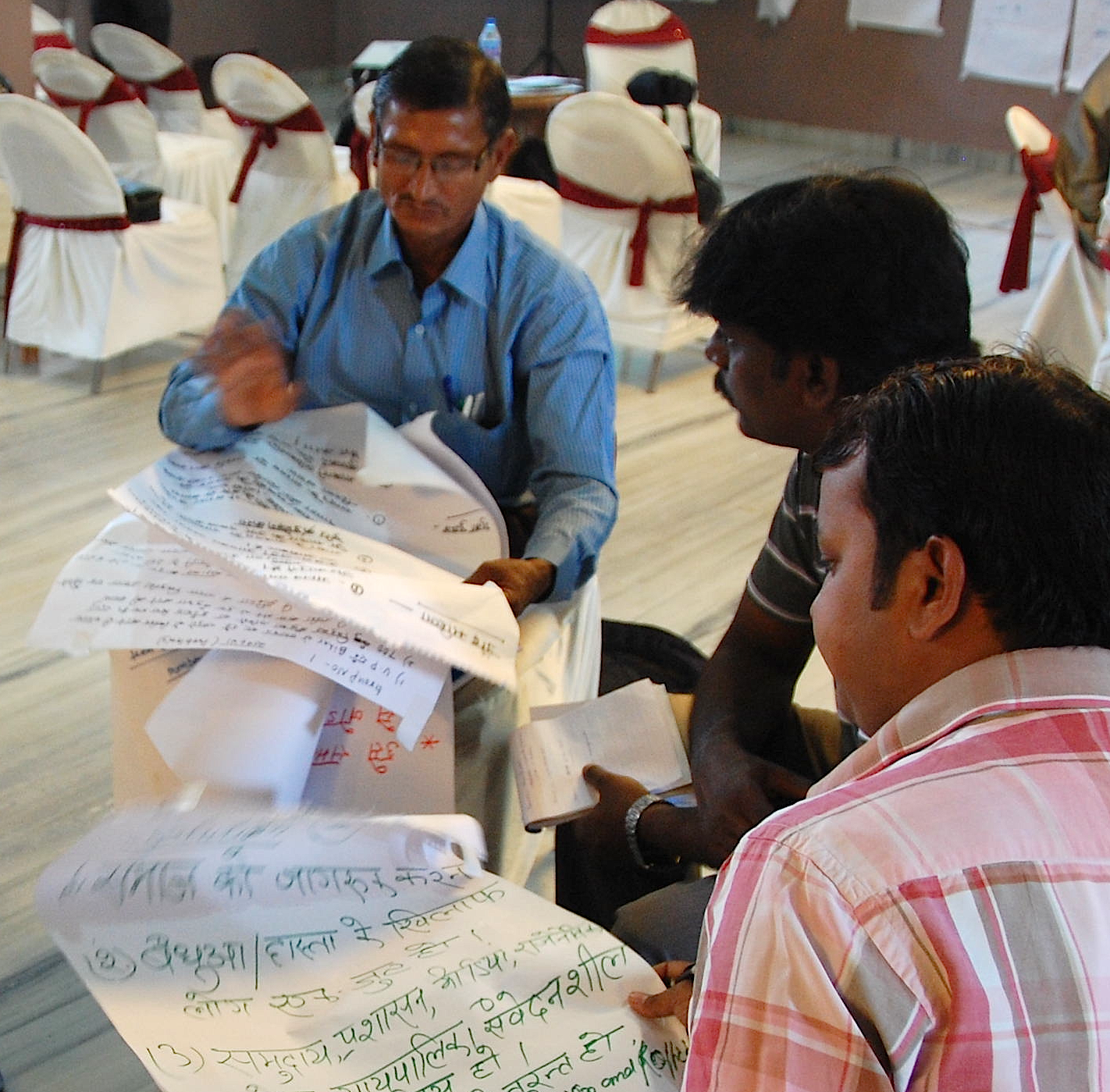
Activists work on message development | Photo: FTS/FitzPatrick
The training project in India, conducted earlier this year, served as our pilot project. Seventeen participants attended from our frontline partner organizations, JEEVIKA, MSEMVS, PGS and the Punarnawa Ashram. They learned valuable communications skills:
- How to develop communications strategies, messages and materials to effectively reach slaves;
- How to create compelling case studies that demonstrate it is possible to overcome slavery;
- How to create effective fact sheets and background documents that quickly summarize the scope and impact of slavery, as well as ways to end it;
- How to reach journalists with news releases and plan effective media events.
“Earlier we used a very traditional way of communicating with media, which was not so effective, hence we did not get desired results,” said one participant at the end of the workshop. “We now feel confident to interact with media.”
The “media event was a good exercise,” said another participant. “It will help us in giving a platform to former slaves.”
FTS plans to conduct communications training in all of our frontline country projects, as funding permits.
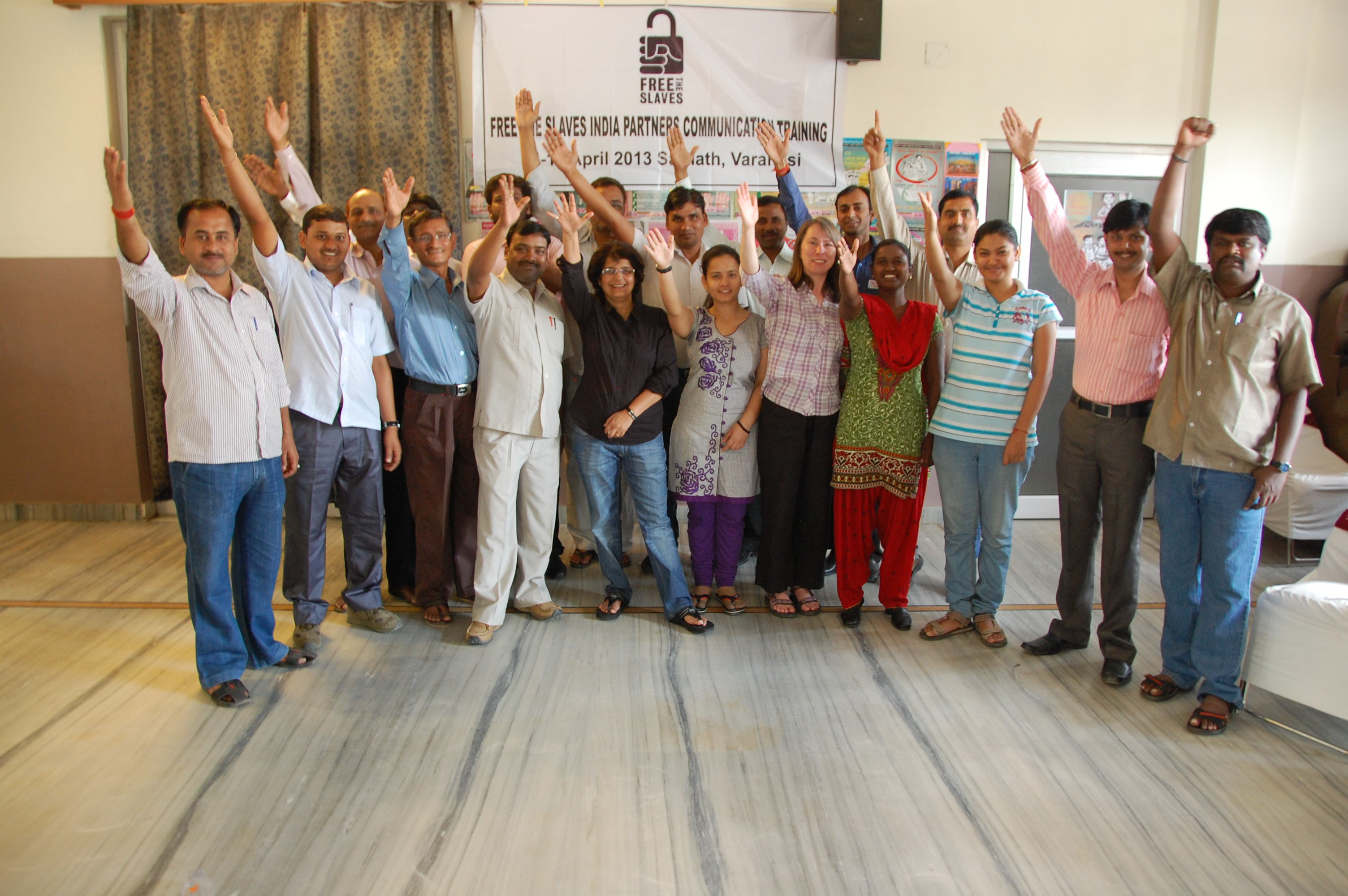
Communications empowerment training participants
Learn more about our program in India on the FTS website.