FTS Distributes Humanitarian Aid in India as COVID-19 Crisis Deepens

The second wave of the deadly coronavirus is wreaking havoc in rural areas of India. The rural population is facing severe economic distress due to lockdowns and the pandemic. Free the Slaves and our partners in India are organizing several drives in affected rural parts of the country to ensure that people have adequate food […]
July 7, 2021

The second wave of the deadly coronavirus is wreaking havoc in rural areas of India. The rural population is facing severe economic distress due to lockdowns and the pandemic. Free the Slaves and our partners in India are organizing several drives in affected rural parts of the country to ensure that people have adequate food to endure this crisis.

With support from a generous foundation, our partner MSEMVS will reach out to villages of eastern Uttar Pradesh and distribute food and hygiene kits to 1,000 vulnerable families from July to September 2021. The distribution will be carried out in more than 100 villages spread across Mirzapur, Varanasi, Bhadohi and Chandauli districts of eastern Uttar Pradesh.

Apart from this direct support, another 500 families will be assisted to link them to government schemes so that they can systematically access government services.

Most of the families are modern slavery survivors who have been rescued as bonded laborers from brick kilns and suffered setbacks in their recovery because of the medical and economic emergency. 

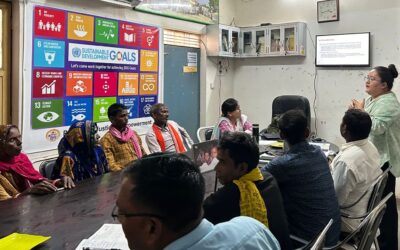
Marginalized families in Uttar Pradesh, like Shanti’s* (pictured above), have been especially hard-hit. COVID-19 restrictions and crop failure have diminished livelihood opportunities in their village. As the breadwinner and caretaker of the family, Shanti is responsible for the well-being of her ailing husband and four children. Her family engages in subsistence agriculture but struggles to make ends meet. Further, they are excluded from accessing government services due to their lack of official documentation.

Through this project, vulnerable families will be provided with lifesaving support such as food, hygiene kits, information about COVID-19 risks and precautions, and official documentation to access government services.

*A pseudonym to protect her identity

Can you help end the conditions that cause modern slavery?

Related Posts

From Planning to Action: Grassroots Leaders Advancing Anti-Trafficking and Safe Migration Efforts

From Planning to Action: Grassroots Leaders Advancing Anti-Trafficking and Safe Migration Efforts

When community members are equipped to lead, lasting protection becomes possible. In eastern Uttar Pradesh, 22 grassroots leaders from Migrant Vigilance Committees and Azad Shakti Abhiyan groups recently completed Community Action Plan workshops, translating a year of training into structured, village-level strategies to prevent exploitation, promote safe migration, and connect vulnerable families to support. Here is what that looks like in practice.

read more
Empowering Partners Through Community Maturity Toolkit Training

Empowering Partners Through Community Maturity Toolkit Training

Sustainable change starts with communities leading their own path to freedom. Through a recent training on the Community Maturity Toolkit, Free the Slaves and partners equipped local organizations in India and Nepal with a practical approach to assess progress, strengthen resilience, and build long-term, community-led solutions to prevent trafficking and modern slavery.

read more
When Crisis Strikes, Migrant Workers Need More Than Emergency Response

When Crisis Strikes, Migrant Workers Need More Than Emergency Response

Migrant workers in crisis settings often face compounded risks, including restricted mobility, withheld documents, and limited access to information, that reflect deeper structural vulnerabilities in migration systems. Free the Slaves’ community-led approaches, including Migrant Vigilance Committees and the SAFE TIPS Guide, help workers prepare before they leave home, strengthening their ability to navigate uncertainty and reduce vulnerability to exploitation.

read more