Entire Family Rescued from Brick Kiln Slavery in India

It started with a simple loan to pay for a wedding. It turned into brutal enslavement for an entire family. It wound up as a triumphant victory over bondage, thanks to Free the Slaves and our front line partner group in India, MSEMVS. Five years ago, Jaswant borrowed $167 from a farm and factory owner […]
August 26, 2014

It started with a simple loan to pay for a wedding. It turned into brutal enslavement for an entire family. It wound up as a triumphant victory over bondage, thanks to Free the Slaves and our front line partner group in India, MSEMVS.

Five years ago, Jaswant borrowed $167 from a farm and factory owner to finance the wedding of his eldest daughter. The interest rate was outrageous — and illegal — and it quickly became impossible for Jaswant to repay the debt. It’s clear the lender was after something more when he lent the money: slave laborers for his brick factory. Even though debt-bondage slavery is illegal in India, Jaswant and his entire family were forced onto trucks and taken to a sweltering brick kiln 35 miles away.

Family members were forced to work 14-hour days, including the children, and they were locked-up at night to prevent escape. Jaswant was beaten when he asked to be paid.

Fortunately, MSEMVS had been working to organize and liberate enslaved villagers in the nearby community of Garai. After a particularly severe beating this May, Jaswant managed to escape and make it to Garai to seek help. Thanks to their training, villagers knew just what to do. They got Jaswant to a local hospital and notified MSEMVS.
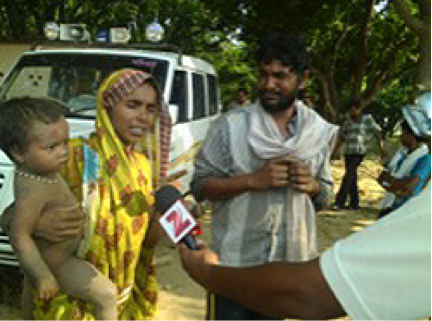
family rescue interview

Reporter interviews Jaswant’s family during raid | MSEMVS photo

Soon a police rescue team headed to the kiln. A news crew captured the dramatic scene for Indian television.

“I lost my hope to be freed because there was not a single person who could listen to us or see our terrible situation,” Jaswant said. “It is MSEMVS and its commitment by which I am free now and enjoying life with my family.”

A legal case has been opened against the slaveholder. Jaswant’s family has been relocated to a safe location, and his children are now in school.

You can learn more about how our India partner groups organize communities on our India webpage, and see video of an actual rescue on our YouTube channel.
Can you help end the conditions that cause modern slavery?

Related Posts

From Planning to Action: Grassroots Leaders Advancing Anti-Trafficking and Safe Migration Efforts

From Planning to Action: Grassroots Leaders Advancing Anti-Trafficking and Safe Migration Efforts

When community members are equipped to lead, lasting protection becomes possible. In eastern Uttar Pradesh, 22 grassroots leaders from Migrant Vigilance Committees and Azad Shakti Abhiyan groups recently completed Community Action Plan workshops, translating a year of training into structured, village-level strategies to prevent exploitation, promote safe migration, and connect vulnerable families to support. Here is what that looks like in practice.

read more
Empowering Partners Through Community Maturity Toolkit Training

Empowering Partners Through Community Maturity Toolkit Training

Sustainable change starts with communities leading their own path to freedom. Through a recent training on the Community Maturity Toolkit, Free the Slaves and partners equipped local organizations in India and Nepal with a practical approach to assess progress, strengthen resilience, and build long-term, community-led solutions to prevent trafficking and modern slavery.

read more
When Crisis Strikes, Migrant Workers Need More Than Emergency Response

When Crisis Strikes, Migrant Workers Need More Than Emergency Response

Migrant workers in crisis settings often face compounded risks, including restricted mobility, withheld documents, and limited access to information, that reflect deeper structural vulnerabilities in migration systems. Free the Slaves’ community-led approaches, including Migrant Vigilance Committees and the SAFE TIPS Guide, help workers prepare before they leave home, strengthening their ability to navigate uncertainty and reduce vulnerability to exploitation.

read more