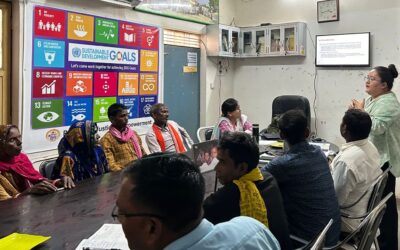

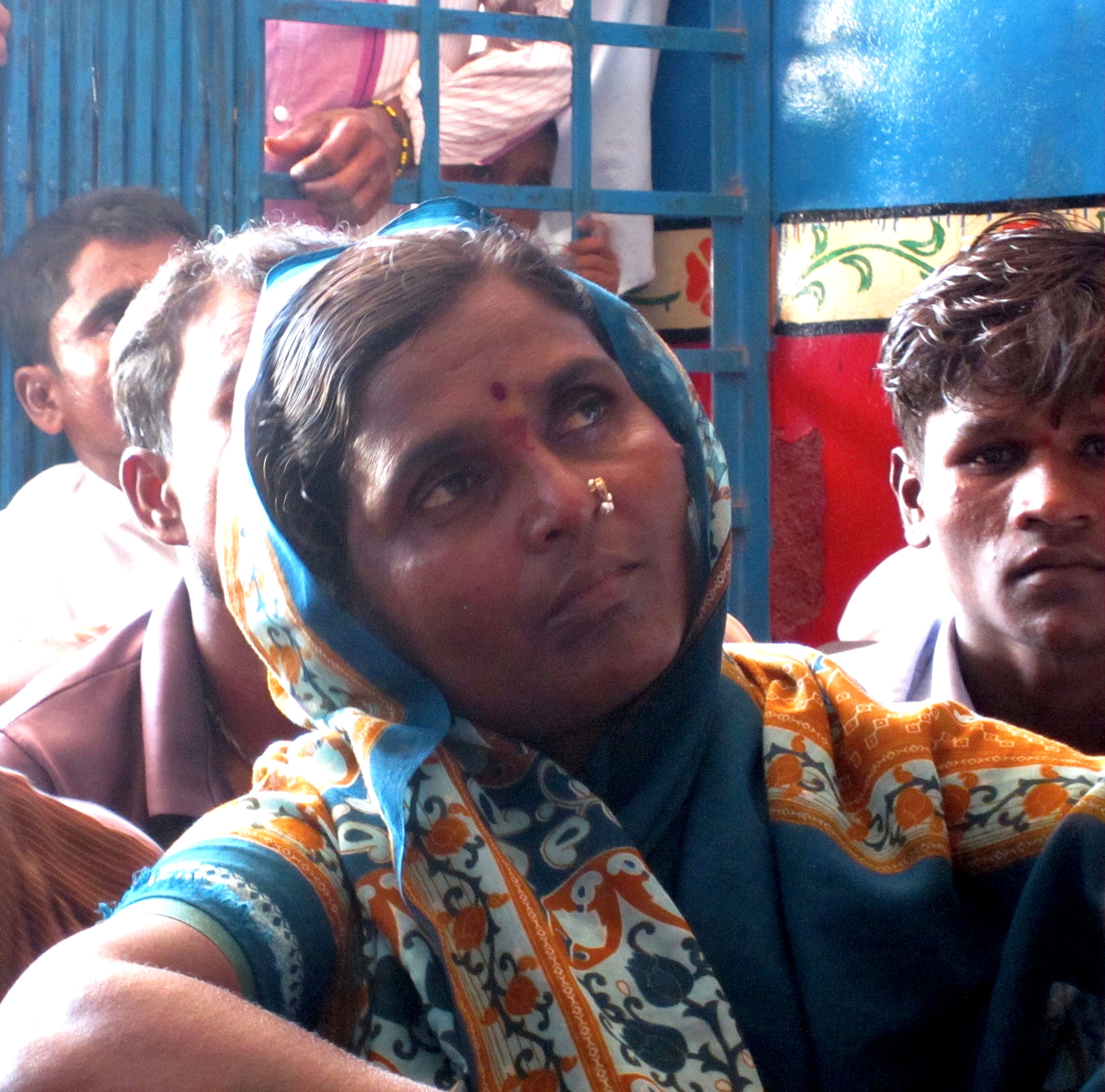
Arriving at the low caste section of Muchkudi village in northern Karnataka, we were ushered into the meeting space in a tiny Hindu temple.
About 60 of us were packed closely together, and the infant sitting beside me gently touched my arm, probably to see what this strange pale skin feels like. The large Hindu devotional statue occupied a comfortably secluded space behind bars, seemingly the only participant who held back on expressing his views during the proceedings.
On the edge of the temple, the children were standing, crowding out the sunlight and visibly entertained by the arrival of strangers.
FTS front line partner JEEVIKA is provoking a long-term change here.
As we asked about their situation and their hopes, the participants wrestled with incredible honesty and practicality about the possibility of freedom. At one point they seemed unable to shift their inter-generational sense of dependence on the landlord.
As one said: “I don’t have a choice. I have to work, otherwise who will give me food?” But another man answered back: “They are cheating us. I didn’t know about this before, but JEEVIKA gave us awareness. The landlord forces us. He’s a criminal. It’s illegal.”
In this and hundreds of other villages in the state of Karnataka, JEEVIKA is stimulating discussions about bonded labor slavery that are entirely new. The group is working on two important fronts to help residents make their own decision to reject slavery once and for all.
First: They are helping laborers to look at the truth of their situation, raising questions about why only low-caste people have to work for virtually nothing, with endless labor and no freedom to work for other employers. For the first time, laborers are talking about the daily humiliations they experience. Importantly, the bonded laborers are also learning that forced labor to pay off a debt is a crime in India. They are being helped to do the math, coming to understand that their labor has already repaid more than the loan they had initially taken.
Secondly: JEEVIKA is helping laborers take practical steps so they can survive independent of the slaveholder. They are applying for official release certificates from the government, so they can access compensation of approximately $350, as well as other important forms of government assistance for former slaves. At the same time, they are forming self-help groups to save small amounts each week, through which they can make loans to each other in times of emergency or help each other invest in livestock or other income generating assets. In this village, members of the emerging self-help group will each save just 50 cents a week to start with.
 One of the strengths of JEEVIKA is that nearly all the activists are from families who themselves came out of bonded labor. They are living representatives that freedom is possible. They know exactly how hard it is to make this shift, and this gives them real authority to urge these residents: “Don’t sell your freedom to the landlord. If you do that, it’s like being dead while you’re alive.” At Muchkudi village, they do not attempt to bring the roving discussion to a fixed conclusion, but it is clear that the ideas are sinking deep and a resolution for freedom is fermenting.
Umesh, JEEVIKA’s coordinator, finishes the meeting with a song that strikes at the workers’ greatest longing for control over their lives. It is about a woman sitting, waiting at home in the night with one candle lit for her son, wondering when he will come back from a long day of forced work for the slaveholder. After their animated discussions, the attention of the women is riveted.
There is no doubt that the song is their own story, but the story is about to change.
Ginny Baumann is the associate programs director of Free the Slaves.