
Click Here to Listen to This Post Twelve Nigerian women are free from slavery in Senegal today! Adaku*, Joy*, Esther*, and Chinara* were intercepted in Fadougou village on their way to what they believed were good jobs in restaurants, hotels, or boutiques that paid a good salary. Adaku* says, “I left home because my father is a farmer, and I couldn’t continue my studies. So I came to Senegal to work and get money to help my older brother stay in school and enhance my job as a hairdresser.”
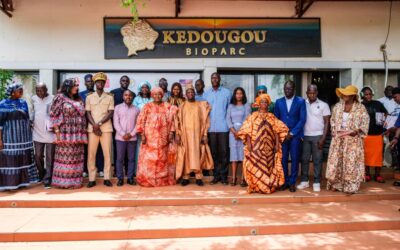
As Adaku and her friends unknowingly traveled to meet their trafficker, they were intercepted by the Gendarmerie (Senegal Military Police). When the police discovered that Adaku* and her friends were in danger of being exploited, they intervened and helped the women access follow-up care at the Saraya shelter, a secure shelter for women. The shelter manager helped them register with the local social welfare office and Enda Youth Action, a local community organization. Representatives of the Nigerian community accompanied the women as they were transferred to La Lumiere’s shelter in Kédougou.
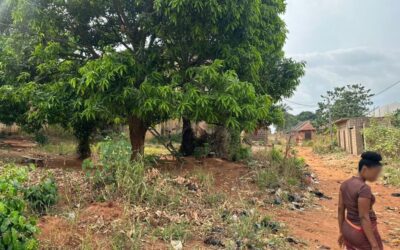
Ginika*, Hassana*, Dayo*, and Mary* also traveled to Senegal from Nigeria where they were also promised good jobs. They soon discovered that the promised jobs did not exist, and they had been trafficked to provide sex to miners working in the Kédougou region’s gold mines. Unwilling to be continually exploited, they escaped their captors and fled the village of Bondala, where they were enslaved. They escaped to Kédougou, where a Nigerian lady took them in and contacted members of the Nigerian community, who informed the local police and the shelter manager at La Lumière, Free the Slaves local partner. Local police interviewed the women and began searching for the trafficker responsible. The perpetrator was arrested and later convicted on August 25, 2022.
Rose*, Obioma*, and Abigail* are also free, thanks to the local community in Bondala. Members of the Bondala community participated in Free the Slaves Community Liberation Training in June. As a result of this training, they formed a community vigilance committee. Members of this committee recognized the signs of trafficking in their community and alerted the military police. Because of this collaboration between, Free the Slaves, local Kédougou law enforcement, and the local community, Rose and her friends are now free. All three women are receiving care and essential services from FTS partner La Lumière. Oladele*, a relative of Abigail*, traveled to the shelter on her own, requested assistance, and is receiving care.
The economy in the Kédougou region of Senegal is heavily reliant on small-scale gold mining. The income generated from mines in the area and ingrained cultural beliefs drive the demand for commercial sex in the region. This demand for commercial sex drives the trafficking of women into the region. All twelve women are currently receiving aftercare services from La Lumière. Additionally, La Lumière is conducting assessments of all the women and connecting them to medical care and mental and emotional support services. When they have recovered from their traumatic experiences, they will have the opportunity to access legal support, vocational training, and financial support to help them restart their lives as they reunite with their families.
This program is part of the Free the Slaves Community Liberation Initiative (CLI). The CLI trains communities, local governments, law enforcement, and social service organizations to recognize human trafficking, modern slavery, and the social conditions that allow it to happen. Law enforcement, social welfare offices, and community organizations are equipped to provide trauma-informed care to survivors. They also eliminate the conditions that make people vulnerable to slavery. This strategy reduces sex trafficking and slavery in the region and increases access to social services for survivors. You can help us eliminate sex trafficking in the Kédougou region of Senegal and provide care to survivors.
Click here to donate to Free the Slaves.
This program is made possible by the generosity of the African Programming & Research Initiative to End Slavery at UGA (APRIES) and the Office to Monitor and Combat Trafficking in Persons (JTIP). The CLI project was funded in part by a grant from the United States Department of State. The opinions, findings, and conclusions stated herein are those of Free the Slaves and do not necessarily reflect those of the United States Department of State.