
Training Police to Target Traffickers

About 50,000 women and girls work in restaurants, dance bars and massage parlors in Nepal’s capital, Kathmandu. Many of them endure brutal sexual abuse. One tool to ending the exploitation is to educate the country’s community police force to recognize sex slavery and respond to it effectively. With that in mind, a six-day training project […]
July 3, 2012

About 50,000 women and girls work in restaurants, dance bars and massage parlors in Nepal’s capital, Kathmandu. Many of them endure brutal sexual abuse. One tool to ending the exploitation is to educate the country’s community police force to recognize sex slavery and respond to it effectively.

With that in mind, a six-day training project has helped transform the way police think about the way women are treated in Nepali entertainment establishments.

“This training really helped us to open our eyes,” said one participant. “We will put all our efforts to end this kind of crime from society.”

The officers watched films about the impact of sex slavery in Nepal. They heard presentations from Free the Slaves and from our frontline partner Shakti Samuha, an organization formed by sex slavery survivors.
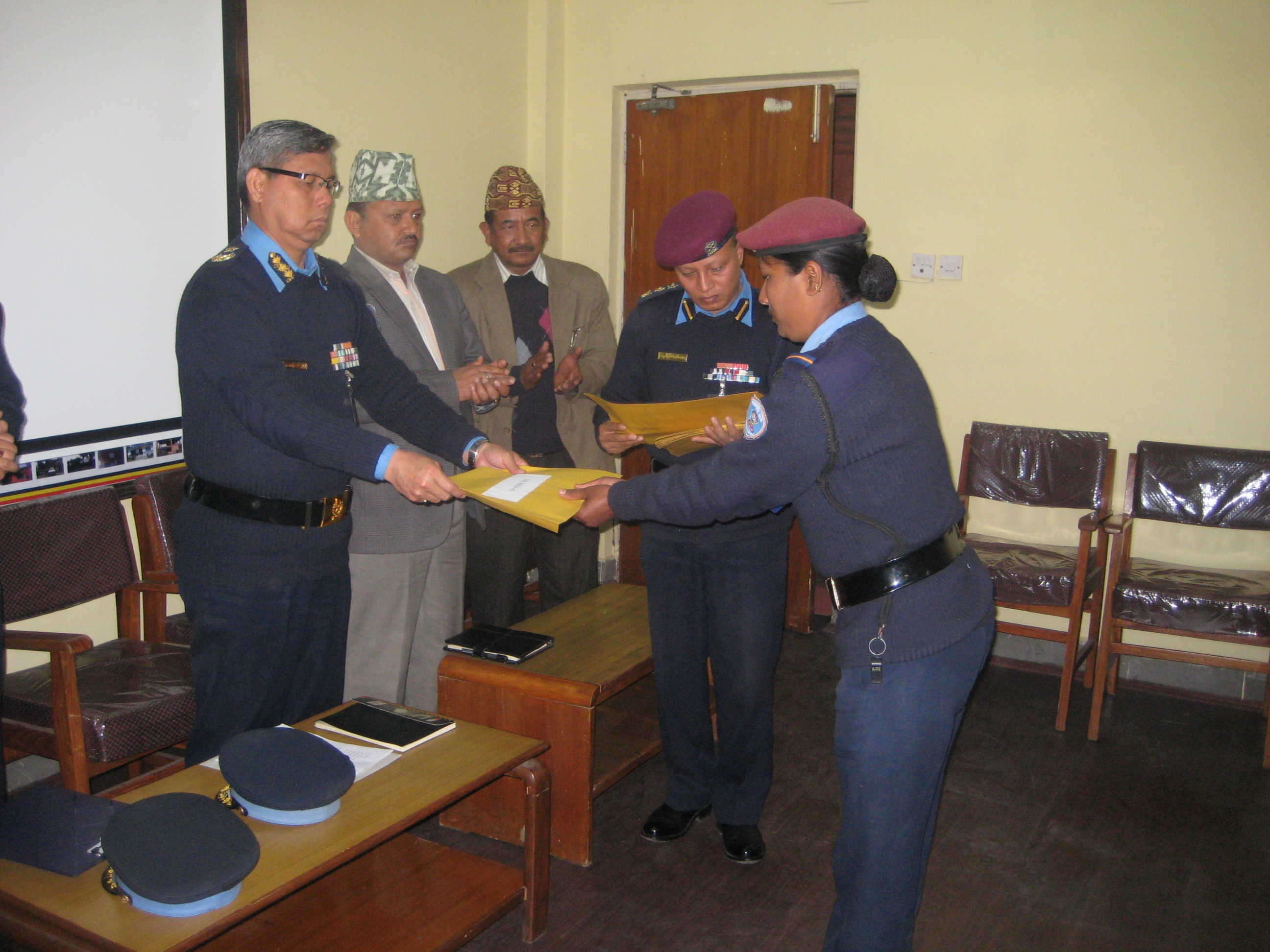
nepal police certificates

“We are very hopeful that community police will cooperate to create a respectable workplace environment for women in the entertainment sector,” said Shakti Samuha chairperson Sunita Danuwar.

Participants received certificates and learned the importance of working with community organizations to identify hotspots, and to recognize the physical and psychological needs of survivors who are rescued. Activists have encountered police officers that refuse to file criminal cases, but the police commissioner says those days should be ending.

“This type of training will give the opportunity to understand, and create opportunity for working together in future,” said Police Commissioner Kuber Singh Rana.

You can read about other innovative techniques that FTS uses to fight slavery in Nepal on our Nepal webpage.
Can you help end the conditions that cause modern slavery?

Related Posts

From Research to Action: Advancing Change for Child Domestic Workers in Kathmandu

From Research to Action: Advancing Change for Child Domestic Workers in Kathmandu

In Kathmandu, thousands of children work behind closed doors as domestic workers, largely unseen and unprotected. A new report from Free the Slaves and CWISH Nepal brings their experiences into focus and examines the structural forces that sustain child domestic labor. But research alone is not enough. This work moves beyond documentation to action, engaging employers, civil society, local government, and children themselves to drive coordinated change rooted in evidence and lived experience.

read more
Shedding Light on Hidden Exploitation: Research Dissemination on Child Domestic Workers in Kathmandu, Nepal

Shedding Light on Hidden Exploitation: Research Dissemination on Child Domestic Workers in Kathmandu, Nepal

Child domestic labor in Nepal is one of the most hidden and normalized forms of exploitation. Despite legal protections, children from rural and disadvantaged communities continue to be trafficked or sent to work in urban households, where they face long hours, hazardous conditions, and isolation. To shed light on these realities, Free the Slaves (FTS) and CWISH conducted a qualitative study, Life as Child Domestic Workers in Kathmandu, and shared its findings at a dissemination event with government, civil society, and child protection stakeholders. The research highlights urgent gaps in protection and calls for systemic reforms to ensure every child’s right to dignity, education, and safety.

read more
Inside the Hidden World of Nepal’s Child Domestic Workers

Inside the Hidden World of Nepal’s Child Domestic Workers

Behind the closed doors of urban homes in Nepal, thousands of children—mostly from rural villages—work long hours in exchange for shelter, food, or a small wage. Often invisible to the public and absent from national statistics, these children face isolation from friends and family, interruptions in their schooling, and in some cases, hazardous labor.

Our new research with CWISH uncovers the pathways that lead children into domestic work, the daily realities they face, and the factors—poverty, lack of rural education, family pressures—that make them vulnerable. More importantly, it highlights the voices of the children themselves and offers actionable recommendations for government, educators, employers, and communities to create safer, fairer futures.

read more