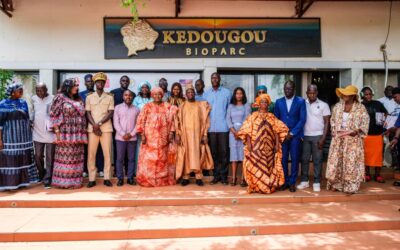

Free the Slaves and our implementing partner, La Lumiere, successfully reintegrated 16 survivors of Commercial Sexual Exploitation back to Nigeria. The successful return of these survivors to their homes is the first repatriation as part of the Program to Address Commercial Sexual Exploitation in the Kédougou area (PACSEK), Senegal. All 16 survivors were removed from exploitation at different times through collaboration with Kédougou community systems, including Community Vigilance Committees (CVCs) and the gendarmerie (military police). Early in this project, Free the Slaves worked with local organizations and concerned citizens to establish a network of Community Vigilance Committees in project areas in the Kédougou region. These Vigilance Committees played an essential role in identifying and removing some of the survivors.
All survivors were referred to rehabilitation shelters, where they received gender-sensitive and trauma-informed care and psychosocial services as part of their recovery and re-integration process. Survivors were flown to Lagos, Nigeria, in the company of the Free the Slaves and the La Lumiere team. Once in Nigeria, they received support from the Nigerian authorities and local NGO partners to complete their journey home. NAPTIP met survivors on arrival at the airport and facilitated a smooth immigration process. They profiled survivors to obtain additional information on the circumstances of their exploitation to aid in further investigations and possible prosecution of perpetrators.
A survivor remarked, “Home is sweet, and I am so glad to be back.” There is a general resolve among survivors and hope that authorities will take action against their traffickers as a result of the information provided by the survivors.
Another survivor remarked, “I know my trafficker, she is in my community, and I hope she is punished severely for deceiving my mother that I was going to work as part of a master-apprentice arrangement, training young girls in dressmaking.”
The journey to recovery and re-integration has just begun. The survivors are safely home now. To successfully reintegrate, they must work to make the most of the recovery and rehabilitation services available. One of the most important opportunities they have is access to livelihood services that will help them learn the necessary skills to get safe jobs that provide adequate income to sustain themselves and prevent re-trafficking.
The trainings for this project, conducted in partnership with the Center on Human Trafficking Research & Outreach, broadened awareness about trafficking issues in the community.
These activities are funded by the U.S. Department of State Office to Monitor and Combat Trafficking in Persons. The opinions, findings, and conclusions therein are those of the author[s] and do not necessarily reflect those of the United States Department of State.