
Survivor-Friendly Police Training in Nepal

Police officers in Nepal sometimes respond with indifference to human trafficking cases, impeding slavery survivors’ access to justice. That is beginning to change, thanks to the Free the Slaves front-line partner organization GMSP. It is working with local and district police officers to ensure Nepal’s justice system works to protect the vulnerable. GMSP trained two groups […]
February 29, 2016

Police officers in Nepal sometimes respond with indifference to human trafficking cases, impeding slavery survivors’ access to justice.

That is beginning to change, thanks to the Free the Slaves front-line partner organization GMSP. It is working with local and district police officers to ensure Nepal’s justice system works to protect the vulnerable.

GMSP trained two groups of Nepali police officers about survivor-friendly approaches to human trafficking, slavery and gender-based violence. The two-day workshops in the Sindhupalchok district were well attended, with 35 officers participating.

An important theme of the training was helping police to better understand the personal situation in which survivors find themselves. Survivors often lack sufficient support systems and access to resources to protect and provide for themselves. They depend on law enforcement to assist them in seeking justice.

Many of the officers were struck by the severity of survivors’ experiences, and they expressed that they had not previously understood the urgency of survivor needs.
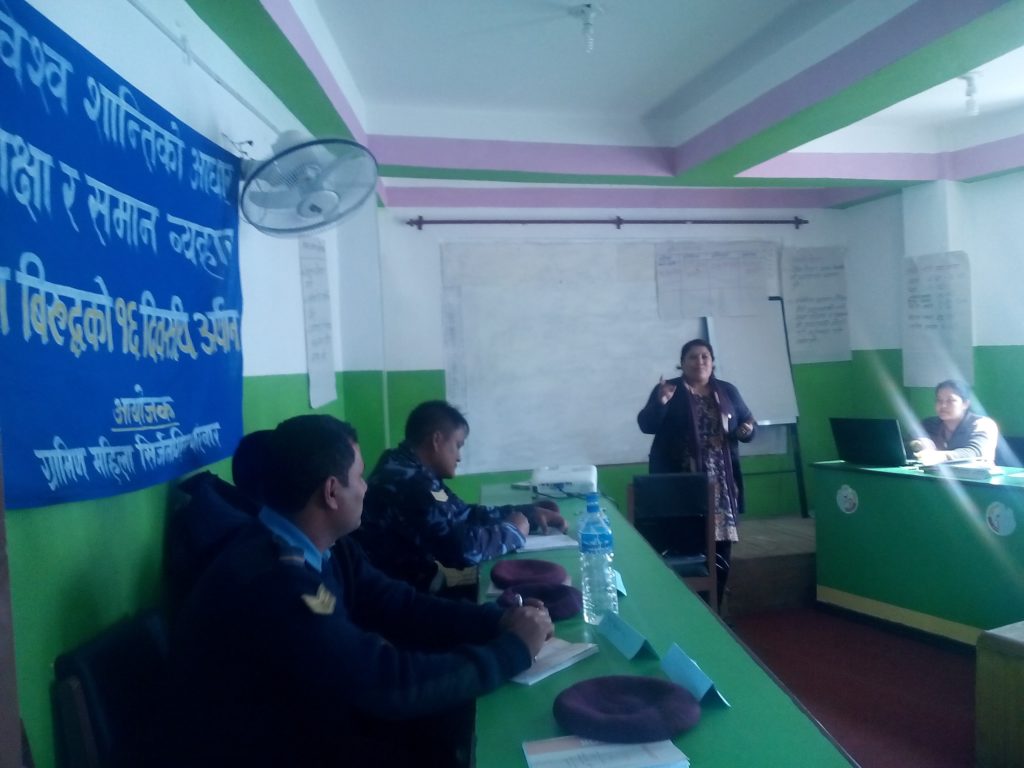
nepal police training 2015 2At the end of the training, officers agreed to prioritize trafficking and related cases. They also agreed to share what they learned with their peers, to promote more proactive law enforcement in these cases and better communication with survivors.

In the future, GMSP plans to collect feedback from survivors who interact with police officers in order to monitor whether there are changes in how survivor cases are handled.

Editor’s note: Learn more and watch videos of our work in Nepal on the Free the Slaves Nepal webpage.
Can you help end the conditions that cause modern slavery?

Related Posts

Shedding Light on Hidden Exploitation: Research Dissemination on Child Domestic Workers in Kathmandu, Nepal

Shedding Light on Hidden Exploitation: Research Dissemination on Child Domestic Workers in Kathmandu, Nepal

Child domestic labor in Nepal is one of the most hidden and normalized forms of exploitation. Despite legal protections, children from rural and disadvantaged communities continue to be trafficked or sent to work in urban households, where they face long hours, hazardous conditions, and isolation. To shed light on these realities, Free the Slaves (FTS) and CWISH conducted a qualitative study, Life as Child Domestic Workers in Kathmandu, and shared its findings at a dissemination event with government, civil society, and child protection stakeholders. The research highlights urgent gaps in protection and calls for systemic reforms to ensure every child’s right to dignity, education, and safety.

read more
Inside the Hidden World of Nepal’s Child Domestic Workers

Inside the Hidden World of Nepal’s Child Domestic Workers

Behind the closed doors of urban homes in Nepal, thousands of children—mostly from rural villages—work long hours in exchange for shelter, food, or a small wage. Often invisible to the public and absent from national statistics, these children face isolation from friends and family, interruptions in their schooling, and in some cases, hazardous labor.

Our new research with CWISH uncovers the pathways that lead children into domestic work, the daily realities they face, and the factors—poverty, lack of rural education, family pressures—that make them vulnerable. More importantly, it highlights the voices of the children themselves and offers actionable recommendations for government, educators, employers, and communities to create safer, fairer futures.

read more
Modern Slavery in Nepal

Modern Slavery in Nepal

Free the Slaves, along with the Alliance Against Trafficking of Women and Children in Nepal (AATWIN) and the Shanti Foundation, have worked on putting together a fact sheet on ‘Modern Slavery in Nepal’ for easy and handy availability of information on modern slavery....

read more