Nepal Earthquake Anniversary: Lessons to Fight Traffickers in Disaster Zones

It’s been a year since the 2015 Nepal earthquake killed thousands and left large parts of the country in ruins. One of the key tragedies of the quake’s aftermath is that human traffickers preyed on desperate and vulnerable Nepalis, causing a rise in slavery cases. A slavery spike is common in crisis zones. So we’ve […]
April 25, 2016

It’s been a year since the 2015 Nepal earthquake killed thousands and left large parts of the country in ruins. One of the key tragedies of the quake’s aftermath is that human traffickers preyed on desperate and vulnerable Nepalis, causing a rise in slavery cases.

A slavery spike is common in crisis zones. So we’ve teamed-up with our Nepali and international partners to develop recommendations that can guide future earthquake response efforts worldwide.

The team found that simple steps can make a huge difference—such as handing out trafficking-prevention information at the same place people line up to get tents and food. Or making sure that community activists are included in strategy meetings at a national, regional and local level. Read the full research report here.

The courageous staffers of Free the Slaves and our front-line partner organizations in Nepal were quick to respond to the earthquake situation – even though they had suffered devastating losses themselves. One organization, GMSP, lost its headquarters and was forced to work from tents. Read more about their selfless dedication here.
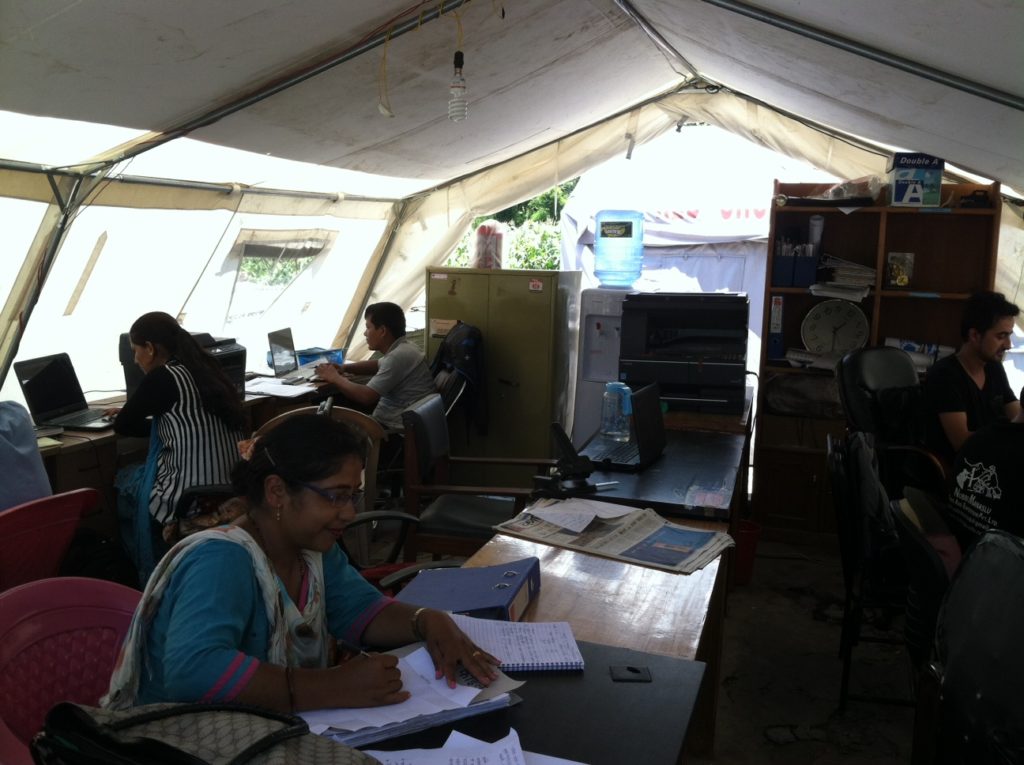
GMSP is currently operating out of tents

Our teams were successful in alerting community members in the quake zone to the risks. In one case, traffickers posing as relief workers had already spirited several children away from a rural village. Thankfully, our partners were able to rescue the children and reunite them with their families. Read the full story here.

Perhaps one of the most lasting accomplishments of the Free the Slaves team in Nepal in the year since the earthquake is the government’s decision to ban slavery in the country’s new constitution. Our partners had been advocating with Nepali officials to take this action for years. Nepal’s new constitution puts it in the vanguard of nations that are establishing progressive legal frameworks to bring human trafficking to an end. Read more here.

Our thoughts are with our team members and everyone in Nepal on this one year anniversary of the earthquake. They are a remarkable inspiration of resilience.

Meet our team in the videos below, produced just a few weeks before the earthquake struck.
 

Can you help end the conditions that cause modern slavery?

Related Posts

Shedding Light on Hidden Exploitation: Research Dissemination on Child Domestic Workers in Kathmandu, Nepal

Shedding Light on Hidden Exploitation: Research Dissemination on Child Domestic Workers in Kathmandu, Nepal

Child domestic labor in Nepal is one of the most hidden and normalized forms of exploitation. Despite legal protections, children from rural and disadvantaged communities continue to be trafficked or sent to work in urban households, where they face long hours, hazardous conditions, and isolation. To shed light on these realities, Free the Slaves (FTS) and CWISH conducted a qualitative study, Life as Child Domestic Workers in Kathmandu, and shared its findings at a dissemination event with government, civil society, and child protection stakeholders. The research highlights urgent gaps in protection and calls for systemic reforms to ensure every child’s right to dignity, education, and safety.

read more
Inside the Hidden World of Nepal’s Child Domestic Workers

Inside the Hidden World of Nepal’s Child Domestic Workers

Behind the closed doors of urban homes in Nepal, thousands of children—mostly from rural villages—work long hours in exchange for shelter, food, or a small wage. Often invisible to the public and absent from national statistics, these children face isolation from friends and family, interruptions in their schooling, and in some cases, hazardous labor.

Our new research with CWISH uncovers the pathways that lead children into domestic work, the daily realities they face, and the factors—poverty, lack of rural education, family pressures—that make them vulnerable. More importantly, it highlights the voices of the children themselves and offers actionable recommendations for government, educators, employers, and communities to create safer, fairer futures.

read more
Exploitation and Extraction: How Armed Groups are Fueling Modern Slavery in DRC’s Cocoa Sector

Exploitation and Extraction: How Armed Groups are Fueling Modern Slavery in DRC’s Cocoa Sector

The Democratic Republic of Congo’s cocoa sector is growing—but so is the exploitation behind it. New research by Free the Slaves reveals how armed groups and corrupt actors are using violence, forced labor, and smuggling to control cocoa production in eastern DRC. As cocoa beans flow into global supply chains, the human cost remains hidden. This new report examines the links between modern slavery and illicit resource appropriation—and what governments, industry, and the international community must do to stop it.

read more