Webinar Recording: Ending Modern Slavery in Our Communities

What are the differences between historical slavery and slavery today? What are the key dates and accomplishments in the history of the abolition movement? How can you take action to make communities slavery free? Find out in our newest webinar recording: “Building Communities Together: How to End Human Trafficking in Local Communities.” This “lunch and […]
April 26, 2021

What are the differences between historical slavery and slavery today? What are the key dates and accomplishments in the history of the abolition movement? How can you take action to make communities slavery free? Find out in our newest webinar recording: “Building Communities Together: How to End Human Trafficking in Local Communities.”

This “lunch and learn” virtual event, sponsored by Florida Power and Light, features the voices of slavery survivors from Brazil, Cambodia, Democratic Republic of Congo, Haiti, India and Pakistan explaining the human impact of slavery today.
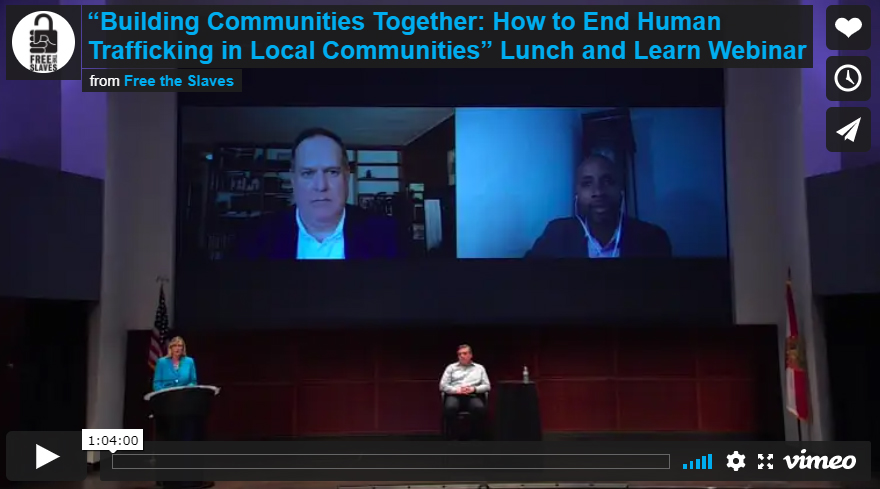
Featured speakers are:

  • Wade Litchfield, vice president and general counsel at Florida Power and Light and board member of Free the Slaves
  • Timothy Patrick McCarthy, Harvard University professor and board chair of Free the Slaves
  • Bukeni Waruzi, executive director of Free the Slaves
  • Ashley Moody, Florida attorney general

More than 800 people participated in this live webinar three weeks ago. Now, you can too. This one-hour video is a great way to broaden your knowledge of modern slavery and efforts to fight it.
Can you help end the conditions that cause modern slavery?

Related Posts

FTS Brings Survivor-Centered Expertise to the Philippines’ Midterm Review on Child Labor

FTS Brings Survivor-Centered Expertise to the Philippines’ Midterm Review on Child Labor

Every child deserves to be a Batang Malaya, free to learn, play, and grow without exploitation. At the Midterm Assessment of the Philippine Program Against Child Labor, Free the Slaves joined government, civil society, and international partners to examine progress, confront ongoing challenges, and strengthen the path toward eliminating child labor. This blog highlights key insights from the assessment and the role of survivor-centered and community-based approaches in building a more effective national response.

read more
Alliance 8.7 – 10 Years of Partnership and Action, Side Event at the 6th Global Conference on the Elimination of Child Labour

Alliance 8.7 – 10 Years of Partnership and Action, Side Event at the 6th Global Conference on the Elimination of Child Labour

At the 6th Global Conference on the Elimination of Child Labour, Alliance 8.7 marked ten years of partnership with a forward-looking conversation about what it will take to turn commitments into real protection for children. Governments, employers, workers’ representatives, international agencies, business leaders, and survivor advocates came together around a shared truth: progress is possible, but only sustained, coordinated, and survivor-centered action will close the gap between promises and impact.

read more
The 6th Global Conference on the Elimination of Child Labor Fails to Deliver For and With Survivors of Child Labor

The 6th Global Conference on the Elimination of Child Labor Fails to Deliver For and With Survivors of Child Labor

Global commitments to end child labor continue to grow, yet the people most affected remain largely excluded from shaping the solutions. Reflecting on the 6th Global Conference on the Elimination of Child Labor in Marrakech, this piece examines the gap between intention and practice and asks a fundamental question: can lasting progress be achieved if survivor voices are not part of the decisions that affect their lives?

read more