
Former U.S. Secretary of State Hillary Rodham Clinton recalled the formative days of the modern anti-slavery movement, and called for a “Decade of Determination” to end modern slavery as we observe the 20th anniversary of the U.N. Palermo Protocol and the U.S. Trafficking Victims Protection Act.
Tomorrow, October 28, marks two decades since America’s landmark law to confront human trafficking was passed by Congress and signed by President Bill Clinton.
Mrs. Clinton said much progress has been made to date, but more needs to be done.
“We’ve come a long way since International Women’s Day in in 1998, when we challenged the world to adopt the three “P” paradigm of prevention, protection and prosecution. The decade of development that followed sharpened our understanding. As Secretary [of State], I was proud to call for a decade of delivery, and what a productive decade it has been. Today I’m calling for a decade of determination. It is time to take stock of our efforts to determine what is working and what is not. And most importantly, we must stay determined,” Clinton said. “Let’s keep going.”
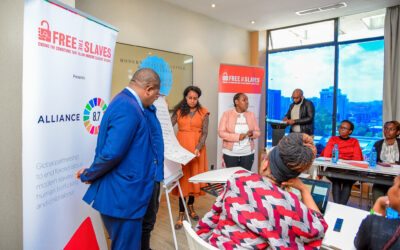
Her remarks were taped for the Freedom from Slavery Forum, conducted in partnership with the Gilder Lehrman Center for the Study of Slavery, Resistance and Abolition at Yale University. Clinton thanked the center, and Free the Slaves, the Froum organizer and secretariat, for convening global activists in ways reminiscent of the founding days of the modern abolition movement.
“The Freedom from Slavery Forum presents an opportunity to come together once again around this critical shared mission,” she said. “Thanks as well to [Executive Director] Bukeni Waruzi and your team at Free the Slaves.”
This year’s forum is a four-day online event, with speakers focusing on on research, advocacy, survivors and resources. Today’s focus on advocacy asked: How have the U.S. Trafficking Victims Protection Act and U.N. Palermo Protocol, now 20 years old, shaped the anti-slavery movement? How can we galvanize coordinated global action to more effectively serve enslaved individuals and vulnerable populations?
Speakers at the 2020 Forum:
- Kevin Bales | University of Nottingham Rights Lab
- Sarah Bessell: Human Trafficking Legal Center
- David Blight | Yale University
- Joha Braimah | Free the Slaves
- Luis C.deBaca | Yale University
- Dominique Chauvet-Staco | Pathy Family Foundation
- Michaëlle De Cock | International Labor Organization
- Geannina Dinarte Romero | Costa Rica Minister of Labor & Social Security
- Davina Durgana | Minderoo Foundation/Walk Free
- Alice Eckstein | United Nations University Center for Policy Research, Delta 8.7
- Tina Frundt | Courtney’s House
- Nick Grono | Freedom Fund
- Anousheh Karvar | Government of France, Alliance 8.7
- Shawn MacDonald | Verité
- Ima Matul | National Survivor Network at the Coalition to Abolish Slavery & Trafficking
- Deepika Mittal | Global March Against Child Labor
- David Okech | Univ. of Georgia African Programming & Research Initiative to End Slavery
- Charlotte Oldham-Moore | U.S. Senate Foreign Relations committee Staff
- Sophie Otiende | Liberty Shared
- Deborah Pembrook | Monterey County California Rape Crisis Center
- Cheryl Perera | OneChild Canada
- John Cotton Richmond | U.S. State Dept. Office to Monitor/Combat Trafficking in Persons
- Vijay Simhan | Humanity United
- Zoe Trodd | University of Nottingham Rights Lab
- Kevin Willcutts | U.S. Labor Department International Labor Affairs Bureau
- Bukeni Waruzi | Free the Slaves
Learn more about the forum here.
The forum is made possible by generous funding from The Elkes Foundation.