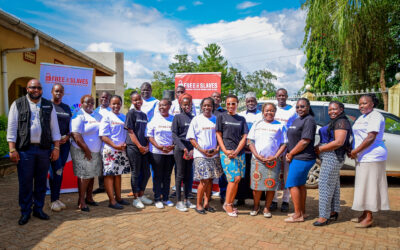

One of the key elements of our front-line strategy is the protection of children. By helping adults recognize and respect that children have rights, we help communities safeguard their youngest from slavery and other abuses. Two recent success stories show how our focus on children is taking root.
 GHANA: A 9-year-old girl complained to her mother that teachers were hitting her with a cane for the most trivial of transgressions. “Teachers at my school enjoy caning,” she said. “The littlest mistake a pupil commits, a teacher will cane. I think that they should be compassionate to us because they are supposed to train us for a better future.”
One day, this girl failed to start a writing assignment in class promptly, and the teacher became annoyed. “He started caning me all over my body. I cried loudly but to no avail, there was nobody to free me. I could no longer wear my school dress because of pain and a burning sensation all over my skin. Eventually I decided to run home to inform my mother,” the girl said. “I wept when I saw marks of canes all over my daughter’s skin,” according to the girl’s mother.
Fortunately, Free the Slaves and our front-line partner organization had helped this community form a child rights protection committee, where residents learn about the rights of children and vow to act as agents of change. The girl’s mother rushed to the committee facilitator, who contacted the school principal. As a result, caning is now banned in the school and the teacher was required to pay for the young girl’s medical care.
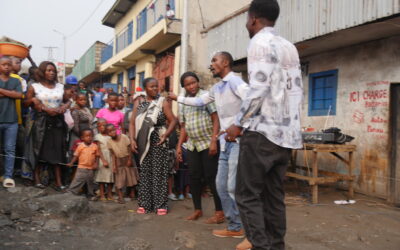
 CONGO: Free the Slaves and our front-line partners have been using radio programs and community discussions to increase knowledge of slavery at the community level. During these sensitization discussions, children reported that an unusual form of forced labor is present in some DRC schools.
“We have seen a lot of teachers who force students who have failed or have disrupted the class to work for them at their home or in their farms,” students said. “Those teachers promised to these students that they would pass their exam or would not have any disciplinary remarks on their record books if they work for them. Thanks to the sensitization sessions, we now understand that these teachers are practicing slavery by forcing us to work for them.”
Free the slaves and our partner organizations are helping Congolese communities form vigilance committees that help residents to recognize and respond to slavery, no matter its form. Villagers see that there’s strength in collective community education and action.
“We recommend that you organize additional sensitization sessions for teachers and other unware people so they are better informed as well,” villagers say. “We have understood that slavery as it has been taught to us in our history class is practiced differently in our communities today.”
Learn more about our Ghana and Congo programs, as well as our community model for fighting slavery.