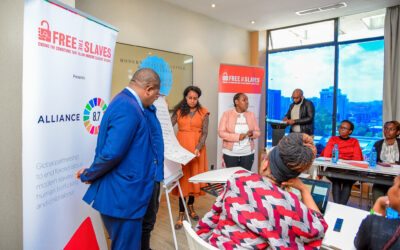
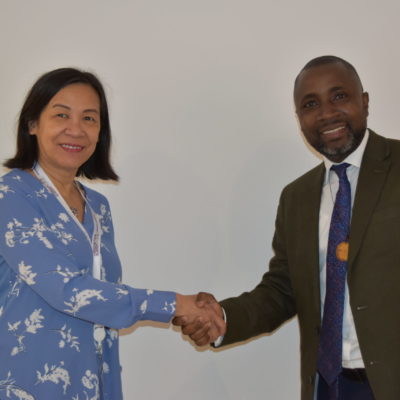

Free the Slaves is excited to announce our new partnerships in Vietnam. These partnerships will allow us to understand more about the country and its need to have more players in the human trafficking space. These partnership endeavors are essential for developing successful programming in the future. We are partnering with three organizations with a long history of working in Vietnam: HopeBox, Pacific Links, and Hagar International.
HopeBox is a social enterprise established in March 2018 in Hanoi. They offer training and employment placement for women who have been victims of gender-based violence, modern slavery, and human trafficking to be financially independent in the future. Free The Slave’s partnership with HopeBox will allow both organizations to work with survivors of trafficking and slavery and provide them with access to its training programs. Recently, FTS supported a program that equipped five survivors with the skills and knowledge to find employment, start their businesses, and lead independent lives. Currently, the survivors have found a renewed chance. By partnering with HopeBox, FTS can help to make a real difference in the lives of survivors of modern slavery, especially women.
The Pacific Links Foundation has 20+ years of experience in empowering women and youth. They empower women and youth through improving life skills, raising self-awareness, bringing new knowledge, and opening opportunities and support networks. Our Education portfolio empowers disadvantaged youth to access education and increase economic opportunities. Their Modern Slavery Prevention portfolio invests comprehensively in at-risk youths to prevent trafficking and in survivors to help them build new lives. The partnership between Free the Slaves and Pacific Links Foundation is essential to unlocking the potential scope to conduct research that can lead to local program developments. Both organizations will initiate more dialogues for insights sharing into the trafficking of Vietnamese to European corridors. Furthermore, this partnership will allow for a greater exchange of information and resources between the two organizations. Both organizations have a wealth of experience and knowledge in their respective fields.
Hagar was founded in 1994 in response to the prevalence of extreme domestic and community violence affecting women and children in post-civil war Cambodia. In 2009, Hagar established an office in Vietnam to care for women affected by the growing magnitude of exploitation and abuse. Today, Hagar International is leading the efforts in Northern Vietnam to provide community-based interventions, with local communities being their partners. The partnership between Free the Slaves and Hagar International is an important one. Both organizations have a great deal of expertise in community-based interventions. This partnership will bring significant advantages to the communities in Vietnam that Hagar International is servicing. Free the Slaves has a wealth of experience in working with communities to identify and address the root causes of slavery, and Hagar International has extensive knowledge of the local context in Vietnam. Together, they will be able to develop more effective and targeted interventions that will make a real difference in the lives of those affected by slavery. This partnership is an important step forward in the fight against trafficking. It has the potential to bring real change to the lives of countless people who are at risk of being trafficked in Vietnam.
Therefore, these partnerships between Free the Slaves and these three esteemed organizations in Vietnam are a hugely positive step in the fight against modern slavery in the country and region. With our complementary strengths and expertise, the partnerships with these organizations will be able to make a real difference in the lives of those affected by modern slavery.
No single organization can end human trafficking and modern slavery on its own. It will take a concerted effort from individuals, companies, governments, and civil society organizations working in partnership to create lasting change. Collaboration is essential to sharing best practices, identifying gaps in the response, and ensuring that everyone is working towards the same goal. By coming together, we can create a more coordinated and effective response to human trafficking and modern slavery.